FlatpanelsHD saw the Philips 2026 OLED and LCD models as TP Vision revealed and demonstrated the newest developments at a launch event in Berlin, Germany.
It was an opportunity to talk with the people behind the products, see live demos and get more details on what you can expect (or not) from the new products. Here is what we learned:
Dolby Vision 2 in Philips TVs
TP Vision will to introduce Dolby Vision 2 to specific 2026 OLED models and 2026 LCD models, with all Dolby Vision 2 features delivered via a software update scheduled for late 2026. As initial content availability is expected to be limited, this later rollout is unlikely to have a major impact for most users.
Dolby Vision 2 introduces a revised feature set including Precision Black, a new image engine, sports optimisation and intensity control. Dolby Vision 2 Max adds Authentic Motion, Light Sense 2 and Pro Reference Mode. Notably, Bidirectional Tone Mapping, which initially was announced as part of the Dolby Vision 2, has been removed from the specifications.
Also read: All our Dolby Vision 2 questions, answered
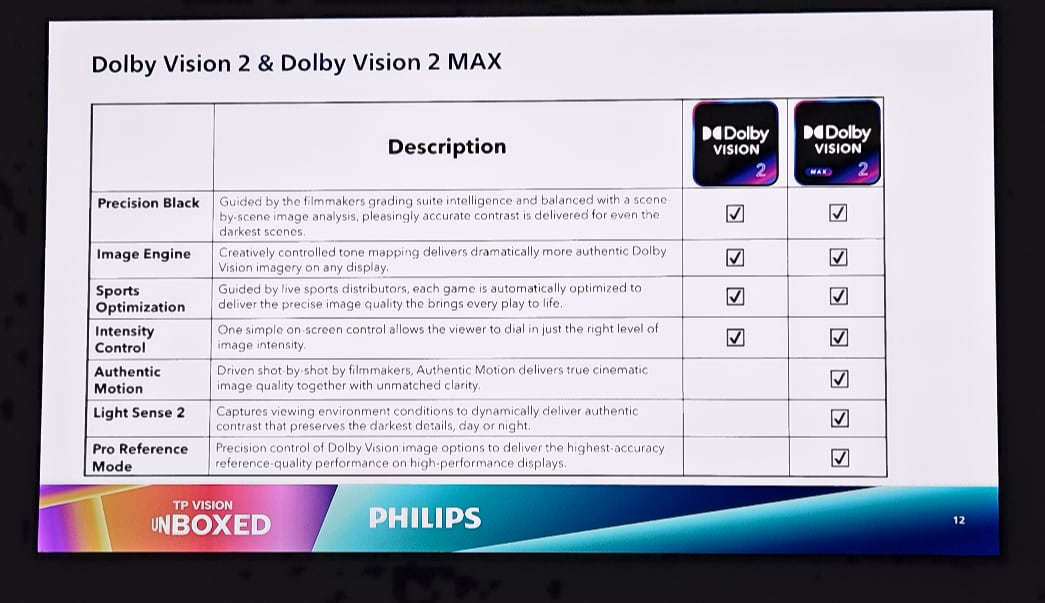
Dolby Vision 2 vs. Dolby Vision 2 Max. Photo: Eric Beeckmans / Flatpanels
Precision Black uses metadata from the content creator's grading environment to preserve shadow detail without compromising overall contrast while viewing in a regular living room. The updated image engine improves tone mapping performance. Sports optimisation relies on content flags to detect sports broadcasts and adjust parameters such as white balance and motion processing. The system can also identify other content types, including movies, games and user-generated material, although users retain full control to override any adjustments. Intensity Control functions as a global adjustment within the Dolby Vision pipeline, allowing users to increase or decrease overall image intensity without switching picture modes.
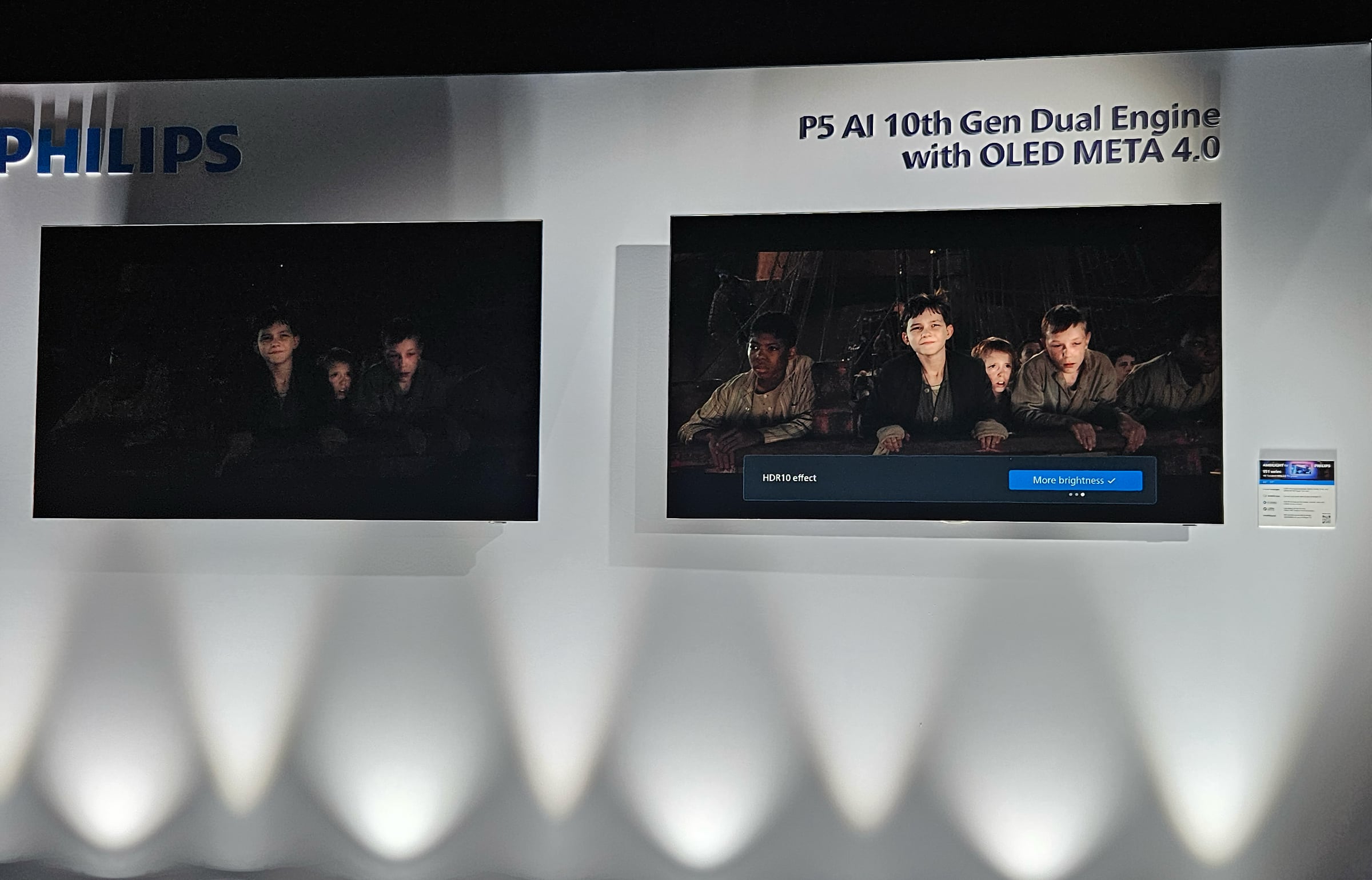
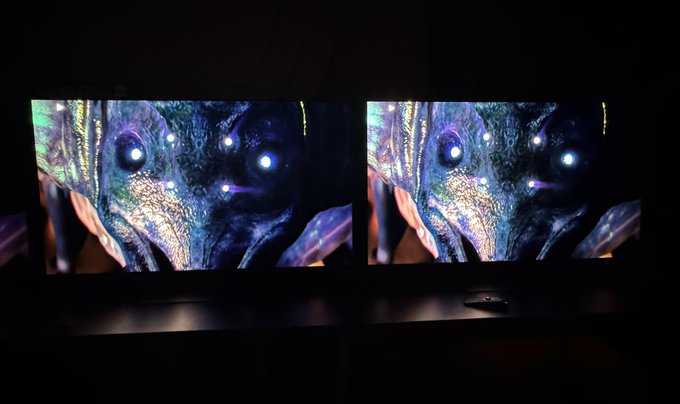
The demo did not show live Dolby Vision 2 in action. Instead, it showed a clip provided by Dolby in two versions. One mastered in Dolby Vision, and one in Dolby Vision 2. Both were shown side by side and the difference was quite clear. The newer version does a significant better job of showing dark details, preserves better highlight detail while being overall punchier.
Demo: Dolby Vision (left) and Dolby Vision 2 Max (right). Photo: Eric Beeckmans / Flatpanels
Dolby Vision 2 Max introduces what are arguably the most significant updates. Authentic Motion enables motion interpolation to be applied dynamically on a scene-by-scene basis, a shift in how content creators approach motion handling for modern displays. As TVs grow larger and offer better contrast, judder becomes increasingly problematic. While some viewers (and content creators) dislike motion interpolation, this new method may change their perspective.
Another demo showed this in action. The video showed the camera panning, at different speeds for three different scenes. Without motion interpolation, judder was clearly visible to varying degree in every scene. Enabling motion interpolation resulted in smooth movement, but for many viewers this would introduce to much soap opera effect. The Authentic Motion version applied different levels of motion interpolation per scene, resulting in far less judder, but without that very visible soap opera effect.
Light Sense 2 builds on Dolby Vision IQ by combining ambient light sensor data with metadata from the mastering environment to improve image adaptation to viewing conditions. Pro Reference Mode replaces what was previously known as Dolby Vision Dark, aiming to reproduce content as close as possible to the creator's original intent.
10th generation P5 video processor
TP Vision continues its annual updates to the P5 picture processor. Improvements have been made to AI Adaptive Tone Mapping V2. It remains one of the P5 standout features, capable of elevating HDR10 content to a level approaching HDR10+. While performance was already strong last year, further fine-tuning has been applied in 2026.
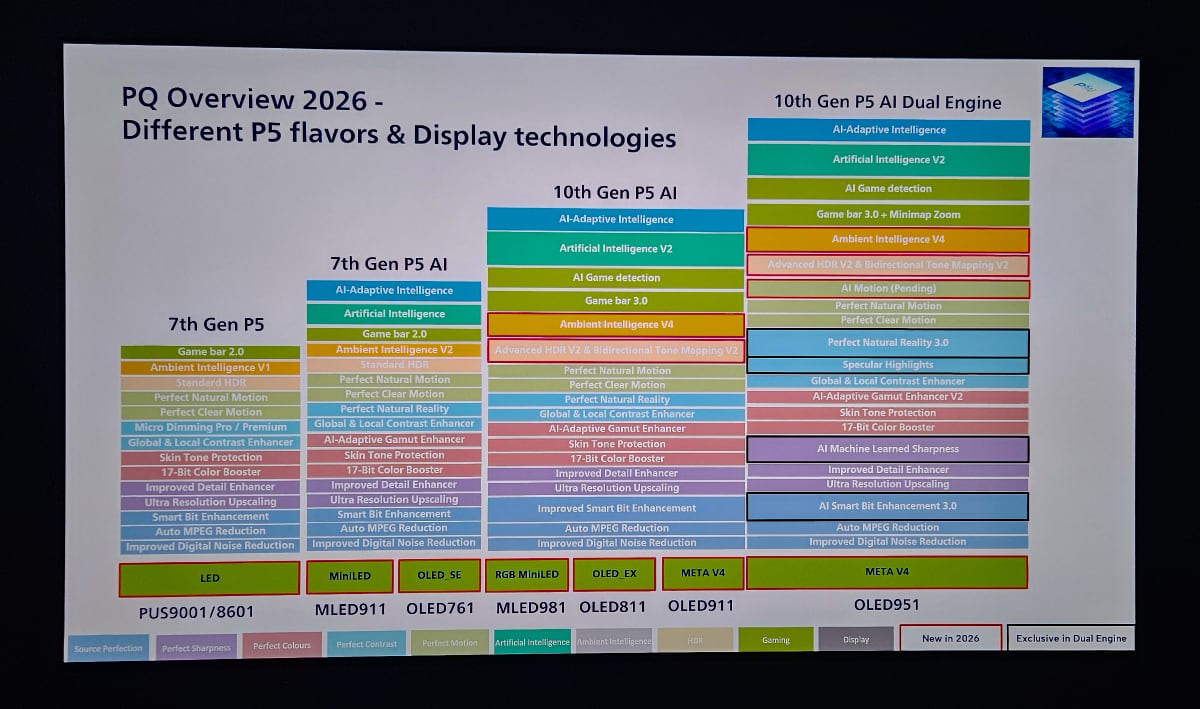
Philips' 10th generation P5 video processor has some new tricks. Photo: Eric Beeckmans / Flatpanels
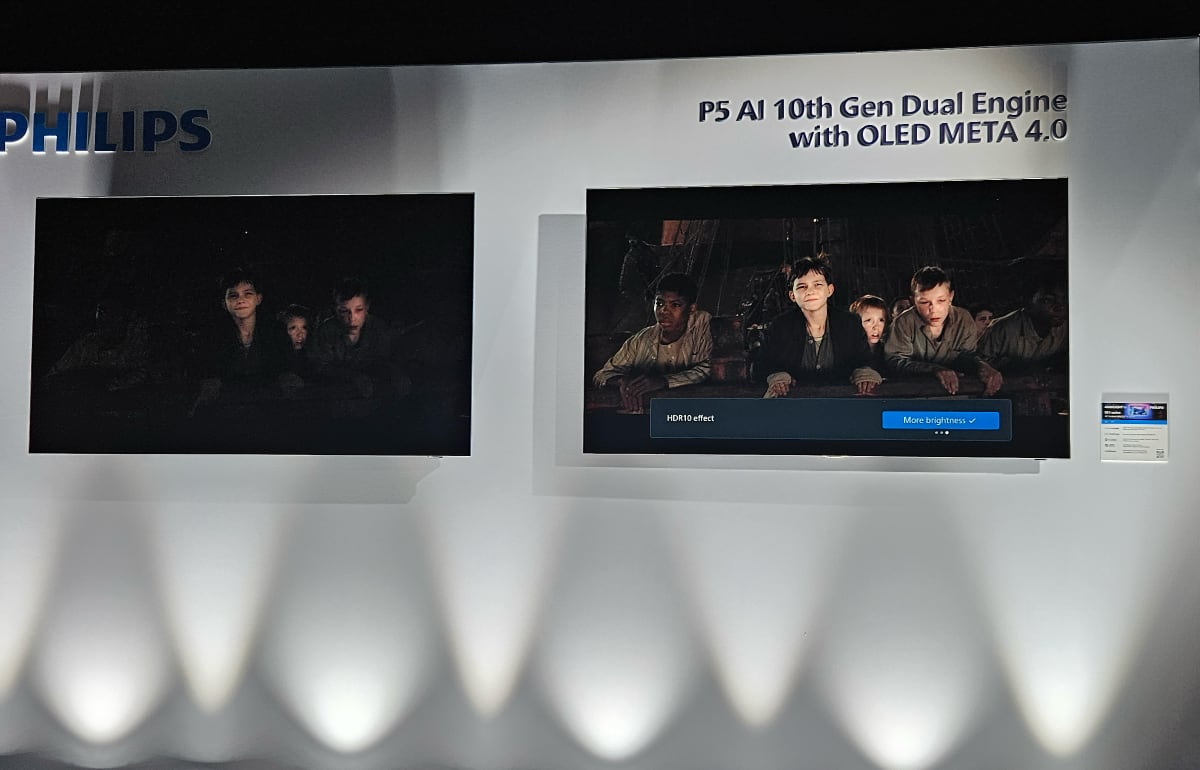
A key highlight is Bidirectional Tone Mapping V2, which can expand HDR10 content to better utilize the available brightness of the TV. This is aimed particularly at conservatively graded movies/series. TP Vision noted that this functionality has been removed from the Dolby Vision 2 specification but will remain available on its OLED811, OLED911 and OLED951 via the P5 Gen10 processor.
More broadly, TP Vision emphasized that several features now associated with Dolby Vision 2 are already implemented in the P5 engine and work across all sources – not limited to Dolby Vision content. A good example of this is the light sensor functionality (Ambient Intelligence V4) which uses the light sensor to overrule the Bidirectional Tone Mapping to retain Filmmaker Mode in dark rooms but boost the performance using Bidirectional Tone Mapping in brighter rooms.
Philips' 10th generation P5 video processor with dynamic tone-mapping. Photo: Eric Beeckmans / Flatpanels
In one slide we noticed a feature "AI Motion (pending)" was mentioned but not covered during the presentation. Upon further questioning, this appears to be TP Vision's own approach to scene-adaptive motion processing, similar in intent to Dolby Vision 2's Authentic Motion. However, instead of relying on embedded metadata, TP Vision is likely exploring AI-based analysis to selectively apply motion interpolation. Availability timing or any further details have not yet been disclosed, but it will be limited to the flagship OLED951.
Improved 2026 OLED TVs
As usual the picture quality session went into more detail about capabilities of the 2026 OLED models. While the quoted peak of 4500 nits for OLED951 stands out on paper, we do think the most important improvement is the increase in full-screen brightness (over 400 nits, up from 350 nits in 2025) as it will translate into more meaningful benefits in daily use.
The OLED951 demo however largely focused on the improved peak brightness and unfortunately TP Vision had set up the 2025 model in Filmmaker Mode whereas OLED951 was set to Crystal Clear. That makes for an unfair comparison.
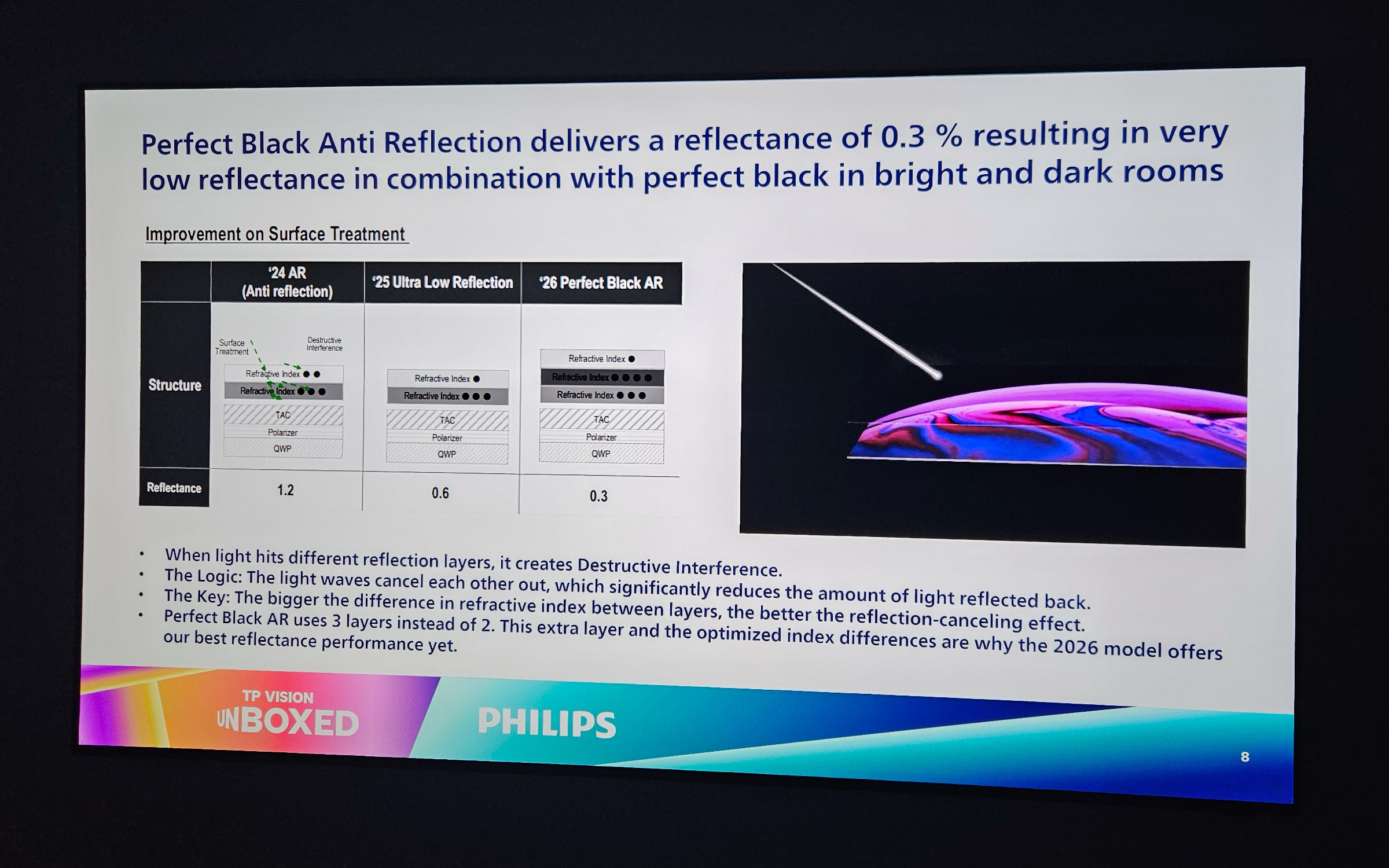
We were impressed though with the new anti-reflection coating, reducing reflections to approximately 0.3%, down from 0.6%.
The company also demoed its Bidirectional Tone Mapping V2, clearly showing the benefits in a brightly lit environment, as it made shadow detail visible and increased the brightness while still staying true to the intent.
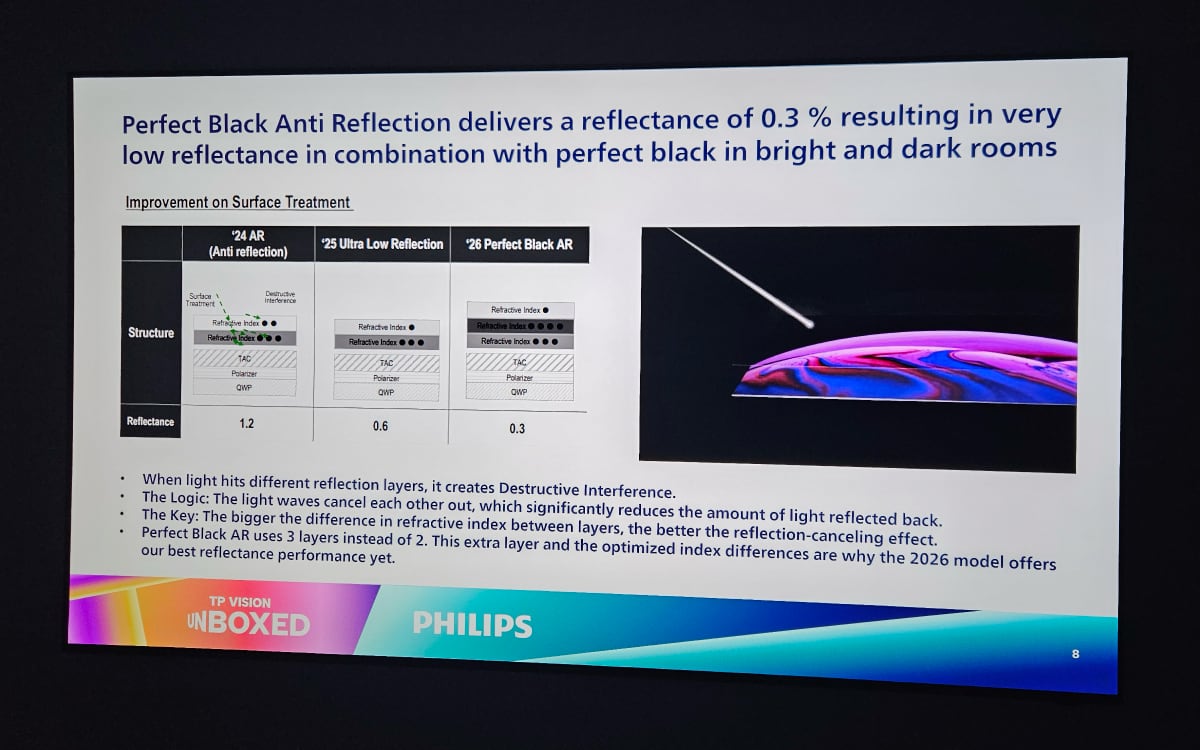
The 2026 Tandem WOLED panel has lower reflectance. Photo: Eric Beeckmans / Flatpanels
As for the big increase in quoted peak brightness boost of OLED811 (2500 nits vs. 1500 nits last year), we did ask how this was achieved, but TP Vision did not confirm whether these panels incorporate 'META technology' or an updated OLED EX structure. Instead, it referred to a 'Peak Light Booster', a feature previously reserved for the OLED 9 series, now making its way to the 8 series. We might be able to learn more when we measure the panel using our spectrometer. Unfortunately no side-by-side demo was given.
Both the OLED 9 and 8 series offer WiFi 6 and Bluetooth 5.4. TP Vision also confirmed that these models will not support HDMI 2.1 QMS (Quick Media Switching). Although the MediaTek chipset used in the TVs is technically capable of supporting the feature, TP Vision has opted not to implement it, citing limited real-world benefits. The models will no longer be IMAX Enhanced certified. It is a minor picture-related loss as it really is not that different from Filmmaker Mode, but you will lose DTS:X IMAX Enhanced audio on Disney+. The DTS Play-Fi wireless audio platform is no longer supported.
The press release did not mention Dolby Vision 2 for OLED761, so we asked why. It turns out this model uses a Novatek chipset giving it four HDMI 2.1 ports but unfortunately it lacks necessary features for Dolby Vision 2, which means it will never support it.
First look at Philips' RGB miniLED
We also got some extra information on the 85" MLED981 ('The Xtra'). Not only will it get 3000 nits peak brightness (10% APL windows) and 800 nit maximum brightness on a 100% full white window (both in Vivid mode, so expect Filmmaker Mode to be less bright), it will also see a sharp increase in number of dimming zones to 3840 zones.
TP Vision reports 11520 zones as each zone can be independently dimmed for Red, Green or Blue (RGB), but that is a somewhat optimistic view. We prefer to state 3840 zones. Like most RGB mini LED models this year, MLED981 will also deliver 99,99% DCI-P3.
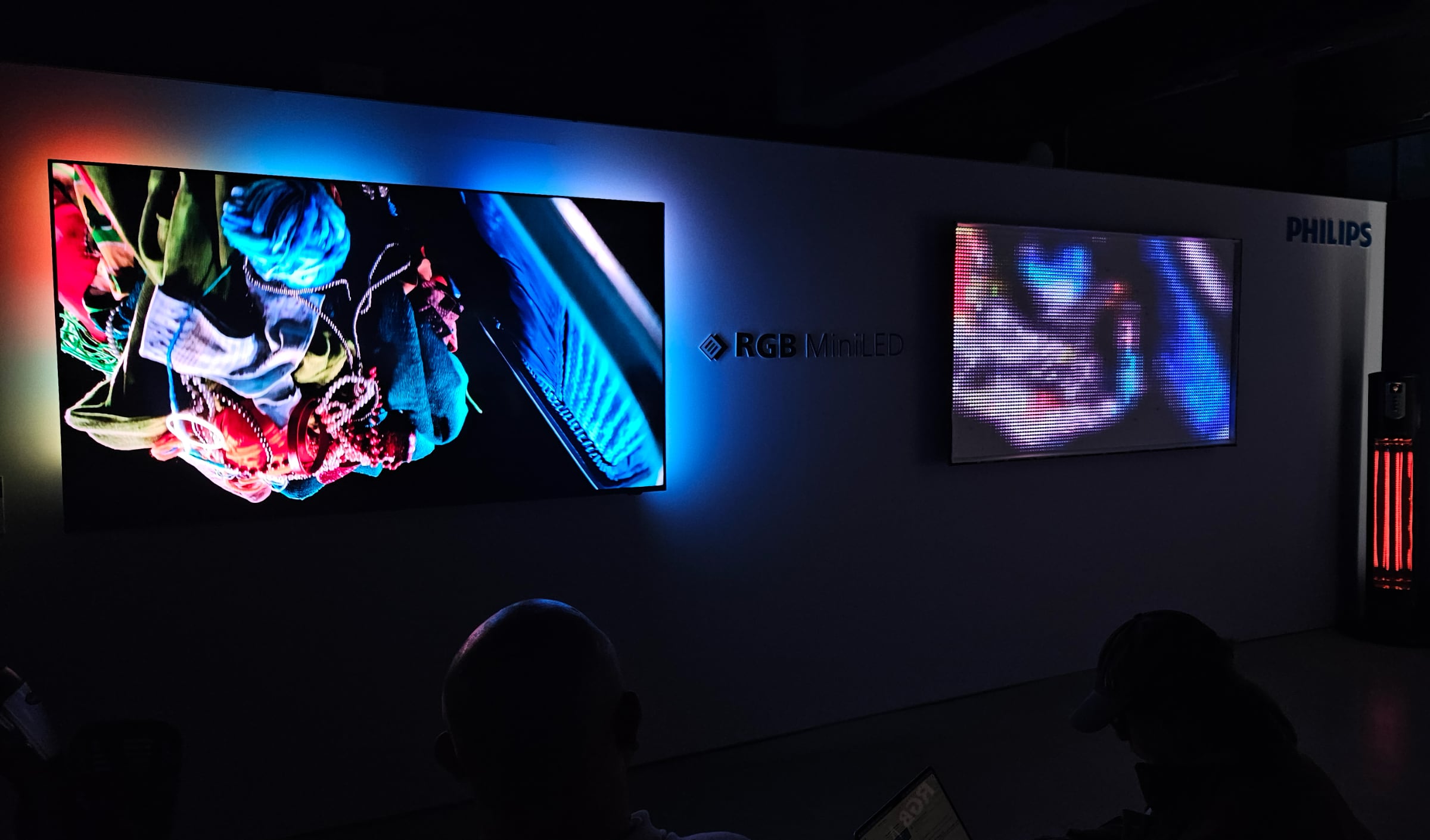
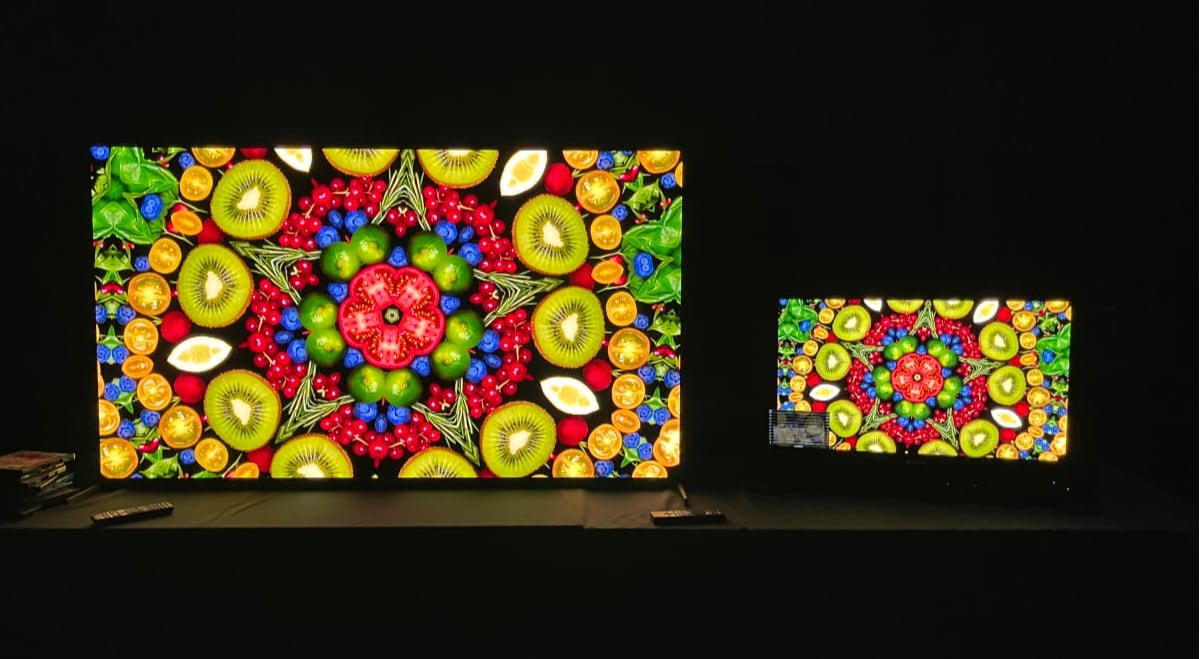
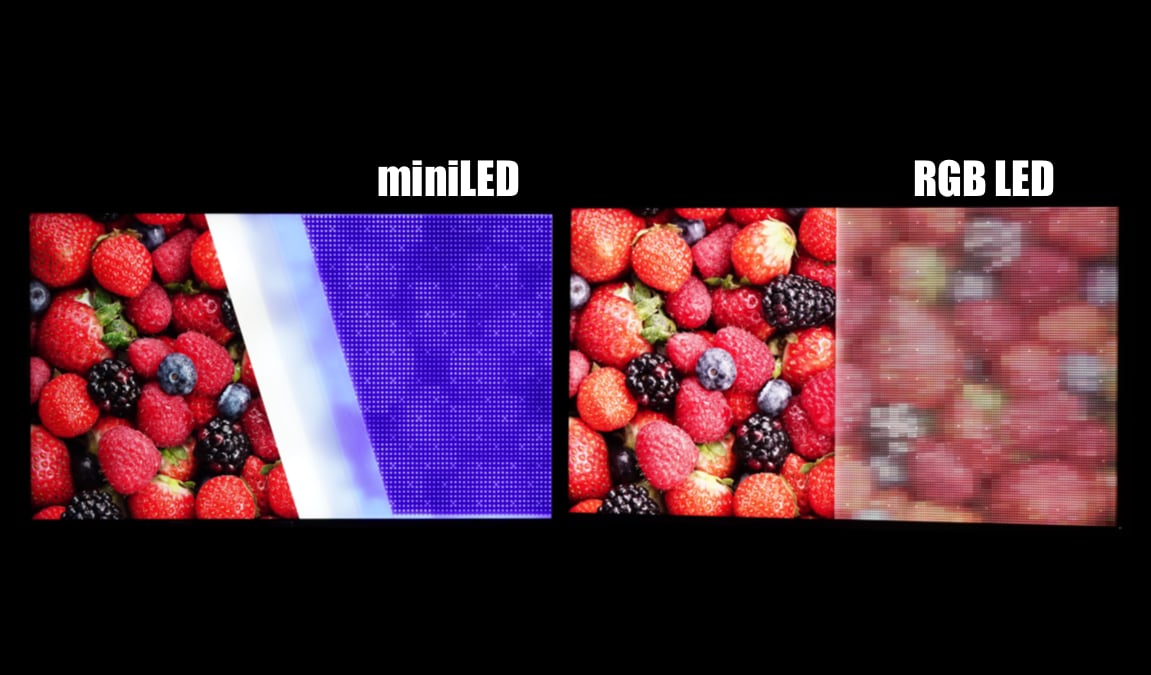
Philips' first LCD TV with RGB LED. Photo: Eric Beeckmans / Flatpanels
TP Vision had a demo set up with two versions of MLED981 side by side. A regular one and one with the LCD panel removed so we could see the backlight in action. The footage was all very high contrast (bright objects on a pure black background) to clearly show the activity of the RGB backlight. Just as we have seen in other demos, the contrast is impressive and haloing is slightly reduced. We look forward to putting one of these through some real-world tests.
First look at AmbiScape
For many years, Ambilight has been a signature feature of Philips TVs. Over time the extra personalization options and features were included to help Ambilight fit into your living space. Up until 2022 you could extend Ambilight's effects to Philips Hue Lights, but the new Ambiscape takes things further.
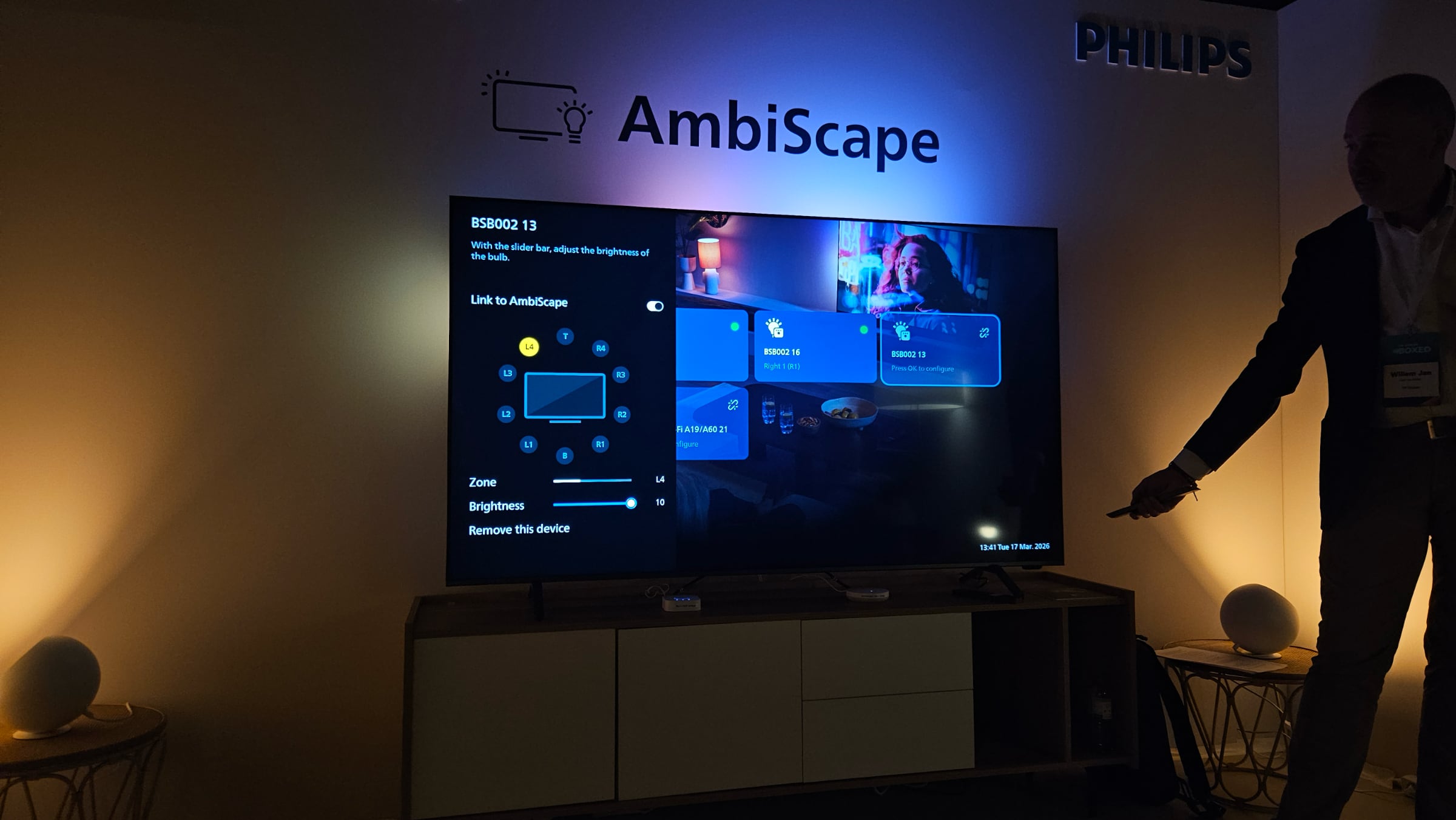
Using the Matter protocol, Ambiscape allows you to connect up to four lights without needing an extra bridge, provided your lamps (like Nanoleaf) communicate via Matter. If you rely on a bridge (such as the Philips Hue bridge or Ikea Dirigera), only one bridge can be used at a time. In Ambiscape, you assign each lamp a spatial position from 10 possible options, such as front, back, front left, front right, and rear left or rear right, creating an immersive atmosphere that fills the whole room during movies or games, as seen below.
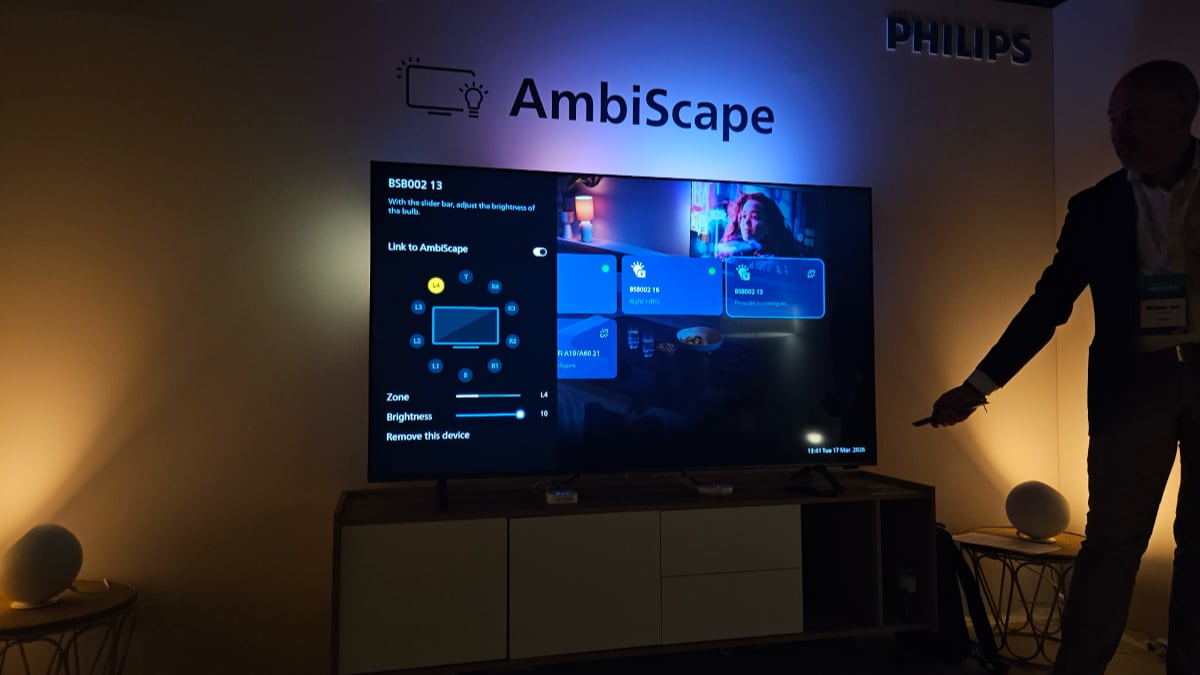
The AmbiScape settings menu. Photo: Eric Beeckmans / Flatpanels

How does it look? Impressive for sure, even though the demo only used a lamp to the left and right of the TV. We have no doubt that Ambiscape can immerse the room in the movie's atmosphere. The demo also showed that the TV recognizes all lamps that you can use. The interface showed five lamps in the demo room. Two of those were given a position (left and right), the remaining ones showed 'Press OK to configure'. Changing the configuration seemed to be very easy. We did notice that the latency is visible. TP Vision states it is less than 0,5 seconds, but we could clearly see the delay between the Ambilight LEDs changing and the Ambiscape lamps changing.
Ambiscape uses AI to detect sports and gaming content, automatically switching to the appropriate mode. It also recognises the entertainment flag" sent out by Netflix, Prime Video, Disney+ and Apple TV to switch into entertainment mode.
Also read: Philips abandons Google TV for Titan OS
Ambiscape will be available on all 2026 series from the 8-series and up, and also on select 2025 Titan OS models: OLED760, MLED950 (The Xtra), MLED910 and PUS9000 (The One). Note that it will not be supported on any Google TV models.