Samsung Display believes that LEDoS (or micro-LED) will replace OLEDoS (or micro-OLED) in future AR headsets. LG Display agrees but sees a bright future for OLEDoS in VR headsets.
Next year's launch of the Apple Vision Pro is expected to kickstart OLEDoS production (OLED on Silicon), meaning OLED displays produced on silicon wafers – like microchips – for very high pixel density, which is why they are also referred to as micro-OLED.
At the Deep Tech Forum hosted by Korean TheElec in July, LG Display said that OLEDoS is most likely to be applied in VR devices.
For future AR headsets however, LEDoS (LED on Silicon) is expected to replace OLEDoS, said Samsung Display's Head of Technology Strategy, Gong Min Kim. LG Display agreed when it comes to AR devices.
That is because micro-OLED has limitations in terms of brightness, form factor and lifespan, according to Samsung Display.
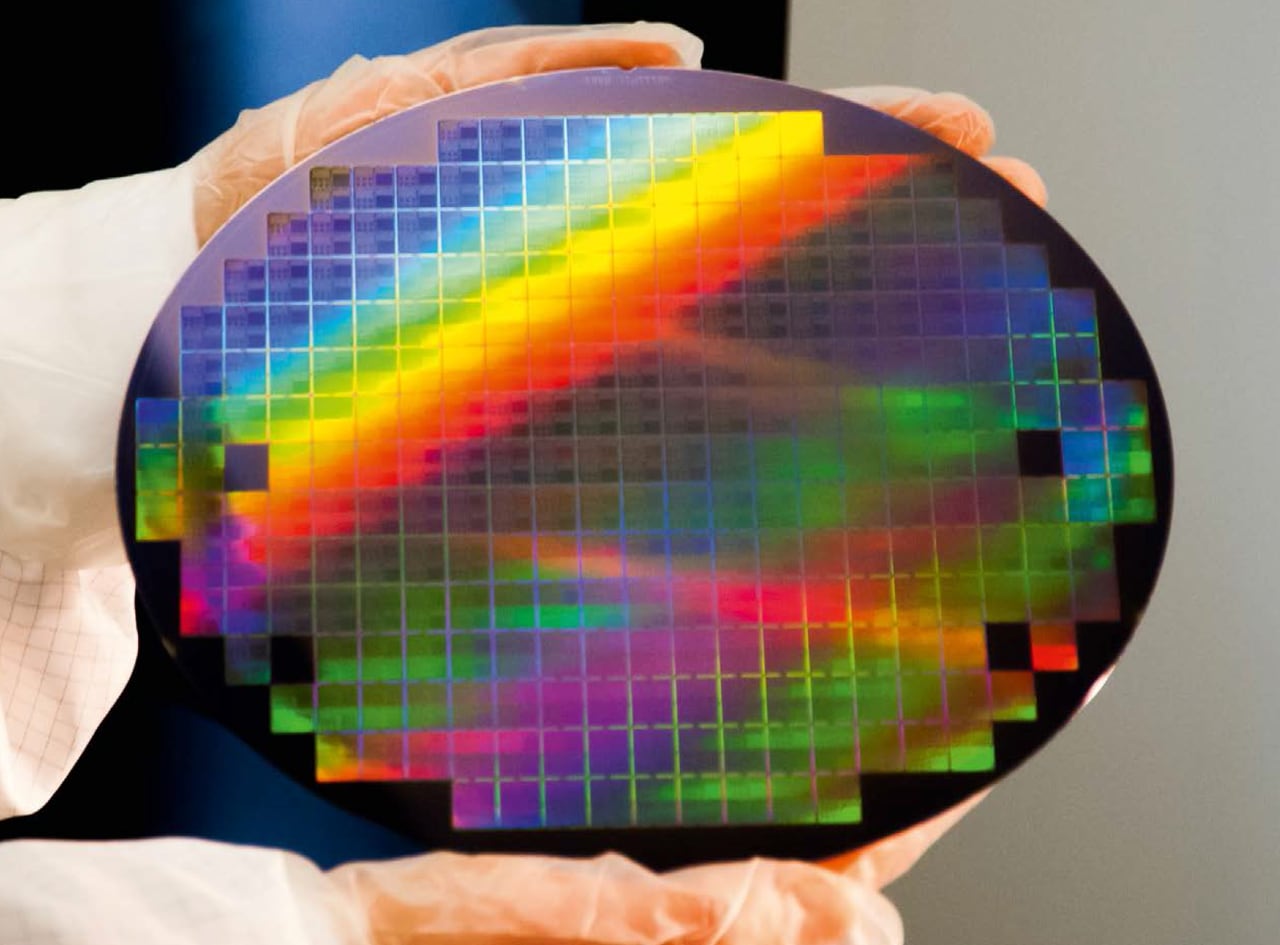
MicroLED on 300mm wafer. Photo: Aledia
True micro-LED
Samsung Display confirmed that it has started the development of LEDoS technology for AR devices, as it believes it can overcome the current issues in display quality and production.
The main challenge is to make the LEDs small enough, down to the 10-20 micrometer range, as current production methods significantly degrade performance and characteristics in this range.
- "These LEDs were truly MicroLED; those used in TVs used in LED chips should be classified as MiniLED," Kim said with reference to Samsung Electronic's "Micro LED TVs", according to The Elec.
Earlier headsets as well as current low-end and mid-range headsets from Meta use conventional LCD displays with an LED backlight. Sony's PlayStation VR 2 features OLED.
The path to 10,000 nits brightness
For micro-LED, Samsung Display said that it is currently conducting research into using RGB LED as well as blue LEDs with red and green quantum dots – much like QD-OLED but just with a blue LED instead of a blue OLED.
One key goal is to increase brightness to reach the milestone of 10,000 nits. LG Display said that it believes it will take at least five more years.
Very high brightness is required in micro-LED and micro-OLED used in headsets as a large portion of the display's brightness is lost due to the lens design and the display driving method.
- Source: The Elec (2)