US pay TV industry caught in 'doom cycle'
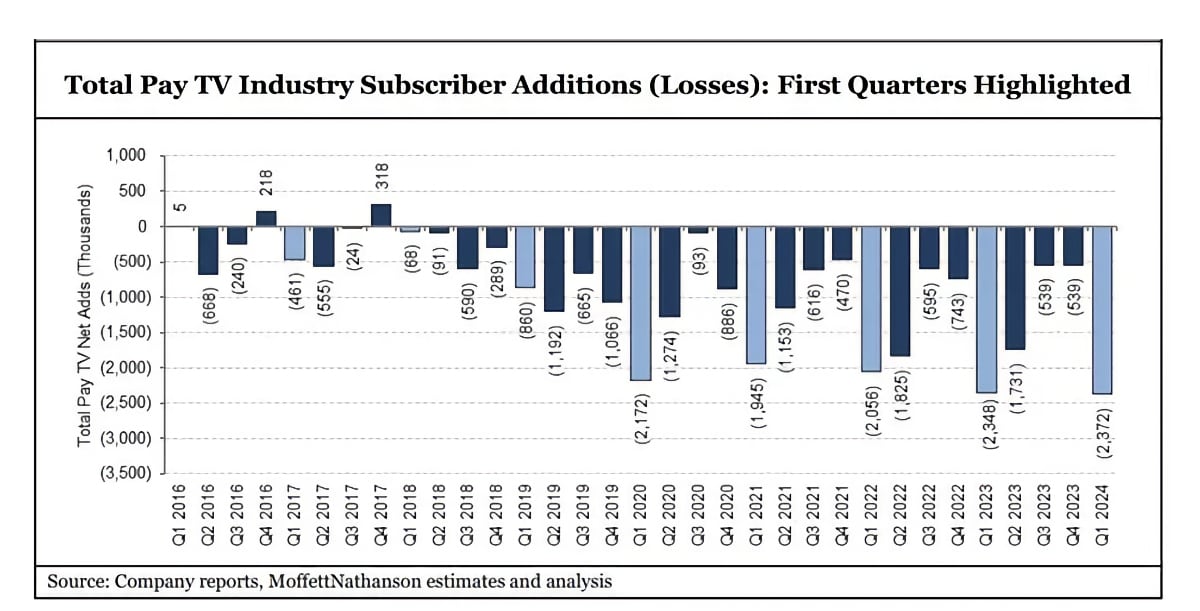
Q1 2024 was the worst quarter yet for the traditional pay TV industry in the US, which is in a "doom cycle," according to analysts at MoffettNathanson. Like physical media, the pay TV industry (cable, satellite, telcos) is being decimated due to the rise of streaming services. - "The first quarter was the worst ever for pay TV subscriber losses," wrote analyst Craig Moffett in MoffettNathanson's quarterly 'Cord Cutting Monitor' report. The traditional pay TV market in the US has fallen below 60 million total subscriber households, down from 100 million eight years ago.2.372 million US households abandoned pay TV in the first quarter of 2024 alone. Almost all pay TV operators lost customers in Q1 2024, including YouTube TV, Hulu's live TV service, Fubo, and Sling TV. Only DirectTV Stream gained 23,000 subscribers, according to the report. - "Even YouTube TV, the only real 'winner' thus far in linear video’s dismantling, posted its first-ever quarterly subscriber loss by our estimate, underscoring the growing seasonality of the increasingly sports-driven linear vMVPDs."
A doom cycle
MoffettNathanson has begun describing the developments in the US pay TV industry as a "doom cycle." The increasing costs of sports programming are pushing entertainment-focused viewers out of the pay TV ecosystem. This exodus leads to further price hikes, as there are now fewer households to share the burden of expensive sports rights. Simultaneously, entertainment companies are shifting blockbuster movies and shows to their streaming services like Disney+, Max and Paramount+. Advertisers are also redirecting their ad dollars to streaming platforms. This creates a vicious – or "doom" – cycle for pay TV. The US pay TV industry has been hit hard, and signs are emerging that other mature markets in Europe are on the cusp of similar issues. Streaming services, including Amazon, Disney, and Max, are taking an interest in not just marquee entertainment titles but increasingly also sports rights. - Source: MoffettNathanson's Cord Cutting Monitor via NextTV