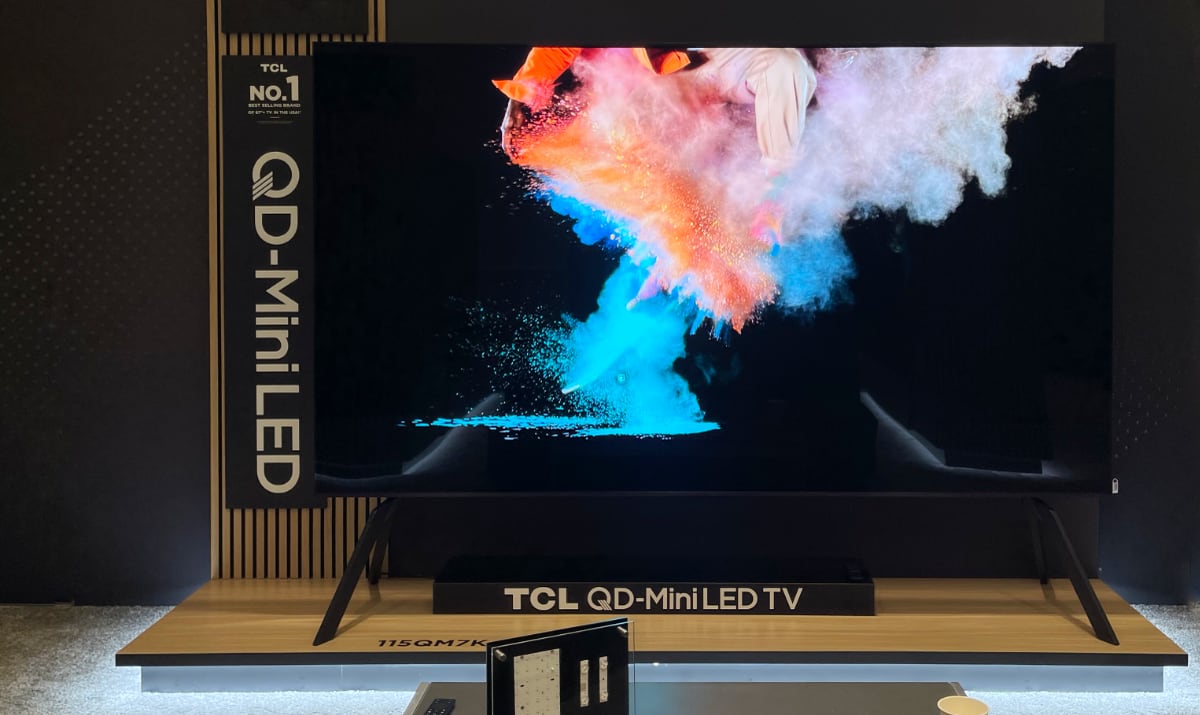
While the global TV market grew only 2% in the last quarter of 2024, sales of premium TVs increased by 51%, with TCL becoming the second-largest seller of premium TVs for the first time.
The latest market data comes from Counterpoint Research. It shows that Chinese powerhouses Hisense and TCL continue to capture market share from South Korean giants LG and Samsung, which have long led the TV market.
In terms of global TV shipments, LG was surpassed by TCL in 2022, and Hisense the following year. The data for Q4 2024 once again shows that Samsung remains the leader, with TCL in hot pursuit. LG was still fourth.

TCL overtakes LG in premium TVs
Hisense and TCL have also captured significant market share in premium TV sales in recent years. In Q4 2024, TCL overtook LG in premium TV sales for the first time.
- "Shipments of premium TV models, consisting of QD-MiniLED, QD-LCD, NanoCell, LCD 8K, QD-OLED, WOLED and MicroLED TVs, grew 51% YoY to reach a record high. For the full year 2024, the shipments were up 38% YoY," wrote Counterpoint Research.
- "As Chinese brands intensified their attacks on the premium market, which is expected to show high growth, Samsung's market share fell to 29%, down 12 percentage points YoY. On the other hand, TCL shipped more than twice as many premium TVs YoY, surpassing LG to take second place in the premium market."

What is a premium TV?
However, the definition of a premium TV remains vague and including marketing terms like "NanoCell" (basic LCD) and "QLED" / QD-LCD (without advanced miniLED backlights) may not paint an accurate picture.
For example, even mid-range TVs are now marketed as "QLED" or even "miniLED" TVs, making it increasingly a matter of reclassifying more LCD TVs under premium branding.
Still, sales of MiniLED LCD TVs are growing rapidly, increasing by more than 170% year-over-year, according to Counterpoint, which rounded off with a warning:
- "If the Trump administration’s ‘tariff bomb’ is implemented, Mexican-produced TVs will also be affected by the 25% tariff on Mexico. In particular, South Korean companies that account for a large portion of the North American premium TV market are expected to be affected more. Therefore, countermeasures are urgently needed to prepare for each situation," said Calvin Lee, researcher at Counterpoint Research.