After producing some truly breathtaking content, Apple will this year open its Immersive Video format to developers and content creators, meaning that users can look forward to much more content in the future.
Did you hear that Apple has introduced its own Spatial Audio format? It is mandatory when producing Apple Immersive Video content.
That is not the only major development for immersive content, as the company also made the following announcement at WWDC 25:
- "Now, for the ultimate immersive experience, there's Apple Immersive Video, which we're making available to developers and content creators for the first time this year," announced Dave Addey, Spatial Media Engineer at Apple.
Feel like you are there
If you have yet to experience any titles in the Apple Immersive Video format, you should head to your local Apple Store to try Apple Vision Pro. The content is breathtaking. Free demos are available in all countries where the Apple Vision Pro has launched.
Also read: First look at Apple Vision Pro: A video revolution
At WWDC 25, Apple used its Wild Life title as an example. Here, the viewer is transported to meet elephants at Kenya's Sheldrick Wildlife Trust.
- "This scene would be almost impossible to experience in reality, but with Apple Immersive Video, it feels like you're truly there," said Dave Addey.
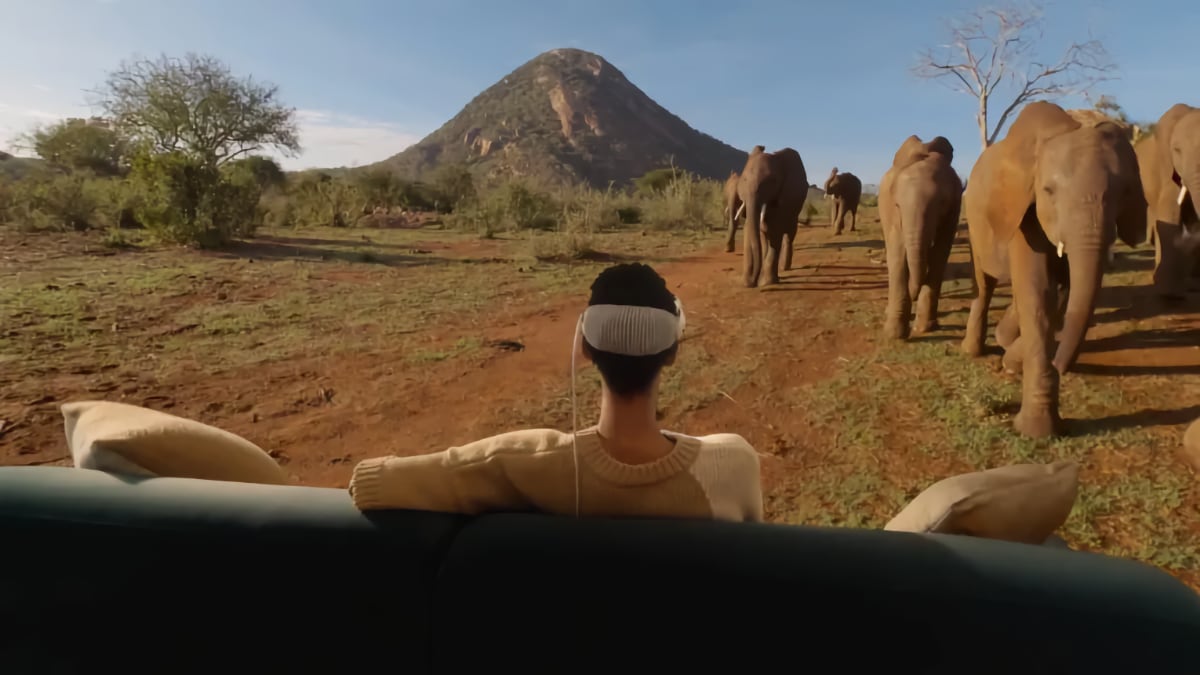
Apple's Wild Life transports you into the elephants' world. Photo: Apple
How to get started
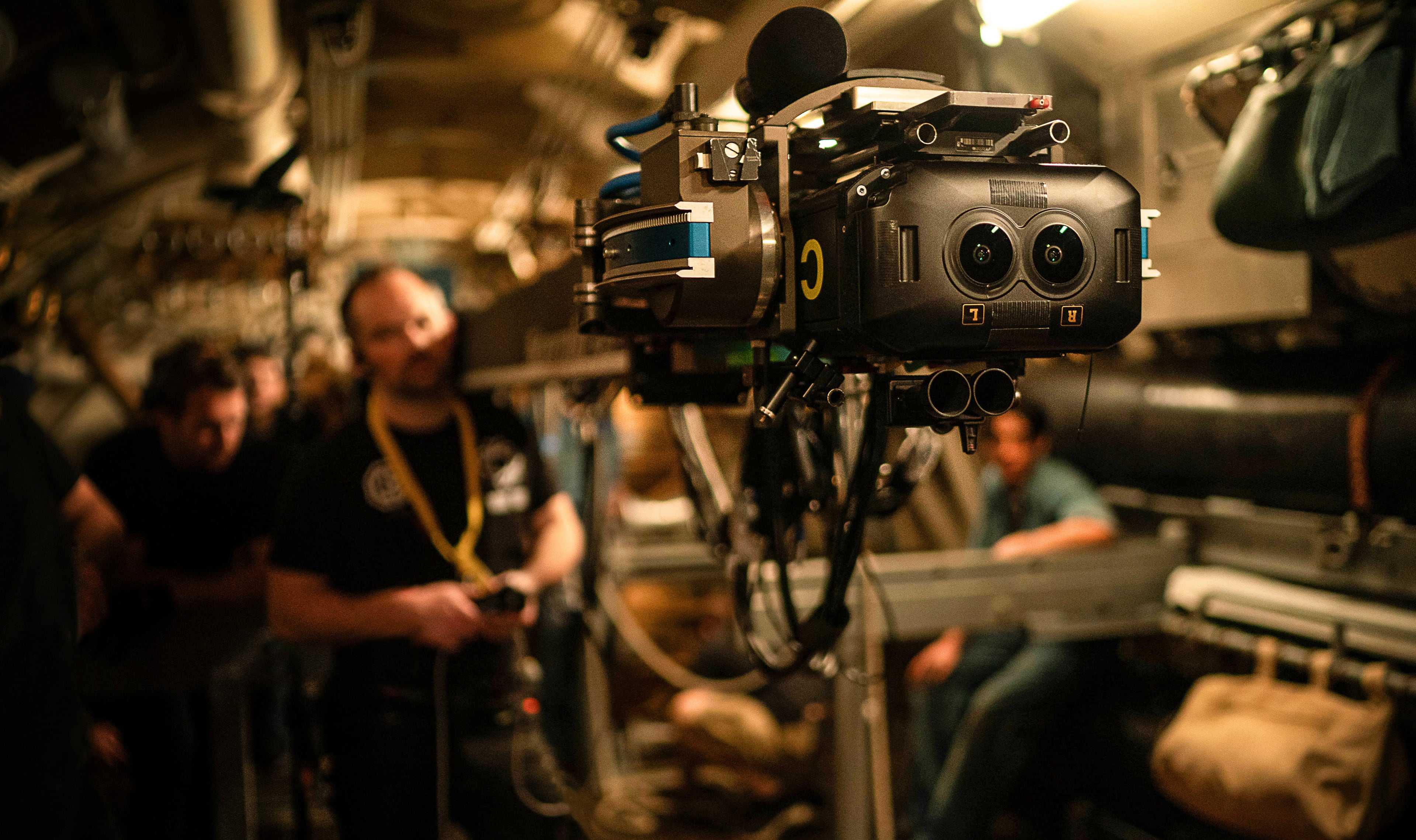
Content creators need the Blackmagic URSA Cine Immersive camera, which was announced last year as the first camera for Apple Immersive Video. It is priced at $30000 dollars.
The camera captures at 8160x7200 pixels per eye at up to 90fps. That is 10 billion pixels per second, if you are counting. These extreme video files can be edited on a Mac using DaVinci Resolve Studio.
These immersive videos can be viewed only on Apple Vision Pro, encoded in MV-HEVC with 4320x4320 pixels per eye, a 90fps frame rate, and 180-degree 3D. Apple has not announced plans to make the Apple Immersive Video format available on other VR headsets or platforms.
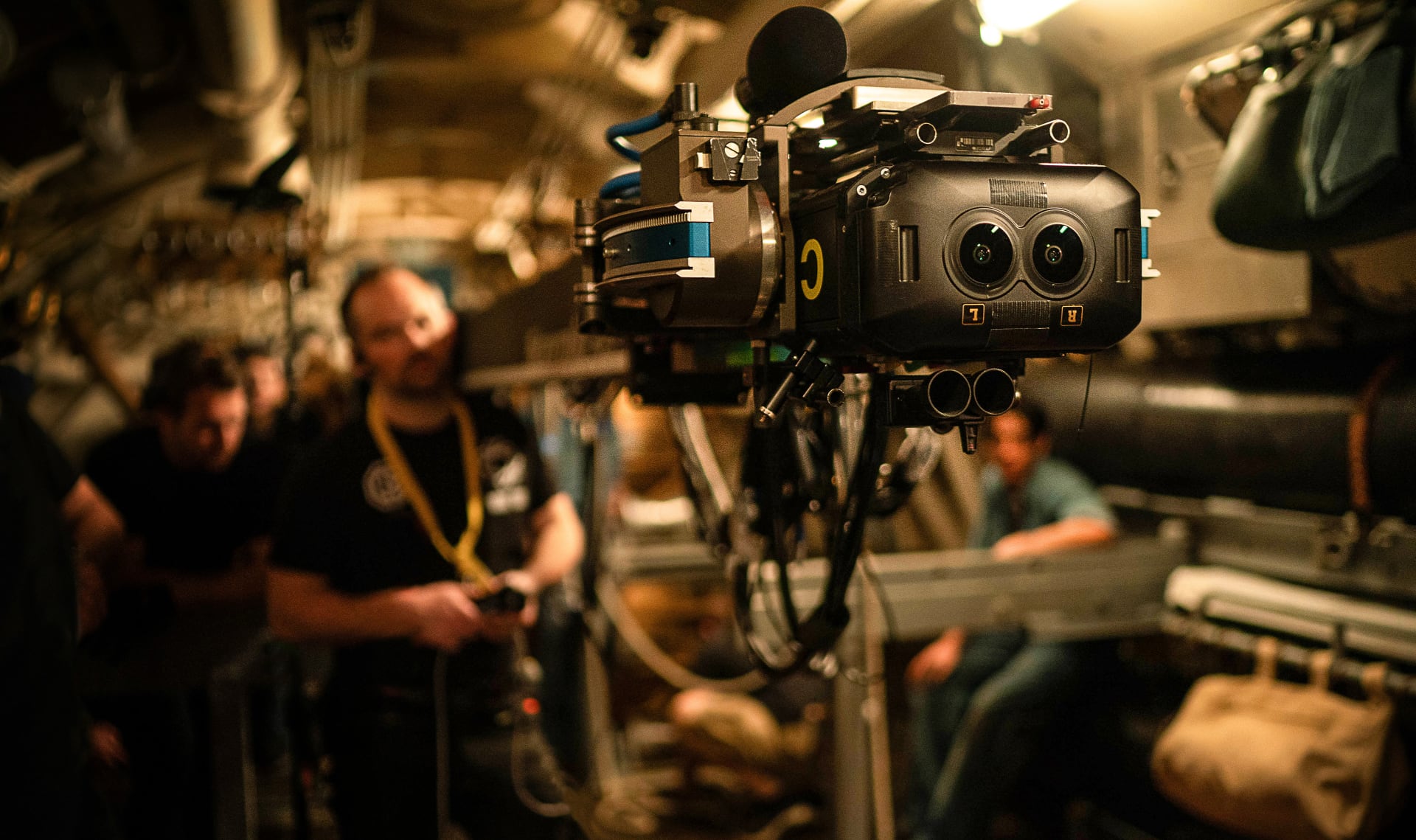
The Blackmagic URSA Cine Immersive camera is needed to produce Apple Immersive Video. Photo: Apple
Canal+ on board – what about Disney?
Who will create Apple Immersive Video titles? Not many details have emerged, other than Canal+ revealing plans to release the first third-party title; a documentary about Johann Zarco's 2025 French Grand Prix victory. Apple's close partner Disney seems like an obvious candidate, but that is just speculation.
The company also announced that spatial videos will be much more widely supported starting with visionOS 26 coming this fall, allowing users to experience them across apps.
- "In visionOS 2, spatial videos can be played with spatial styling in your own app with the QuickLook PreviewApplication API. In visionOS 26, we're bringing that same spatial styling to all of Apple's media playback frameworks. We're adding QLPreviewController support in QuickLook, plus support in AVKit, RealityKit, Safari, and WebKit, enabling you to incorporate spatial videos however you choose in your app, with support for HTTP Live Streaming, or HLS," said Dave Addey.
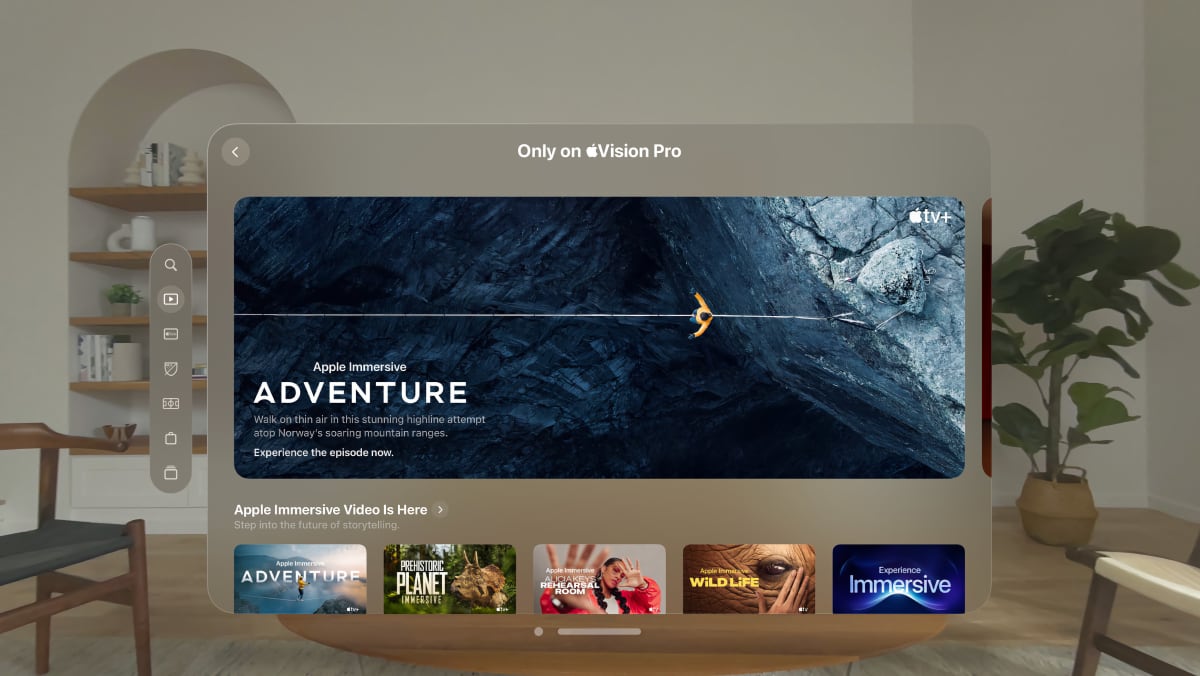
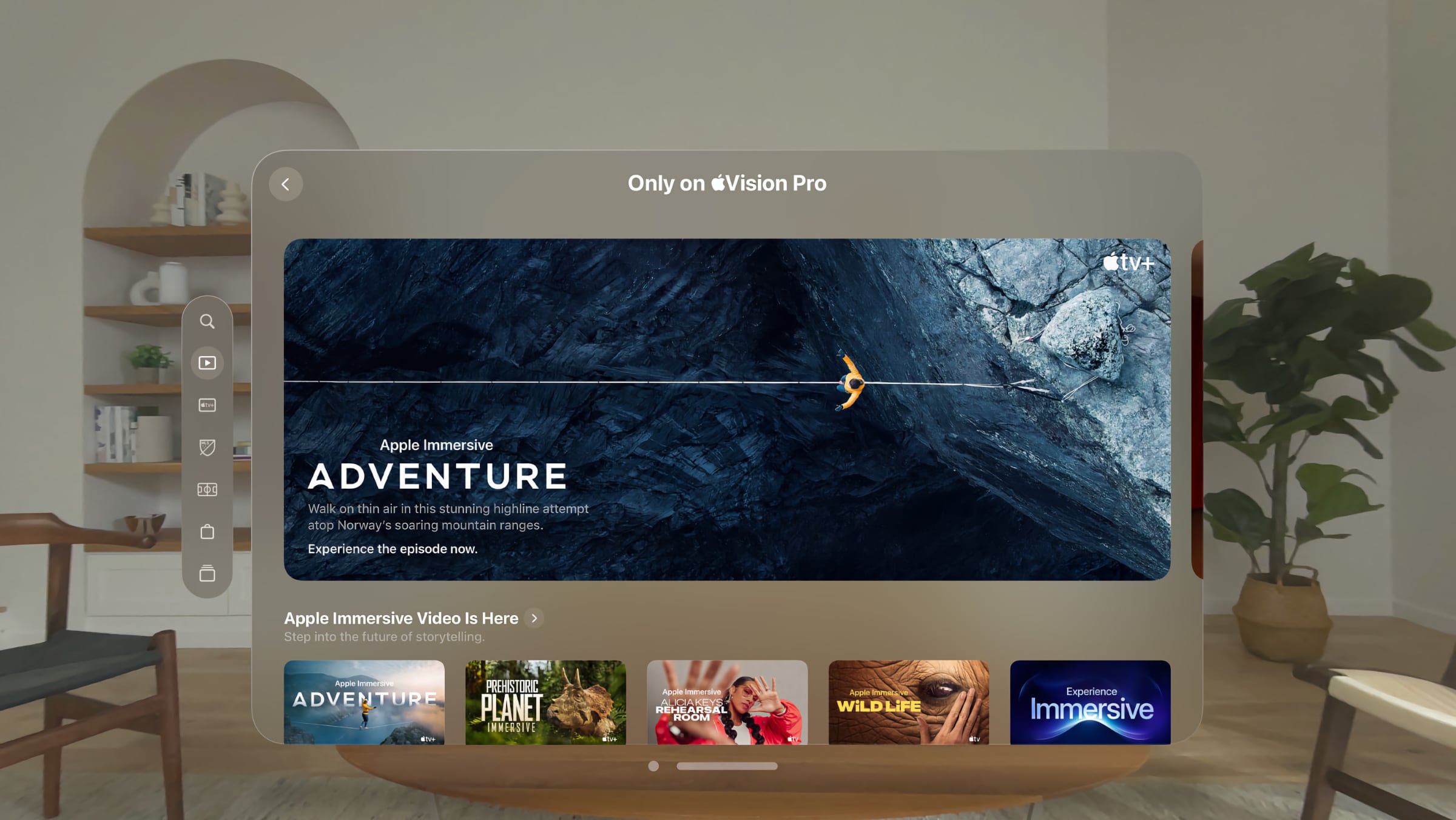
Some of the Apple Immersive Video titles available for Apple Vision Pro. Photo: Apple
IMAX films without black bars
Apple Vision Pro is the first and the only device that can present films in IMAX 1.43:1 aspect ratio outside the cinema. However, only teaser content has been made available so far.
Select films are being released on streaming in the not-as-tall but still expanded IMAX 1.78:1 format. These films sometimes shift from ultrawide 2.76:1 to 1.78:1 between scenes, which we have seen with Marvel or Christopher Nolan films, and most recently with Sinners.
With visionOS 26, Apple will support such dynamic aspect ratio shifts between scenes, fully removing black bars (they are already removed in movies without shifting aspect ratios).
- "A new in visionOS 26, 2D and 3D videos can specify a per-frame dynamic mask to change or animate their frame size and aspect ratio, to accentuate a story point, or to combine archival and modern-day footage in a single scene, without needing to show black bars for letterboxing or pillarboxing," explained Dave Addey. "These kinds of seamless transitions, with a framing that best suits each shot, are only possible on a spatial computer."
This is in addition to the other new video formats that will be supported starting with visionOS 26.