The smartwatch will be available either with an OLED or micro-LED display, the latter being brighter but also more expensive and with significantly shorter battery life.
After a troubled debut in TVs, rumors have long circulated that the industry has turned its attention to the smartwatch segment in an attempt to promote micro-LED display technology.
This is now a reality with the launch of the Garmin Fenix 8 Pro.
Is the upgrade worth it?
Garmin is the first company to include a micro-LED display in a smartwatch, but the question is whether it was worth the trouble.
Garmin is clearly not ready to let micro-LED completely replace OLED in their Fenix 8 Pro. The watch launches in two versions, with the OLED version available in both 47mm and 51mm sizes, starting at $1200. The version with a micro-LED display only comes in 51mm and costs $2000.
Both versions are also the first smartwatches with satellite connectivity that can be used to send messages and location data.
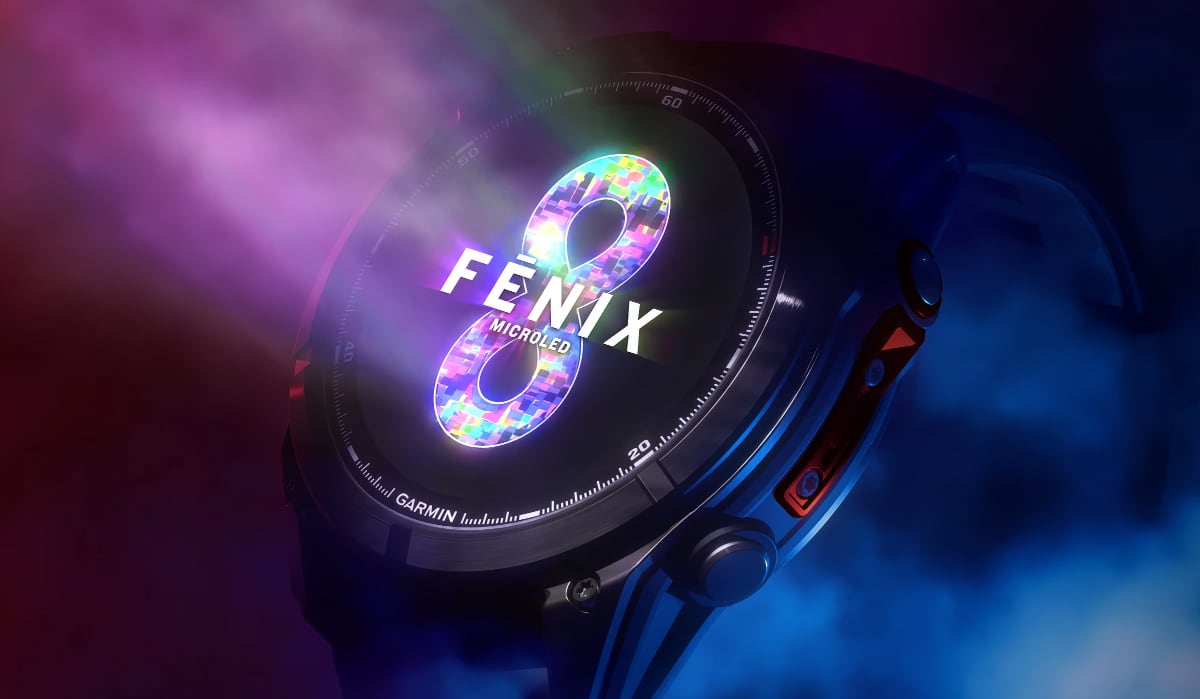
The Fenix 8 Pro edition with micro-LED costs extra. Photo: Garmin
Higher brightness, shorter battery life
The advantage of micro-LED is higher brightness for outdoor use, initially 4500 nits. Current OLED displays in watches go up to 3000 nits, but 4500 nits is possible with the latest OLED technology.
- "Offering remarkable brightness in exquisite detail, fēnix 8 Pro – MicroLED features over 400,000 individual LEDs delivering up to 4,500 nits, making it the brightest smartwatch ever. The result is a revolutionary display that produces rich colors and high pixel densities with wide viewing angles and superior readability – even in direct sunlight," said Garmin.
On the downside, battery life is markedly shorter. According to Garmin, the 51mm Fenix 8 Pro offers "up to 27 days" of battery life (15 days always-on) with OLED but "up to 10 days" (4 days always-on) with micro-LED – a reduction to about one-third.
Taiwanese AU Optronics is producing the micro-LED display.
Seven years after its introduction, micro-LED display technology still is not mature enough for TVs. Is the technology ready for watches and other devices?
Also read: First look: Samsung's 110" microLED TV