Valve's Steam Frame will compete with Meta Quest 3. The headset connects wirelessly to a PC or runs VR games on its own hardware. The panels, however, are HD standard.
The VR headset market has yet to take off, but in early 2026 Valve will try to give it an energy(drink) boost with Steam Frame.
The new headset can stream the thousands of VR games already available on Steam. With a Snapdragon 8 Gen 3 chip that is more than twice as fast as the Snapdragon XR2 Gen 2 in Meta Quest 3, it can also run certain games locally.
Also read: Apple Vision Pro vs. Samsung Galaxy XR vs. Meta Quest 3
Games from Steam
Like Valve's new Steam Machine game console, Steam Frame's link to the Steam store is a major strength, offering users an established ecosystem where developers do not first need to be persuaded to make games. Steam Machine can also stream games to Steam Frame.
Games can be streamed from a PC to Steam Frame via a dedicated USB adapter that transmits wirelessly over a 6GHz connection. A wired connection to a PC is not possible. Valve is using "foveated streaming", which focuses the streaming bandwidth to where the eye is looking using eye sensors in the headset.
At the same time, existing VR apps can be ported to SteamOS because the Snapdragon 8 Gen 3 is an ARM-based chip, just like the ARM chips in Meta Quest, Apple Vision Pro and Samsung Galaxy. This could help boost VR apps – non-gaming apps.
The headset is primarily intended for gaming. It is not designed as an "XR" headset that blends reality with VR. For example, the passthrough cameras are black and white.
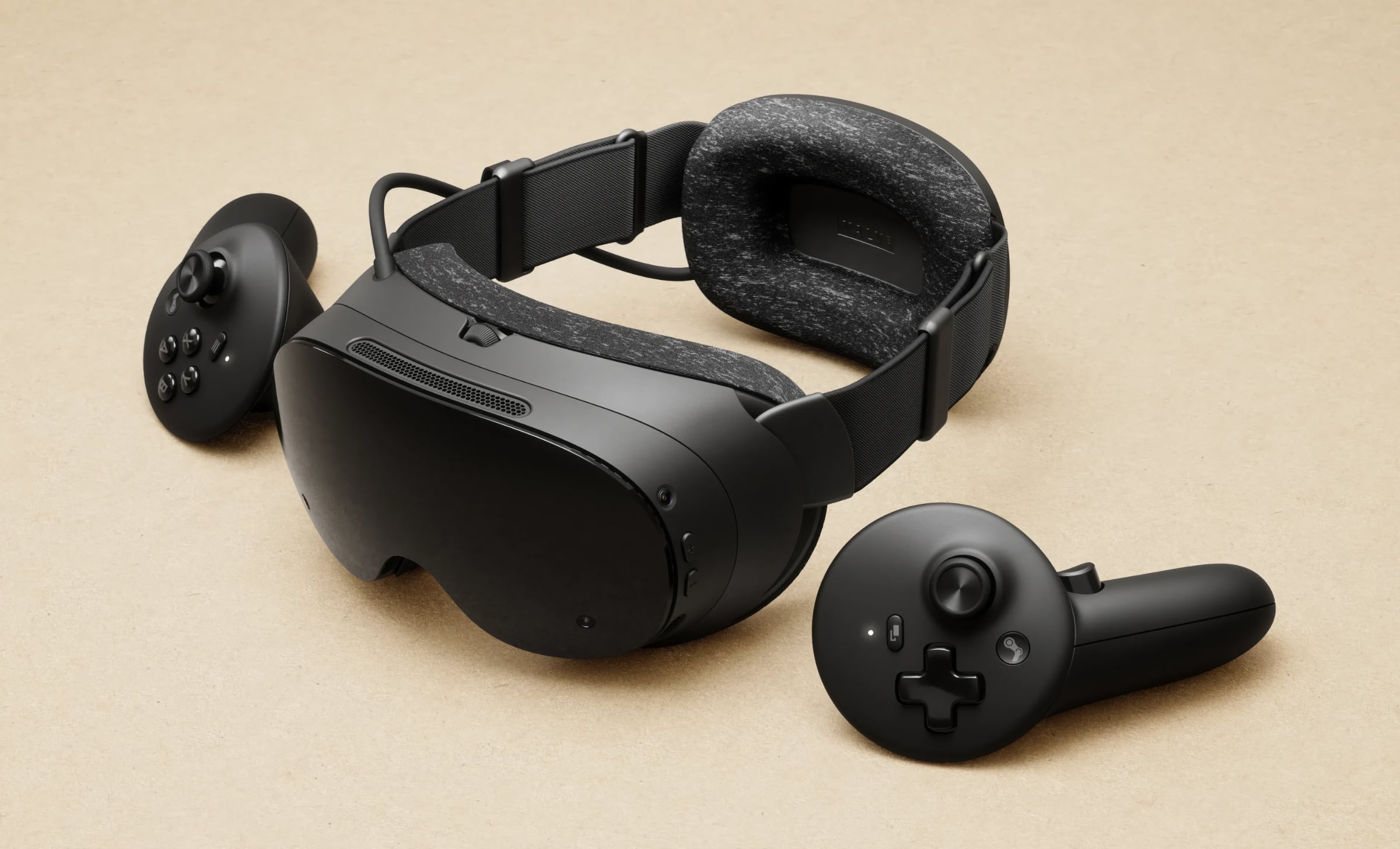
Games are controlled using Valve's new VR controllers, Steam Controllers, which come with the headset. Built-in speakers are integrated into the head strap.
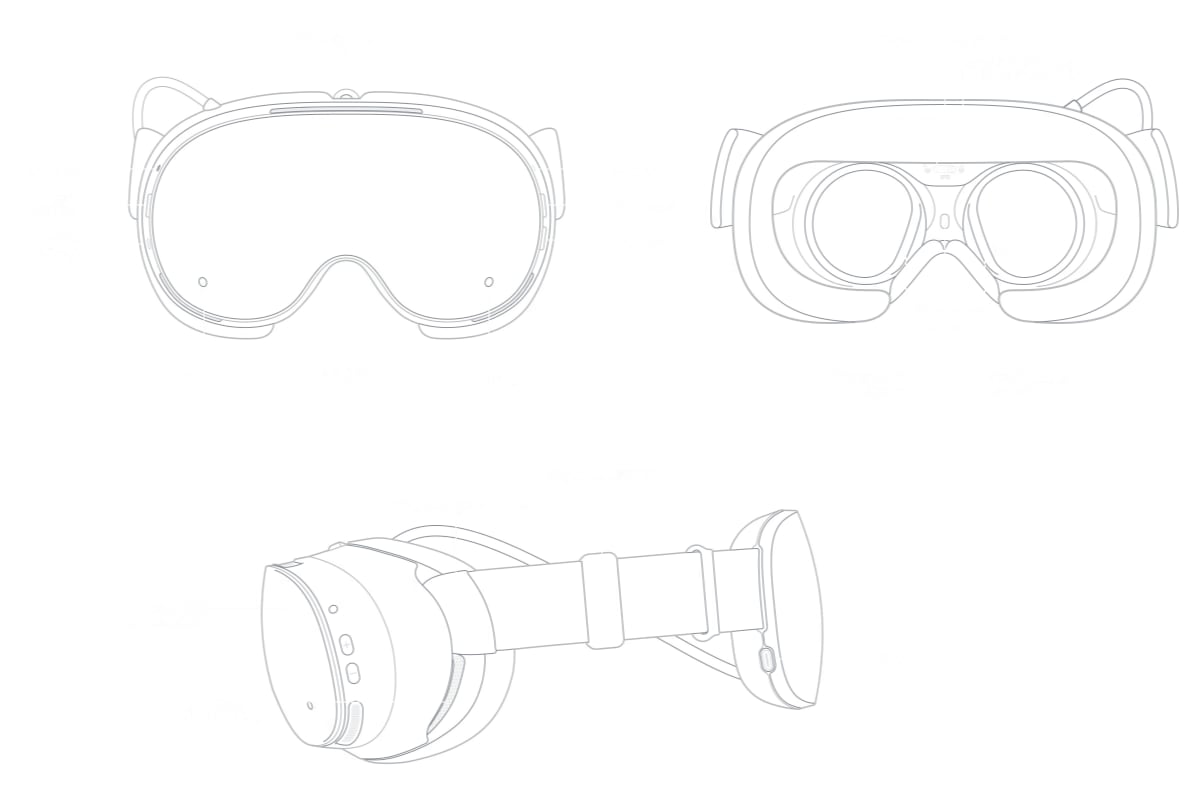
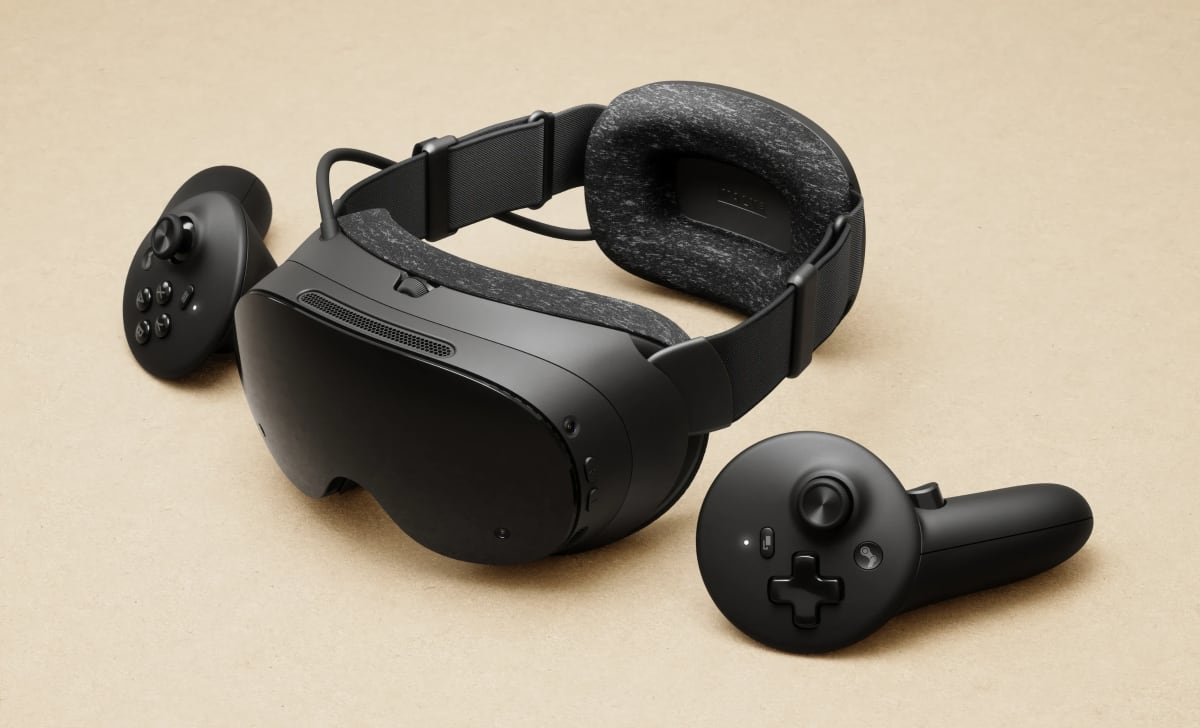 Steam Frame and the new VR controllers. Photo: Valve
Low-resolution LCD panels
Steam Frame will not move the VR market forward technologically but it could potentially expand it commercially.
Although the hardware surpasses Meta Quest 3 in several areas, the displays are at roughly the same low quality. They are HD standard in both resolution and color. Apple Vision Pro and Samsung Galaxy XR use micro-OLED panels with over 4K resolution and HDR, offering a much better viewing experience, especially in VR.
Also read: First look at Apple Vision Pro: A video revolution
Specifically, Steam Frame is equipped with two LCD panels with 2160x2160 pixels per eye. There is no LED zone dimming, so contrast will be very low, which significantly reduces immersion. According to Valve, the LCD panels can operate between 72 and 144Hz, although 144Hz is described as "experimental".
The headset weighs 440 grams including the strap. Battery life was not disclosed.
Steam Frame is not a direct replacement for Valve Index, launched six years ago as Valve's first step into VR gaming. Nevertheless, the Index is now being phased out. Index required external tracking stations, but everything is now built into Steam Frame.
Valve says Steam Frame will launch in early 2026, but pricing has not been announced. It will, however, be cheaper than Index, which cost 1000 dollars.
Valve Steam Frame – specifications
 General
Processor
4 nm Snapdragon 8 Gen 3
Architecture: ARM64
RAM
16GB Unified LPDDR5X RAM
Storage
256GB / 1TB UFS storage options
microSD card slot for expanded storage
Power
Rechargeable 21.6 Wh Li-ion battery
One USB-C 2.0 port in the rear, for charging and data
Charge with USB-C, 45W
Modular Headstrap
Headstrap includes integrated dual audio drivers and and rechargeable battery on rear.
Headstrap weight: 245g
Core module can be separated from headstrap, for other headstrap solutions.
Display and Optics
Display
2160 x 2160 LCD (per eye)
72-144Hz refresh rate (144Hz experimental)
Optics
Custom pancake lenses
Glass and non-glass optical elements
Large FOV (up to 110 degrees)
IPD target range
60mm - 70mm
Eye glasses max width
140mm
Cameras and Tracking
Tracking
Inside-out camera based tracking
Cameras
4x outward facing monochrome cameras for controller and headset tracking
2x interior cameras for eye tracking and foveated streaming
Passthrough
Monochrome passthrough via outward facing cameras
Low-light support
IR illuminators for tracking and passthrough in dark environments
Expansion
User accessible front expansion port
Dual high speed camera interface (8 lanes @ 2.5Gbps MIPI) / PCIe Gen 4 interface (1-lane)
Connectivity
Wi-Fi
Wi-Fi 7, 2x2
Dual radios enable concurrent 5Ghz Wi-Fi and 6Ghz VR streaming
Wireless Adapter
Wireless adapter included in the box
Wi-Fi 6E (6GHz)
Provides direct, low-latency link between headset and PC
Bluetooth
Bluetooth 5.3
Audio
Speakers
Dual speaker drivers per ear, integrated into headstrap
Microphone
Dual microphone array
Size and Weight
Size
175mm x 95mm x 110mm (core module + facial interface)
Weight
440 g - core module + headstrap
185 g - core module
Software
Operating System
SteamOS 3 (Arch-based)
Desktop
KDE Plasma
General
Processor
4 nm Snapdragon 8 Gen 3
Architecture: ARM64
RAM
16GB Unified LPDDR5X RAM
Storage
256GB / 1TB UFS storage options
microSD card slot for expanded storage
Power
Rechargeable 21.6 Wh Li-ion battery
One USB-C 2.0 port in the rear, for charging and data
Charge with USB-C, 45W
Modular Headstrap
Headstrap includes integrated dual audio drivers and and rechargeable battery on rear.
Headstrap weight: 245g
Core module can be separated from headstrap, for other headstrap solutions.
Display and Optics
Display
2160 x 2160 LCD (per eye)
72-144Hz refresh rate (144Hz experimental)
Optics
Custom pancake lenses
Glass and non-glass optical elements
Large FOV (up to 110 degrees)
IPD target range
60mm - 70mm
Eye glasses max width
140mm
Cameras and Tracking
Tracking
Inside-out camera based tracking
Cameras
4x outward facing monochrome cameras for controller and headset tracking
2x interior cameras for eye tracking and foveated streaming
Passthrough
Monochrome passthrough via outward facing cameras
Low-light support
IR illuminators for tracking and passthrough in dark environments
Expansion
User accessible front expansion port
Dual high speed camera interface (8 lanes @ 2.5Gbps MIPI) / PCIe Gen 4 interface (1-lane)
Connectivity
Wi-Fi
Wi-Fi 7, 2x2
Dual radios enable concurrent 5Ghz Wi-Fi and 6Ghz VR streaming
Wireless Adapter
Wireless adapter included in the box
Wi-Fi 6E (6GHz)
Provides direct, low-latency link between headset and PC
Bluetooth
Bluetooth 5.3
Audio
Speakers
Dual speaker drivers per ear, integrated into headstrap
Microphone
Dual microphone array
Size and Weight
Size
175mm x 95mm x 110mm (core module + facial interface)
Weight
440 g - core module + headstrap
185 g - core module
Software
Operating System
SteamOS 3 (Arch-based)
Desktop
KDE Plasma |
FlatpanelsHD