The transition has been a long time coming, but starting in 2026 OLED will begin pushing LCD panels out of tablets, according to Omdia. Much like what has already happened in phones.
Global tablet panel shipments are expected to reach 297.4 million units in 2025, an 8% increase over 2024. In 2026, Omdia predicts the number will rise to 301.5 million. However, roughly half of these panels will go into devices that are not traditional tablets.
The vast majority are still traditional LCD panels that cannot reproduce modern video standards such as HDR or wide color gamuts (DCI-P3 or Rec.2020). As a result, the video-quality ecosystem is held back. With OLED, consumers get a significant boost in picture quality on handheld devices.
OLED makes its move
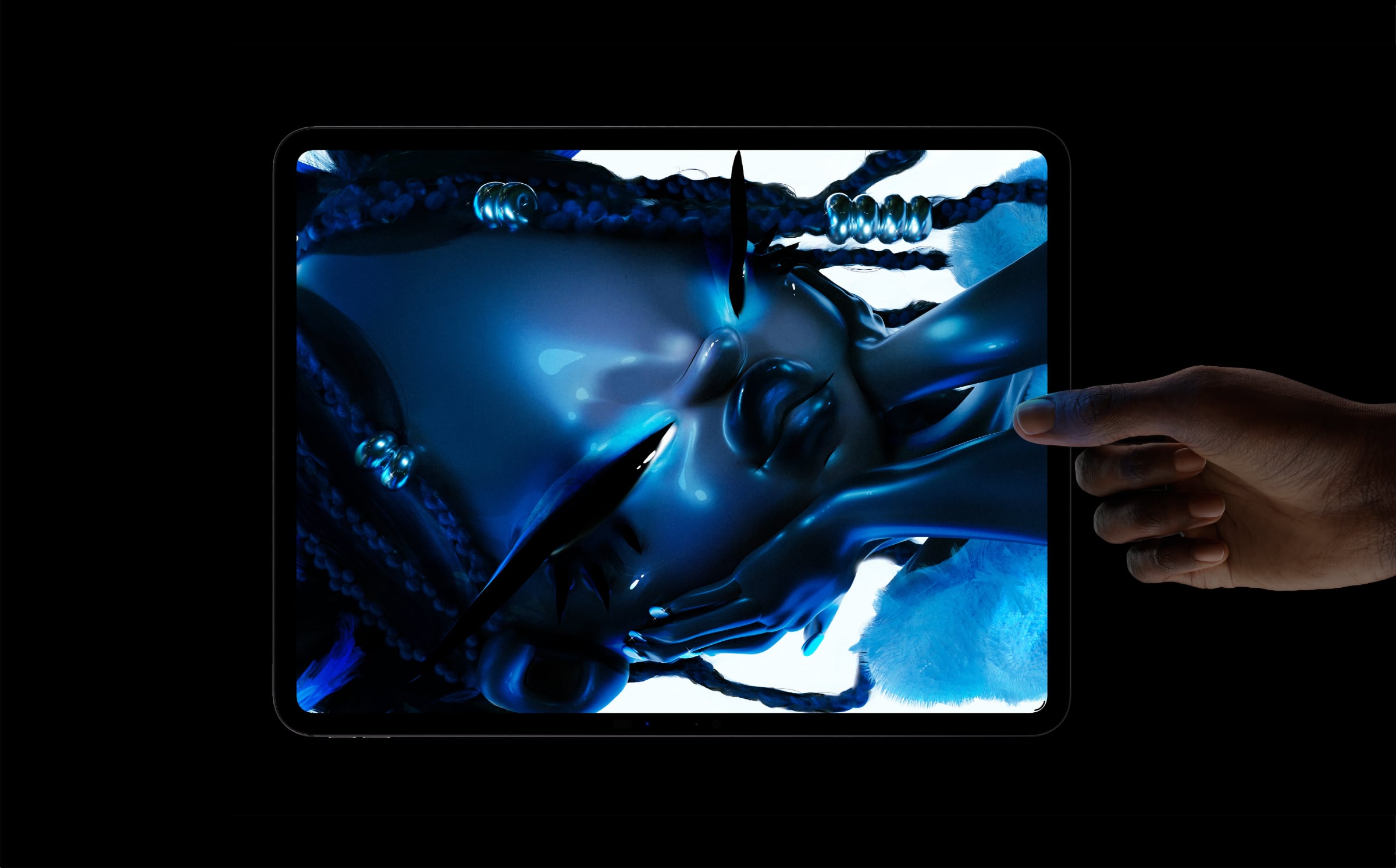
Today, OLED panels are used in Apple iPad Pro and many Samsung tablets. Omdia expects Apple to shift from LCD to OLED in cheaper iPad models in 2026 and 2027. Huawei is also expected to adopt OLED in more tablets next year.
- "OLED tablet panel shipments are finally becoming the main engine of tablet panel growth," said Linda Lin, Senior Principal Analyst at Omdia. "In 2026 we expect OLED shipments to grow 39% year-on-year to 15 million units, while LCD remains at roughly the same shipment level as 2025, so most of the incremental demand comes from OLED."
Since 2024, the majority of smartphones sold have come with OLED rather than LCD panels.
 iPad Pro M4 is the first iPad with OLED, but more are on the way, according to Omdia. Photo: Apple
New factories
The shift will be enabled by several new factories currently under construction. Chinese panel makers TCL CSOT, BOE and Visionox, along with South Korea's Samsung Display, are all building new 8.6G lines capable of producing millions of OLED panels annually.
Also read: TCL breaks ground on massive new 8.6G OLED factory
These factories are aimed at OLED for smartphones, tablets, laptops and monitors.
In the coming years, OLED is also expected to expand into many laptops and more PC monitors.
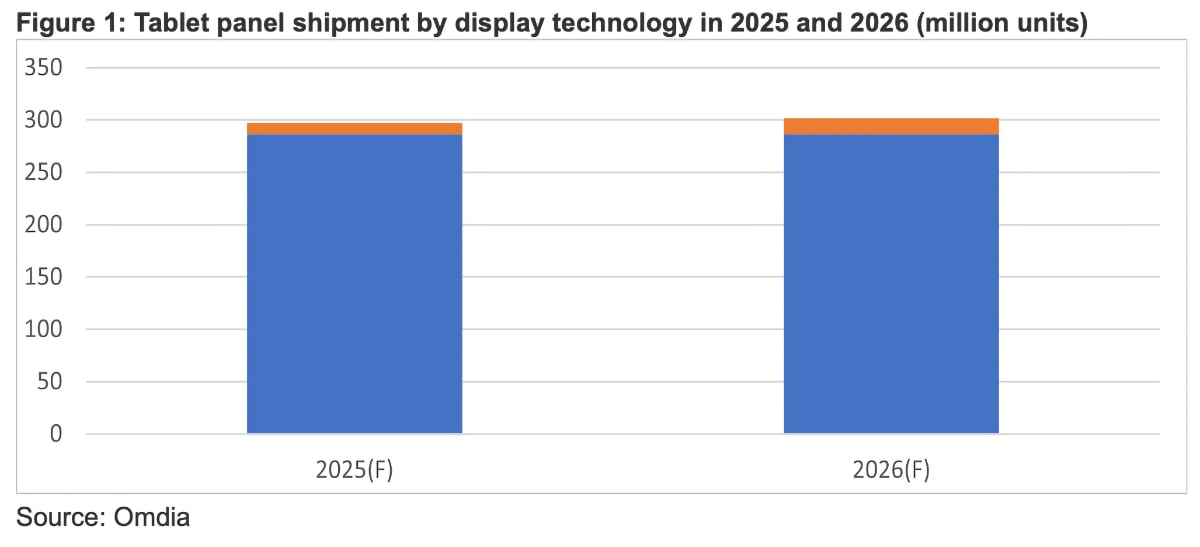 Blue: LCD. Orange: OLED