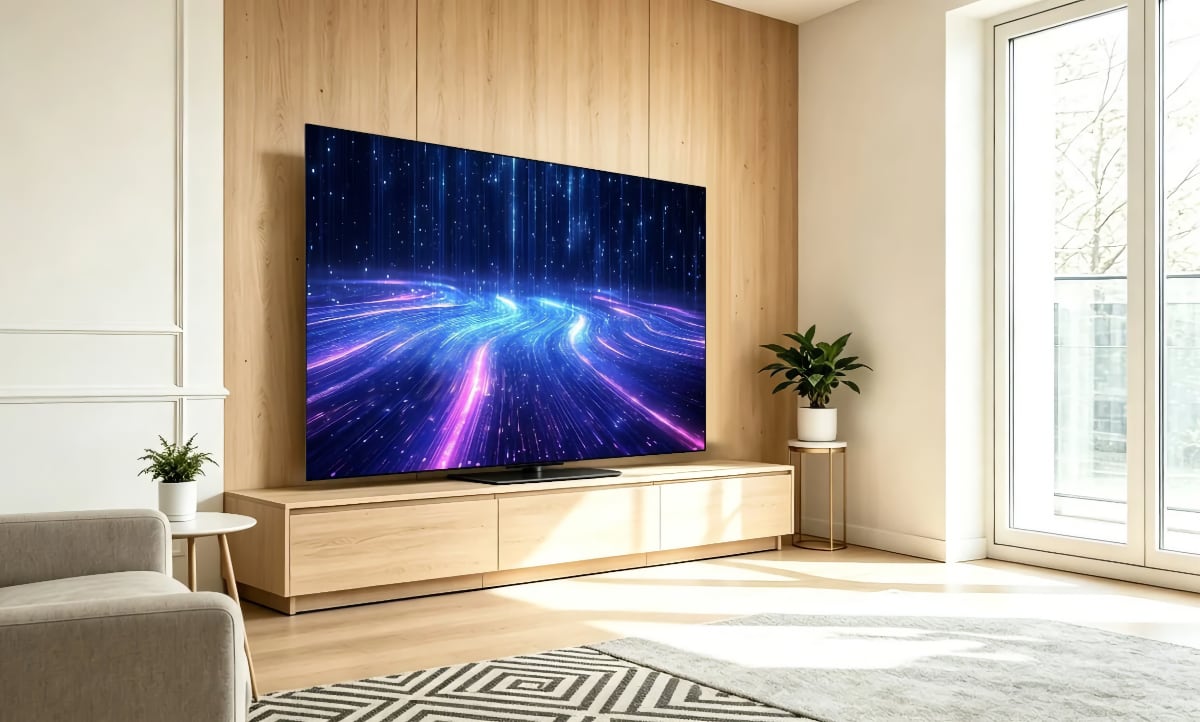
In 2026, Tandem WOLED is getting even brighter and will be expanded to more TV and monitor panels, while OLED SE is a new line of more affordable TV panels. Here is our Q&A with LG Display.
RGB LED, also known as 'micro RGB' or 'RGB miniLED', is making its big debut this week at CES 2026 in Las Vegas. We have already seen LCD TVs with RGB LED from Hisense, Samsung and even LG Electronics, with additional models expected from Sony soon.
Is OLED about to be dethroned as the best display technology?
OLED versus RGB LED
FlatpanelsHD's own answer would be multifaceted – more on that after testing – but RGB LED certainly forces OLED TV makers to step up and expand, as RGB LED looks poised to take the lead in another area, color saturation, in addition to high brightness.
On the other hand – and as opposed to true micro-LED (without an LCD panel) – it must be emphasized that 'micro RGB' or 'RGB miniLED' models are still LCD TVs. The most crucial and defining display component remains the LCD panel, which has at least 100 times slower response time than OLED, dramatically lower contrast and limited viewing angles, to name some of the fundamental issues.
Contrast can be increased through zone dimming, but notably absent from this week's RGB LED announcements is the actual number of dimming zones. This is because there are now three individual LEDs – red, green and blue – that are controlled individually within each dimming zone. This requires a high level of control and processing, so the number of dimming zones may actually decrease in 2026 models compared to 2025's miniLED LCD TVs.
This dilemma could prove detrimental, as a dramatically increased number of dimming zones compared to today's LCD models is still required to match OLED's picture quality and HDR; specifically to increase contrast on LCD TVs, to produce good blacks, to reduce halos and to improve color accuracy. RGB LED does not fundamentally address any of these key challenges. Remember that OLED already performs 'zone dimming' at the pixel-level for both luminance and color, effectively 8.3 million 'zones' (for a 4K OLED) compared to typically only a few thousand zones in high-end miniLED or RGB LED LCD models.
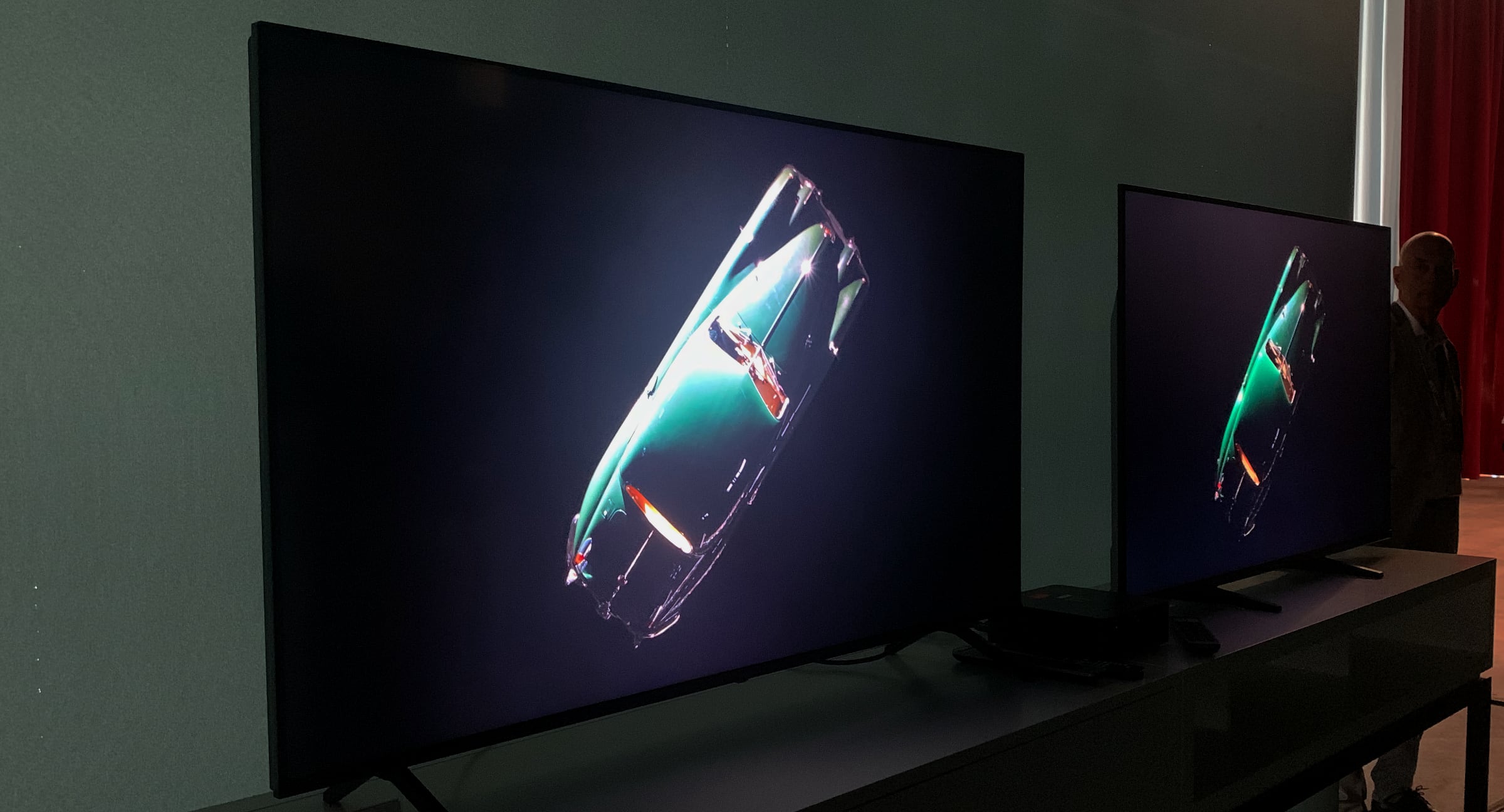
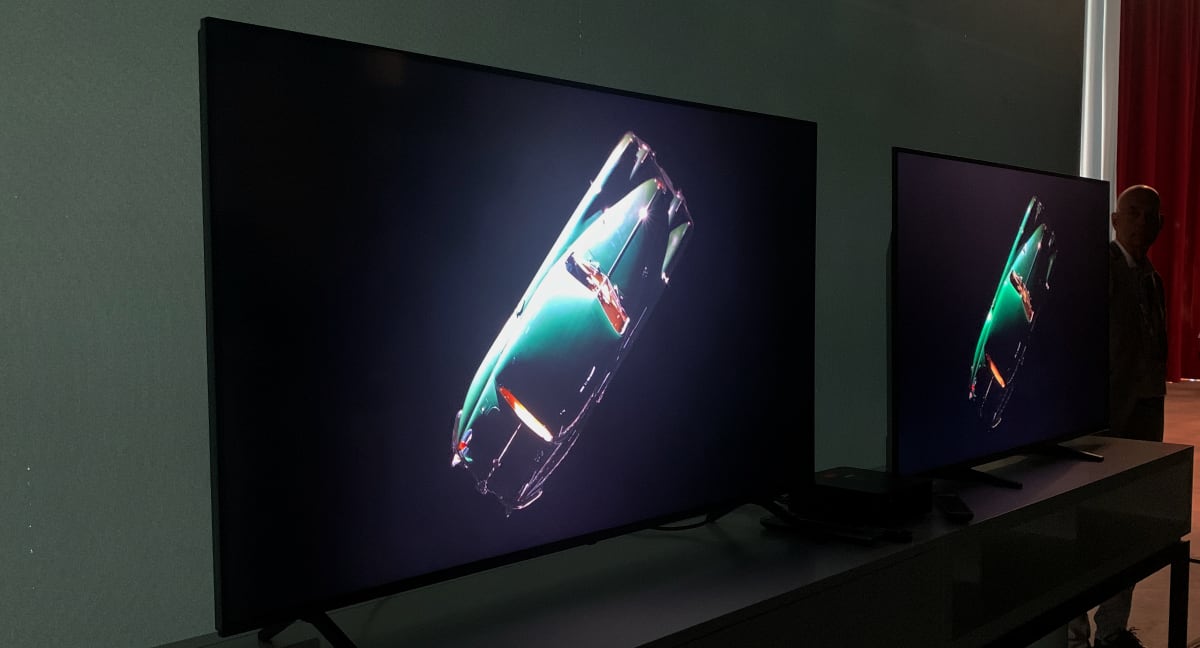 LCD TVs, with or without RGB LED, suffer from contrast and halo issues due to the low number of dimming zones. Photo: FlatpanelsHD
Better OLED TV panels
Still, despite significant advances in OLED, especially over the last few years, makers of OLED TV panels such as LG Display cannot rest on their laurels, as RGB LED is expanding in 2026 to LCD TVs ranging from 55 to 130 inches across multiple brands.
So we asked LG Display how it plans to respond to RGB LED?
It said that notable developments in 2026 include the improved Tandem WOLED panel with 'Primary RGB Tandem 2.0'. This new panel is said to deliver up to 4500 nits and reduced reflectance.
Another development, which is specific to OLED monitors for now, is RGB-stripe pixels to improve text clarity as well as color saturation and accuracy. LG Display will continue to use RGBW pixels in all OLED TV panels in 2026. Most OLED monitor panels will also retain RGBW in 2026. Both RGBW and RGB-stripe TV and monitor panels will branded as 'Tandem WOLED' due to the nature of white OLED – the W is not related to the extra white subpixel in RGBW.
Also read: Q&A with TrueCut on motion grading, competition, home releases and the future
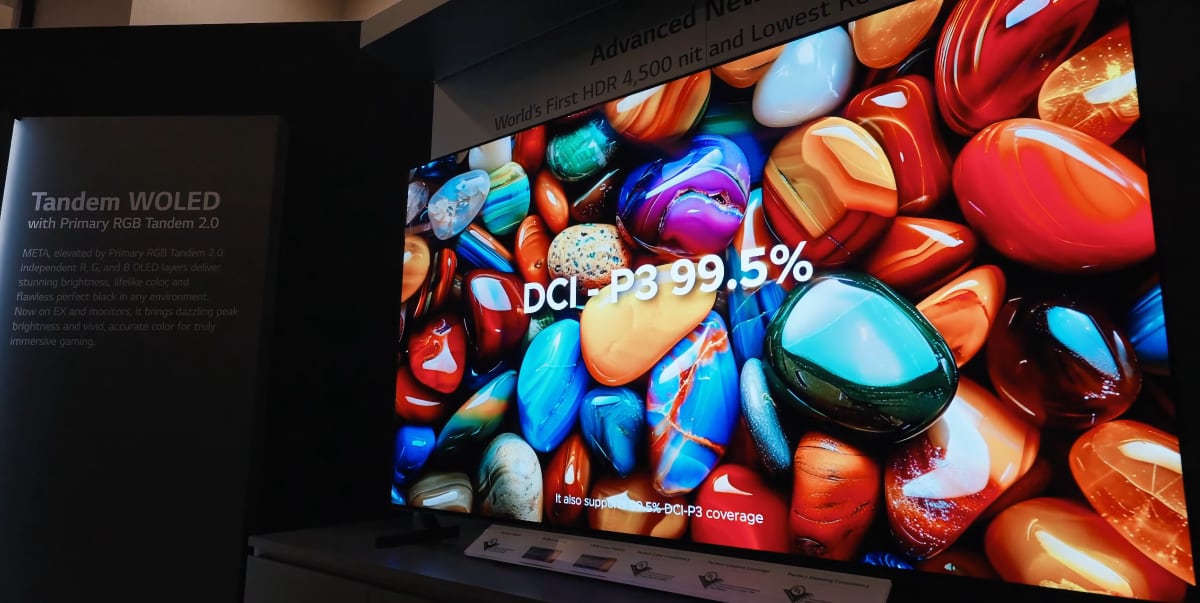 This year's new 83-inch Tandem WOLED panel
Cheaper OLED TV panels
Perhaps more interesting are LG Display's efforts in 2026 to bring new OLED technology further into the mainstream by expanding 'Primary RGB Tandem 2.0' to its OLED EX panels and all gaming monitor panels.
Also read: LG unveils 2026 OLED TVs: Both G6 and C6 get upgraded Tandem panels
Another significant move, revealed exclusively to FlatpanelsHD, is the introduction of more affordable OLED SE (Special Edition) panels in 83, 77, 65, 55 and 48 inches, which will be made available to TV makers sometime in 2026. We hope this marks the beginning of mid-range OLED TVs.
Meanwhile, 8K OLED is on ice for the time being.
Q&A with LG Display
With CES 2026 about to kick into high gear and many of these new technologies on display this week, LG Display provided us with these answers to our list of questions sent late last year:
FlatpanelsHD: How does LG Display plan to respond to the rise of RGB LED as the latest evolution of LCD technology?
LG Display: Firstly, LG Display is not focusing on short-term, transitional technology competition, but rather on perfecting OLED. Our latest OLED panels powered by Primary RGB Tandem 2.0 which will be unveiled at CES 2026 – including TV panels featuring even higher brightness and lower reflectance – represent the current pinnacle of many years of development and accumulated expertise. Through OLED's differentiated value proposition, LG Display will continue to strengthen its technology leadership in high-end markets such as premium TVs and gaming monitors.
FlatpanelsHD: What do you see as OLED's biggest advantages over RGB LED LCD?
LG Display: OLED's biggest advantages stem from the fact that it is a self-emissive display technology. This enables many of the features that you and other writers have praised, such as true-to-life colors and perfect black. We are very grateful for this recognition, and proud of leading OLED to new heights of picture quality.
FlatpanelsHD: What is the roadmap for scaling Primary RGB Tandem technology to more panel sizes and products?
LG Display: At CES 2026, LG Display will unveil Primary RGB Tandem 2.0, which represents the next evolution of its OLED technology. It maximizes luminous efficiency by combining a more sophisticated pixel structure design with advanced algorithms.
A key highlight is the expansion of its application range. While this innovation was initially applied to the top-tier META lineup, LG Display plans to extend it to the EX lineup for TVs in 2026, as well as fully adopting it across its Gaming OLED monitor lineup, a key new growth area. Through this expansion, customers will be able to experience a clear performance gap across a much broader range of products.
FlatpanelsHD: OLED outcompetes LCD TVs in most areas but ultra-large LCD TVs (+80 inches) remain cheaper than OLED. What is being done to make ultra-large OLED TVs more cost-competitive?
LG Display: It is true that a price gap still exists in the ultra-large TV segment above 80 inches. However, the market is undergoing change. LG Display continues to enhance OLED's cost competitiveness through a wide range of cost-reduction efforts, including process innovation and yield improvement.
At the same time, LCD technologies are facing rising manufacturing costs with the adoption of more expensive components for the latest LCD panels. So, we expect the price gap between the technologies to continue narrowing.
FlatpanelsHD: Regarding cost parity with LCD TVs, are there plans to introduce more affordable OLED panels aimed at mid-range TV segments?
LG Display: LG Display's Special Edition (SE) lineup will also be unveiled at CES 2026. It is positioned as an even more affordable product line designed to accelerate the mass adoption of OLED. The SE lineup maintains OLED's inherent picture quality strengths while applying balanced specifications, with a focus on reducing power consumption and supporting environmental sustainability. In terms of performance, SE retains OLED's pixel-level dimming and core advantages, including superior HDR picture quality, perfect black levels, and outstanding response times, enabling clearly superior image quality compared to LCD TVs in a similar price range.
The SE lineup, available in a wide range of sizes – 83, 77, 65, 55, and 48 inches – is scheduled to be launched by major customers in 2026 and will soon be available to consumers.
FlatpanelsHD: Is LG Display still actively developing 8K OLED TV panels?
LG Display: LG Display reached the pinnacle of resolution in 2019 by launching the world's first 88-inch 8K OLED TV and has already secured sufficient technological capabilities in this area. However, we are taking a comprehensive view of current display market trends and the trends within the 8K content ecosystem. As our technical readiness is already complete, LG Display is fully prepared to respond immediately whenever the market and customers determine that the timing is right.
FlatpanelsHD: What are the key factors in eye health and comfort when comparing OLED to RGB LED LCD?
LG Display: This is due to the difference in the way light is emitted. While all LCDs continuously emit strong light from a backlight unit mounted behind the panel, OLED displays emit light from each individual pixel without the use of any kind of backlight.
As a result, OLED has been recognized with various certifications and verifications related to eye health. In 2025, LG Display became the world's first to earn Eyesafe 3.0 verification related to circadian rhythm. Eyesafe 3.0 provides comprehensive standards for circadian rhythm protection by precisely measuring the amount of blue light emitted by displays.
The gap between OLED and LCD technologies is only growing when it comes to eye comfort, because the higher resolution and superior color expression powered by Primary RGB Tandem 2.0 deliver even more vivid and clearer picture quality, providing enhanced visual comfort.
FlatpanelsHD: Can you share any updates on the development of blue PHOLED for TV and monitor panels?
LG Display: To achieve breakthrough improvements in luminance, efficiency, and lifespan – key factors in display performance – LG Display is conducting extensive advanced research across the materials domain. There are several future technology candidates that we are actively and in-depth researching. We are not limited to any single technological approach and are broadly reviewing a wide range of next-generation emissive materials and device structure technologies in order to identify the optimal solution that satisfies both material efficiency and stability.
FlatpanelsHD: What does the future hold for OLED technology?
LG Display: We're not able to comment on this in detail at the moment, but we look forward to sharing more at an appropriate time. Thank you for your understanding.