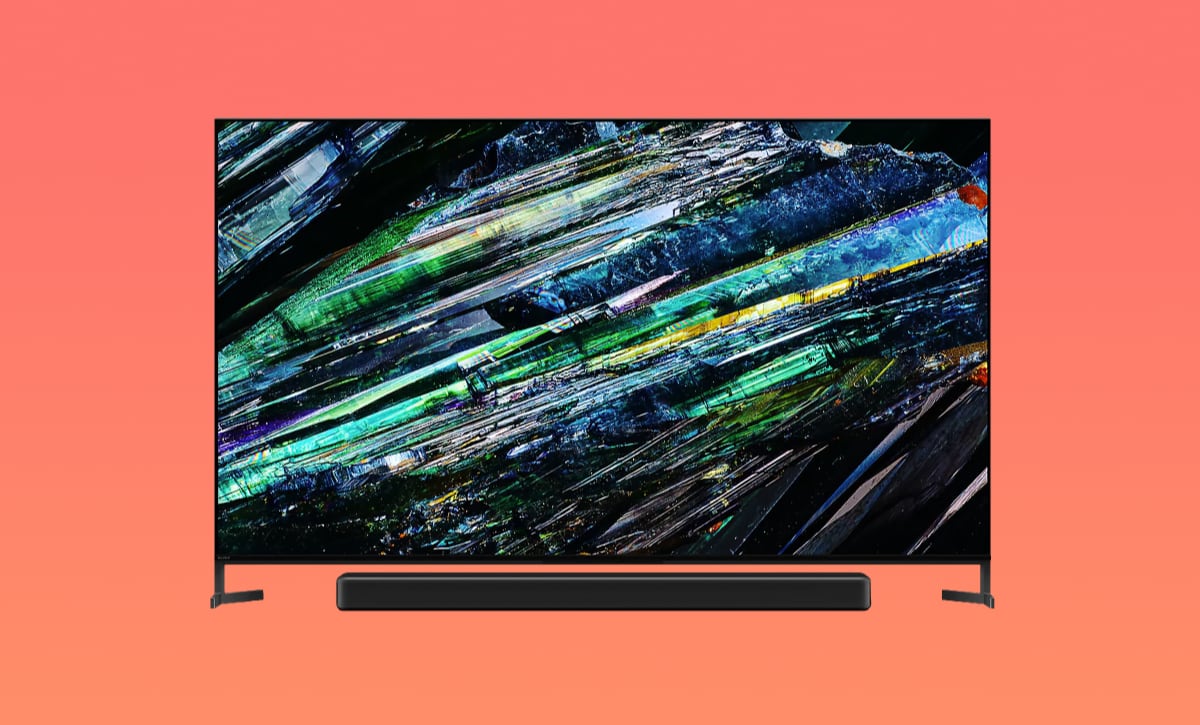
The surprise announcement about TCL taking majority control of Sony's TV/AV business has a number of potential implications – both good and bad – so let us try to examine them.
First of all, it is not a done deal. It needs final signatures and regulatory approval, and only then can the new joint venture company be established and start operations in April 2027, according to Sony and TCL. Sony's 2026 TV lineup is not affected.
In the new joint venture company, TCL will own 51% and Sony 49%, giving TCL majority control. However, Sony insists that it is not just letting TCL do whatever it wants.
- "We consider the two companies to be nearly equal partners, both Sony and TCL will provide steadfast support for the sustainable growth of the new company, to create innovative products that meet the expectations of customers around the world and pursue further business growth through operational excellence," Sony UK, Ireland & Nordics wrote in a statement to FlatpanelsHD.
Sony had already ceded control
The announcement came as a shock to many so to understand it we need to first back up and examine how Japan's Sony ended here.
To some, it may be equally surprising to learn that Sony has not actually produced its own 'displays' – or panels – for TVs since the days of Trinitron CRT TVs.
As the age of picture tube TVs came to an end in the mid-2000s, Sony entered into a joint venture with Samsung called S-LCD to produce LCD TV panels. This partnership quickly turned sour and Sony sold all of its shares to Samsung in January 2012. S-LCD got folded into what we today know as Samsung Display (who, incidentally, has also sold off its LCD technologies and patents to TCL).
Since then, Sony has had to buy all panels for its TVs from competitors, including Samsung Display (LCD, QD-OLED), LG Display (WOLED) and more recently TCL CSOT (LCD). This put Sony at an disadvantage in terms of cost and display innovation. What Sony brought to the table after integration of others' panels into its TV products was its expertise in video processing, calibration, design etc.
The situation forced Sony to move upmarket, even more so than in the past, to become a premium TV brand. This worked for a while until LG and Samsung started competing head-to-head in OLED TVs, and until Hisense and TCL started pulling ahead in miniLED backlight technology for LCD TVs. Sony had hoped to use RGB LED to outmaneuver competitors, but the competitors moved faster.
Also read: Sony may use RGB LED in both Bravia 9 II and Bravia 7 II
Sony had also ceded control in chips and processing, leaving chip development to MediaTek; system chips that are also found in TV models from Hisense, TCL, Panasonic, Philips, Sharp and many other brands.
And Sony had ceded control over software to Google after switching to Android TV in 2015, and later Google TV.
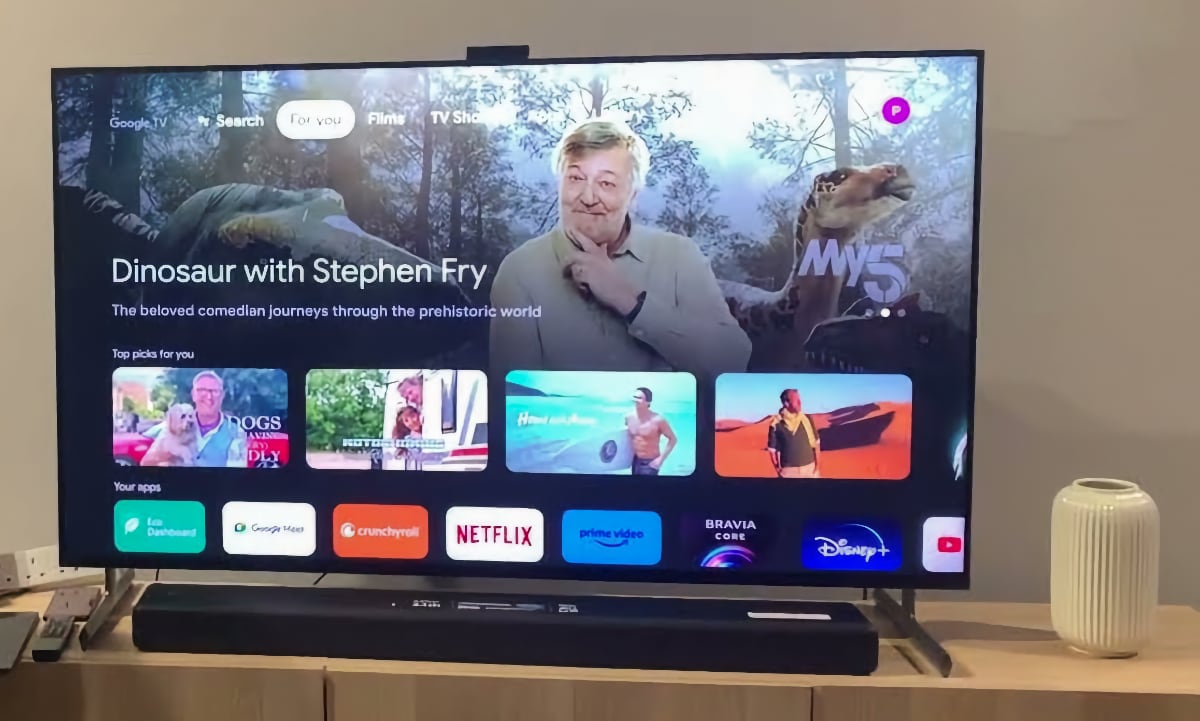 Sony had already ceded control over display panels, chips and software. Shown here is a Sony Google TV
Sony's ecosystem fumble
Sony is a global powerhouse with perhaps the most admired gaming business (PlayStation, game studios), large film and television studios (Sony Pictures, Sony Pictures Television), a music studio (Sony Music), a leading camera/imaging division (film & mobile cameras), and more.
For years, we have called on Sony to combine its strengths – not just be another TV maker. Sony had every opportunity to become what Apple has a become; a tightly integrated tech and entertainment powerhouse. Steve Jobs admired Sony in a number of ways, as described in his biography.
Yes, Sony has a Sony Pictures Core (née Bravia Core) app on its TVs. Yes, Sony has a PlayStation Remote Play app on its TVs. However, these have always felt like an afterthought; separate apps that could just as well have been offered on competing TV platforms. They are simply sideloaded Android apps – just not offered through the Google Play store. To realize this vision Sony would have had to many years ago give up on its corporate silo structure and develop its own software and design its own hardware for TVs. Instead, by ceding control left and right, it ultimately lost its edge.
That is not to say that Sony created average TVs, not at all. FlatpanelsHD still has Sony's QD-OLED as our reference TV. Sony's LCD models, like Bravia 9, are still some of the best around. We admire Sony's approach to video processing, factory calibration and attention to detail.
Also read: FlatpanelsHD's TV reviews
We are simply saying that Sony missed its chance to build a glorious end-to-end ecosystem of hardware, content and services. This could also have benefitted Sony's other business divisions, too.
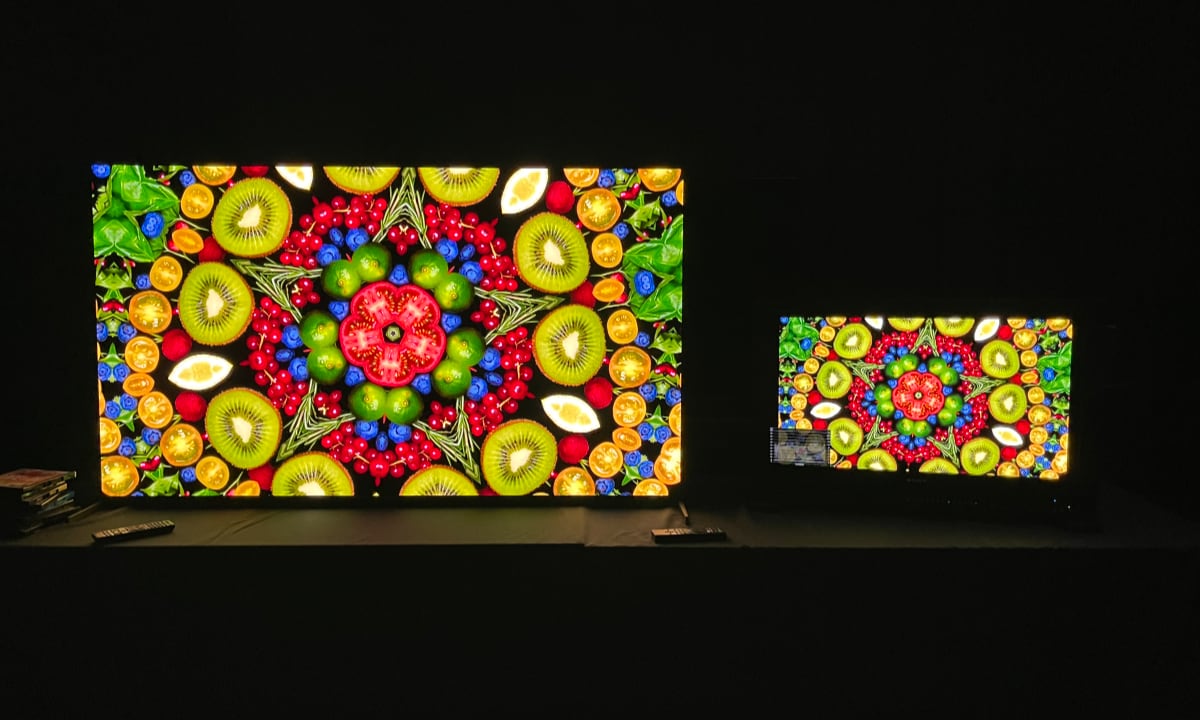 Sony produces some of the best TVs around, with Sony's QD-OLED as FlatpanelsHD's reference TV. Photo: FlatpanelsHD
What happens next?
Instead, Sony will take the ultimate step by ceding control of its TV business to TCL. Sony will still be involved but TCL will be in the driver's seat. Who do you think will supply display panels and LED backlights to Sony TVs in the future? Who will have the final say on the TV lineup? TCL is of course also be interested in lifting its own TV business.
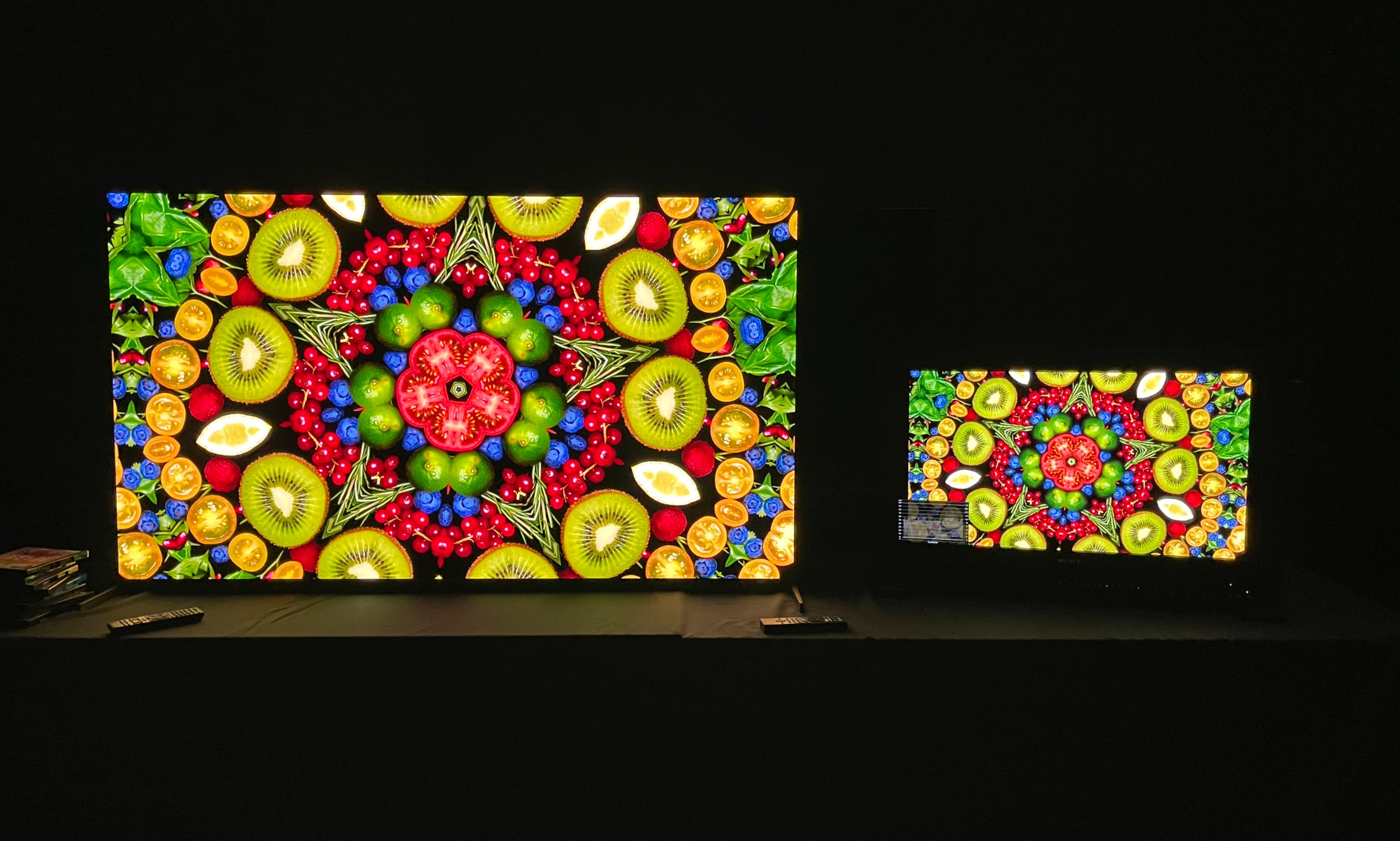
The optimist in us sees a scenario where Sony could finally build scale in TVs again, with affordable miniLED LCD TVs featuring thousands of dimming zones (TCL's technology) and pushing boundaries in the high-end segment with the most advanced miniLED or RGB LED technology – something TCL is already doing. Combined with Sony's video processing and calibration, these TVs would be amazing, and probably cheaper too. A virtuous circle.
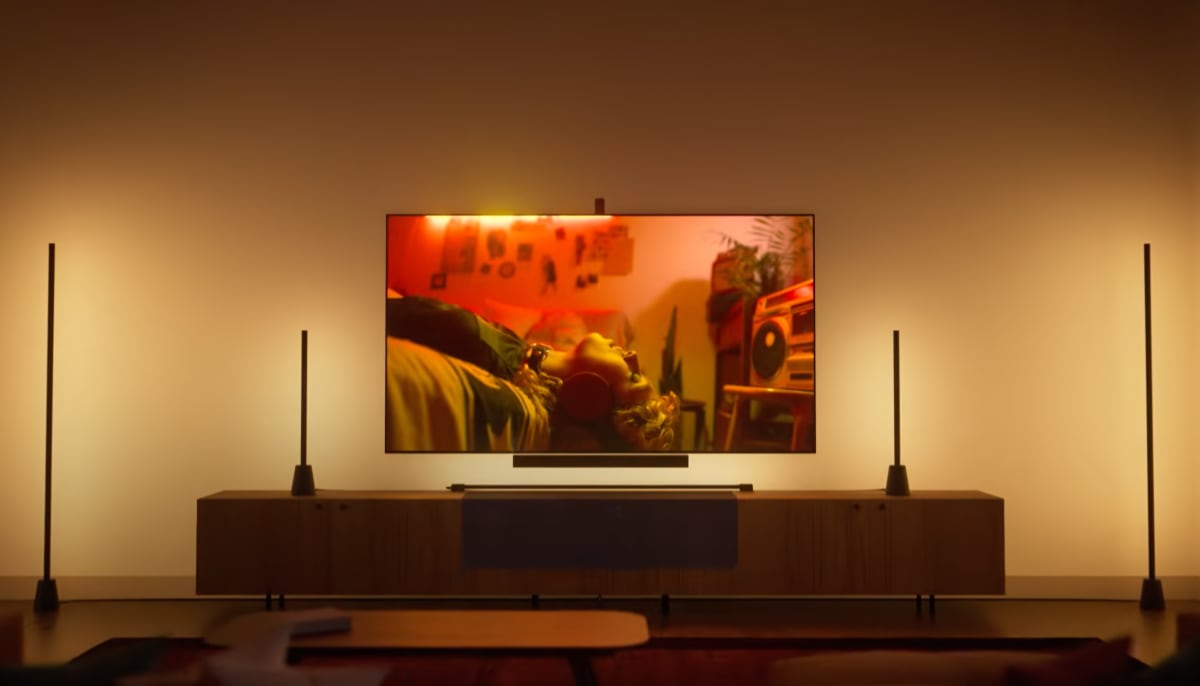
The pessimist in us sees a scenarios where Sony falters, losing its shine, uniqueness and premium brand in an attempt to sell millions of mid-range Sony-branded TVs. Is Sony Japan even prepared to continue to support the things that made Sony TVs unique? Like video processing, calibration, special audio integration, the bare minimum of Sony Pictures and PlayStation integration etc?
What about OLED TVs?
Continuing the pessimistic scenario, we worry about Sony's OLED TVs. TCL has shown little interest in OLED TVs so far and has never sourced OLED panels from LG Display and Samsung Display. TCL once announced a QD-OLED TV but quickly backtracked.
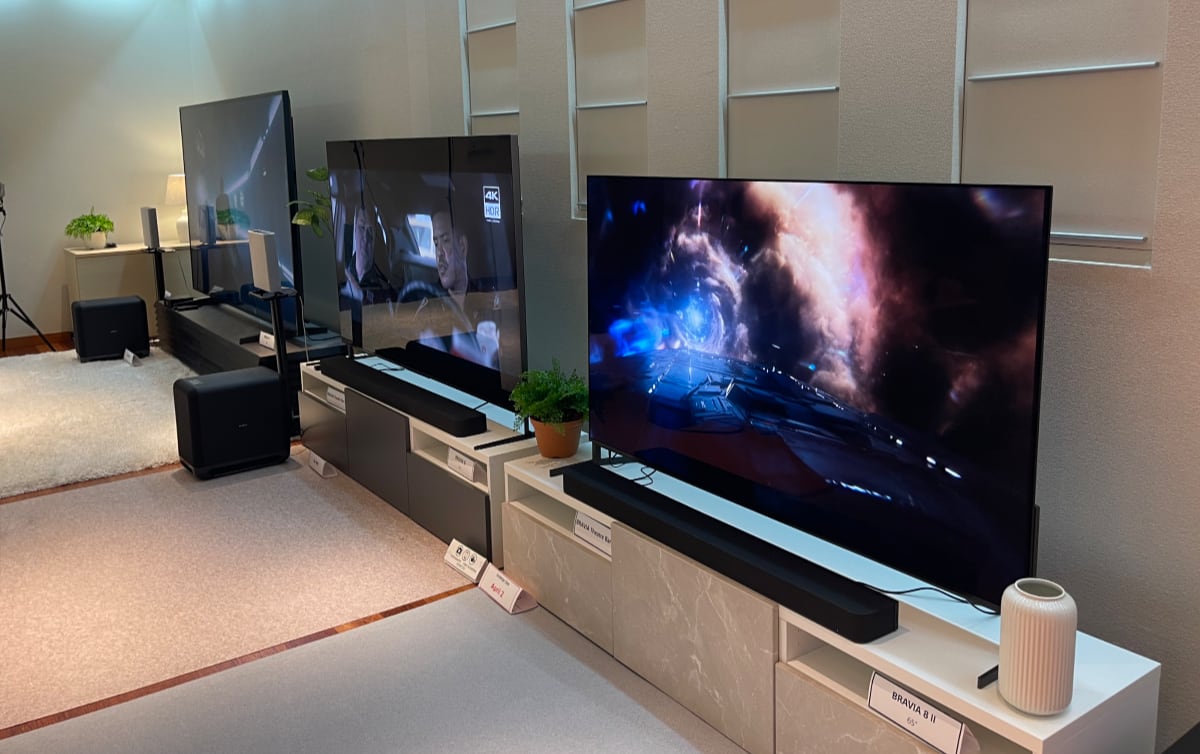
Sony currently offers TVs based on both QD-OLED (Bravia 8 II) and WOLED (Bravia 8) panels. These are Sony's best TVs. So what will happen here? We may get a clue once Sony's 2026 lineup gets announced.
Our hope is that TCL will continue to prioritize Sony OLED models and perhaps even start offering OLED TVs under the TCL brand. TCL CSOT is currently building a huge 8.6-generation plant, the world's first to inkjet print OLED panels, and while inkjet printing will initially be targeted small-to-mid sized OLED panels, producing TV panels was a topic at one time, and has not been ruled out for the future. Come 2027, the plant will be in operation so let us see what happens.
LG and Samsung should be worried
The Sony-TCL partnership will also have implications for the TV market as a whole, and we think LG and Samsung should be worried.
Analyst firm Omdia estimates that Samsung shipped 36.4 million TVs in 2025. TCL shipped about 31 million and Sony close to 4 million. However, in November 2025, TCL came within striking distance of Samsung globally, separated by only one percentage point in TV sales units. TCL could surpass Samsung even before the deal with Sony closes.
Samsung is already struggling to compete with TCL and Hisense in the mid-range segment and lower high-end due to Hisense's and TCL's more advanced and better-value miniLED LCD TVs. Case in point: Samsung is discontinuing its once-popular QN90 series this year. Soon, TCL will gain further leverage in the high-end segment through the partnership with Sony. Not only in technology, but also in shipping volumes, further reducing its costs in miniLED LCD TVs. TCL produces both the LCD panels and the LED modules.
As for LG, it has a strong position in high-end TVs with OLED, but a weak position in mid-range and high-end LCD TVs. We do not expect this to change and LG is struggling to compete in the high-volume LCD TV market. If LG loses further ground, it will be pushed toward high-end, but despite its unique advantage – unlike Sony – in producing its own OLED panels, its market share could become too small for LG to keep investing heavily in TVs. The optimistic view is that it could force LG to take OLED TVs mainstream.
Also read: Is RGB LED a threat to OLED? How LG Display is pushing OLED forward
If the deal goes through in April 2027, TCL will likely become the world's largest TV maker, if not before. It will be in a position of strength, vertically integrated – something Samsung's TV business once was. So while the Sony situation makes a lot of us uneasy, it will undoubtedly strengthen TCL and perhaps even Sony, too.