LG's G6 – the successor to last year's G5 – is brighter and more refined, with markedly reduced banding. The company's first 'micro RGB' is a mixed bag. Here is FlatpanelsHD's first look.
We will publish a full review of LG G6 later, but during LG's UK launch event in London last week, we had a chance to see LG's new flagship OLED TV for 2026 side by side with last year's LG G5, Samsung S95F (QD-OLED) and Sony Bravia 8 II (QD-OLED).
What we saw was promising, but before we get to that, let us briefly cover some of the technical changes underpinning the improvements in picture quality.
12-bit internal processing
Powering the LG G6, as well as C6H and W6, is the Alpha 11 Gen 3 processor, as announced in January. According to LG, Alpha 11 Gen 3 features a 50% faster CPU, a 70% faster GPU and a 5.6x faster NPU compared to Alpha 9 Gen 8 used in the more affordable models.
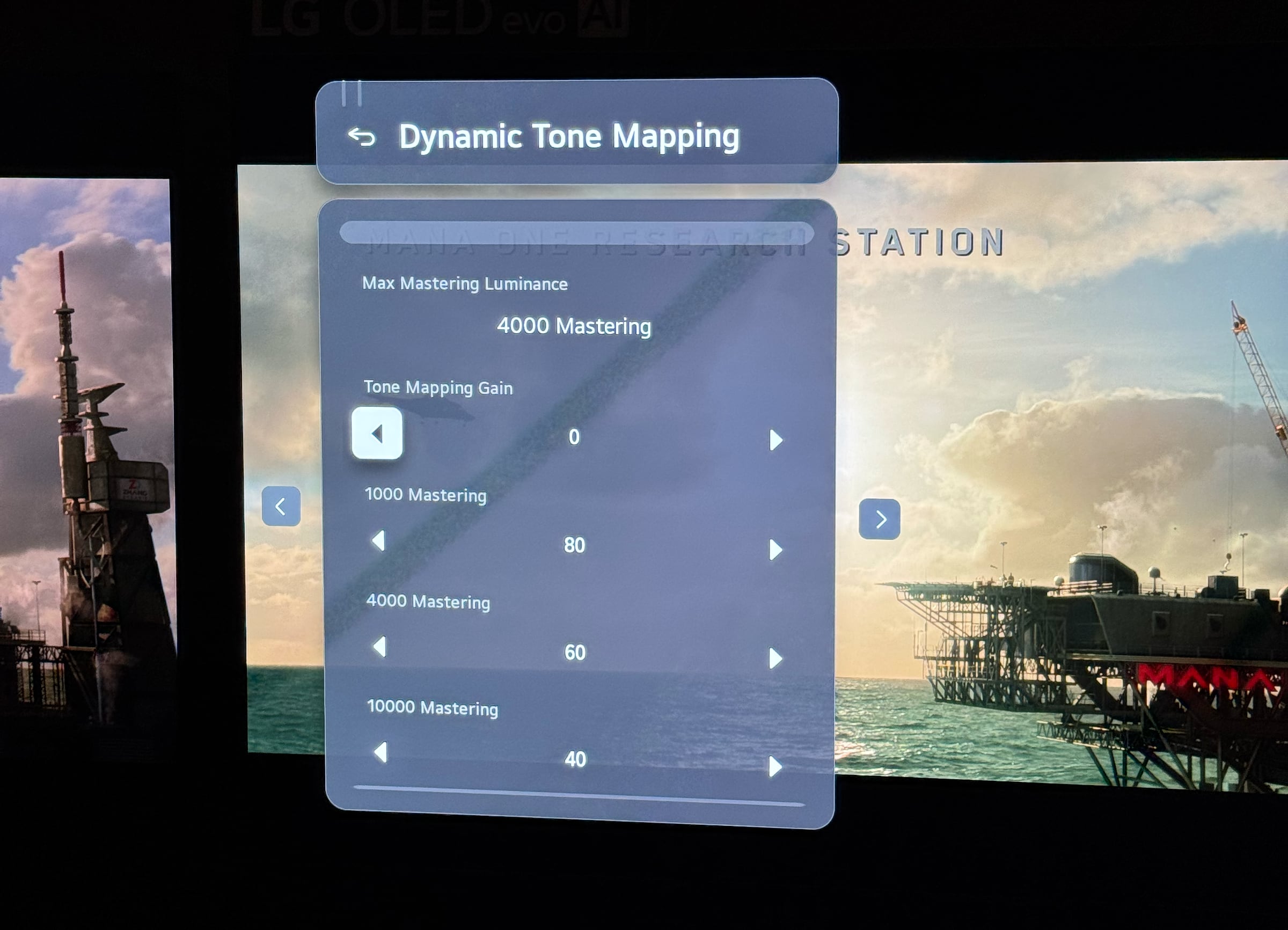
 New dynamic tone-mapping settings for HDR highlights for pro users. Photo: FlatpanelsHD
LG G6 first look
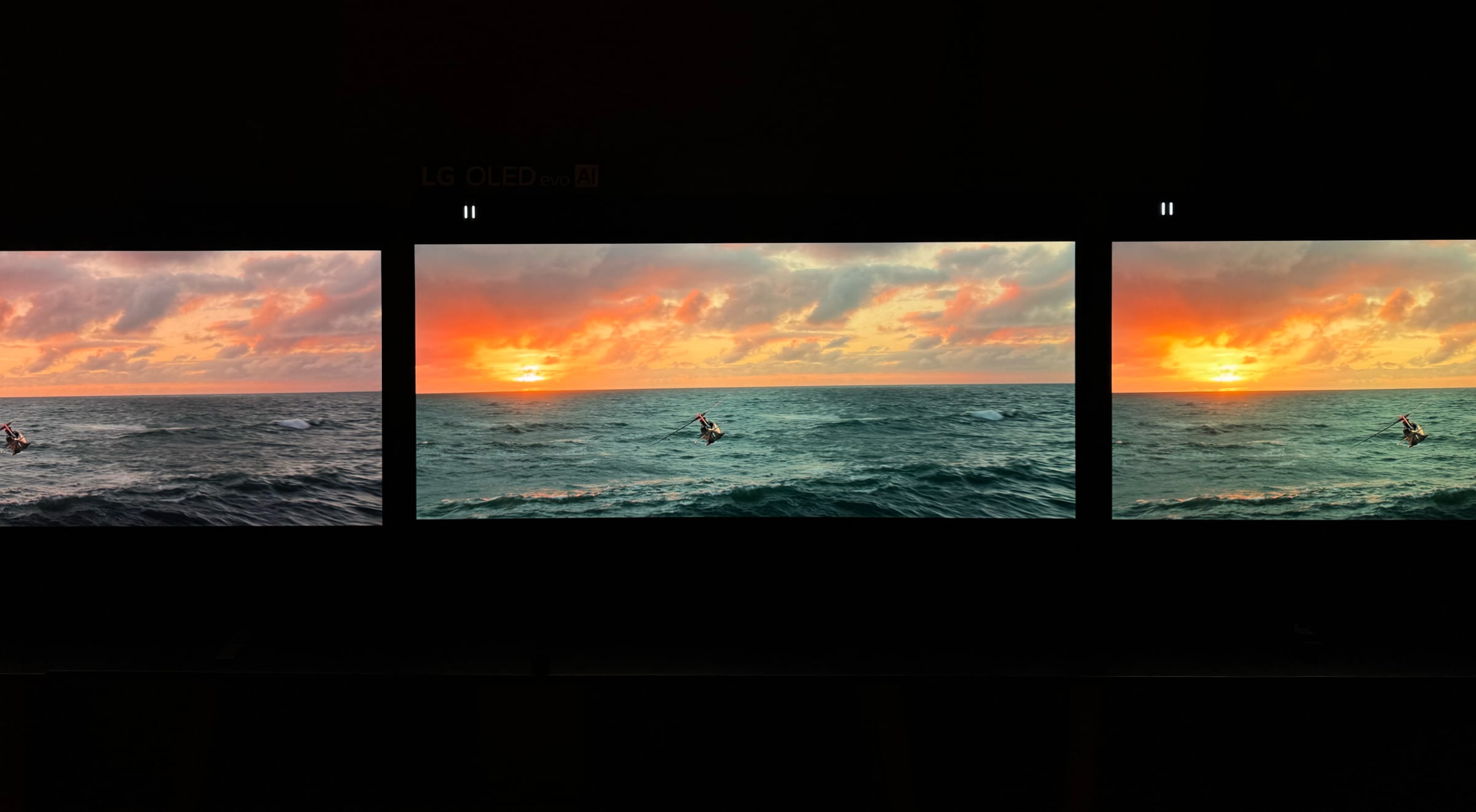
LG G6 gets brighter once again, which was clear in a side-by-side comparison with last year's G5. G6 delivered brighter highlights with slightly better definition. It is not a drastic change over G5 but it is a significant step up from the "old" 1000-nit OLED panel. LG cited "over 2500 nits" in a 10% window for G6, which we will have to confirm later on a review sample.
LG also highlighted that G6 is brighter full-screen, at 400 nits versus around 350 nits on last year's G5. Again, we will verify this independently, but G6 did appear brighter with winter and snowy demo content. As a result, G6 also offers a slightly larger color volume.
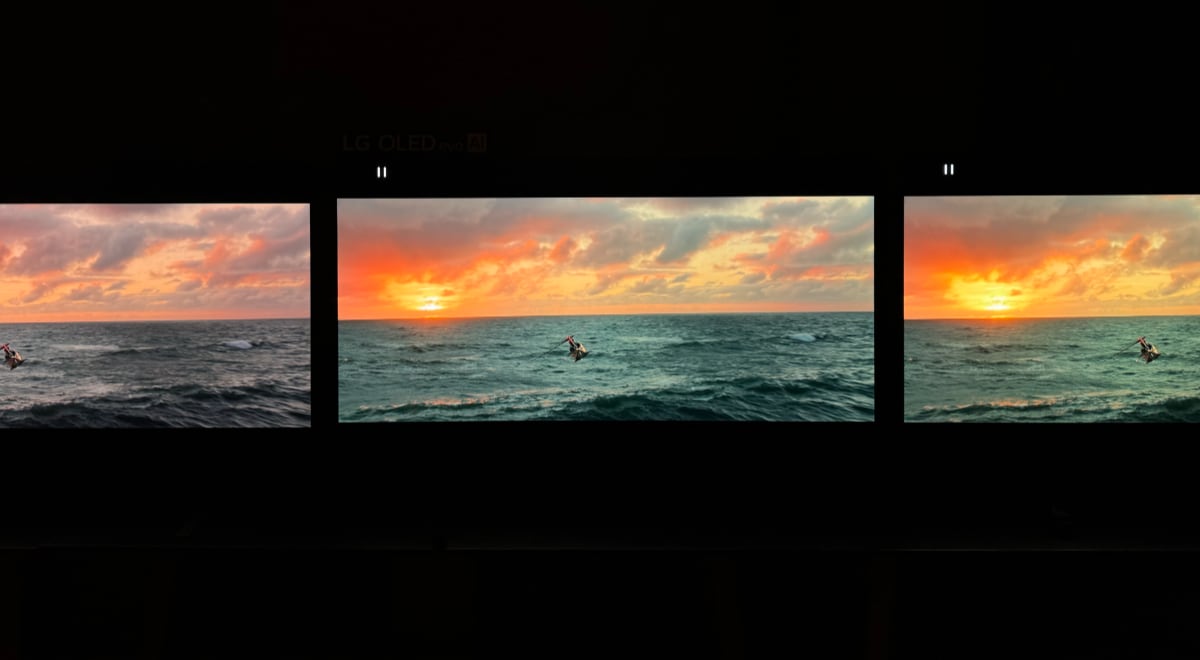 LG G6 (middle) has higher peak brightness and better definition in highlights than LG G5 (right). The color tint on Samsung S95F (QD-OLED) is caused by the camera. Photo: FlatpanelsHD
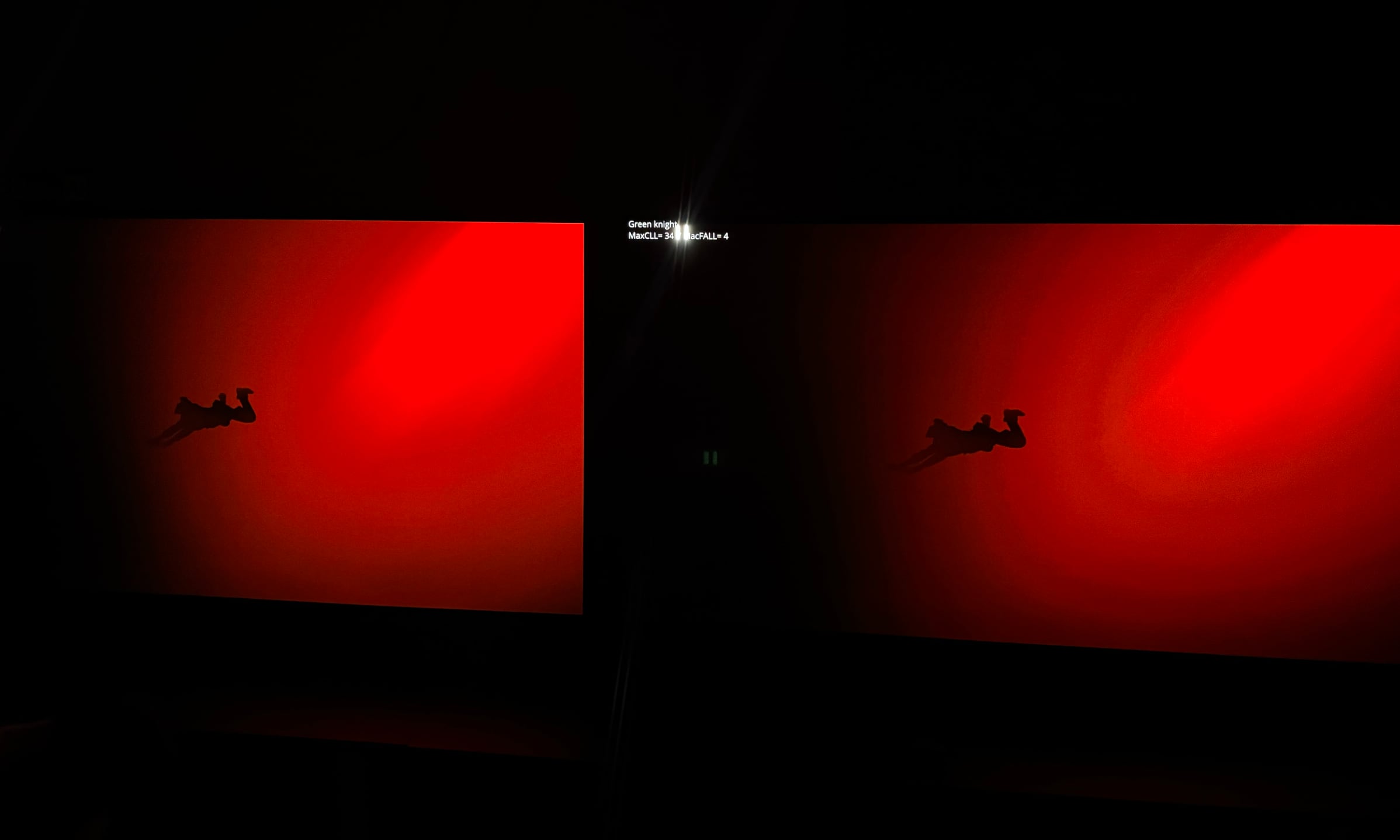
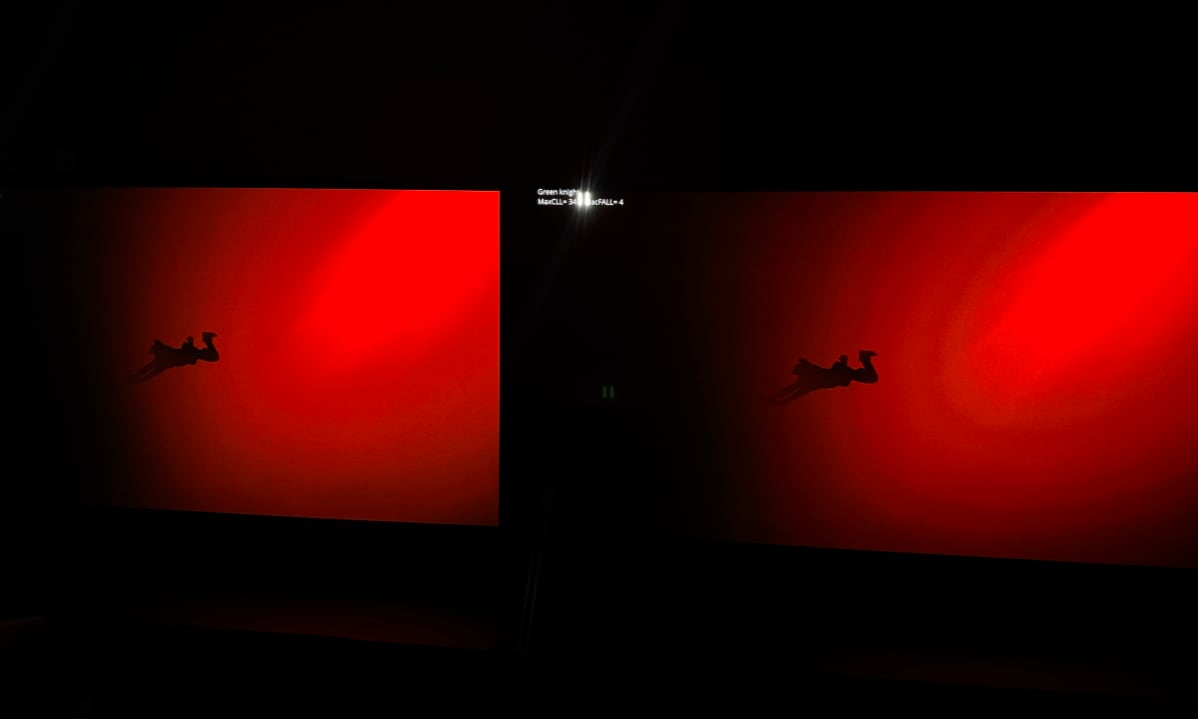 LG G6 (left) versus LG G5 (right) banding. Photo: FlatpanelsHD
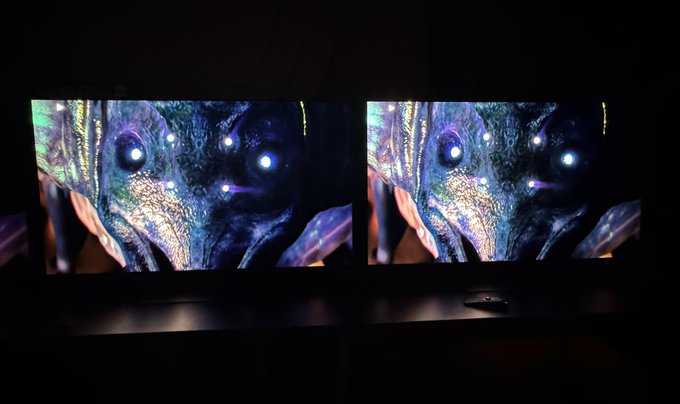
 LG G6 (left) vs. LG G5 (right). Video: FlatpanelsHD
webOS 26 and audio
LG's main focus at the event was G6's improved picture quality, but the company also noted that while the speaker hardware in G6 is identical to G5, the tuning has been adjusted to deliver more balanced audio with better-sounding bass. We preferred this new tuning.
Dolby audio formats are supported up to Dolby Atmos, but DTS remains unsupported in 2026.
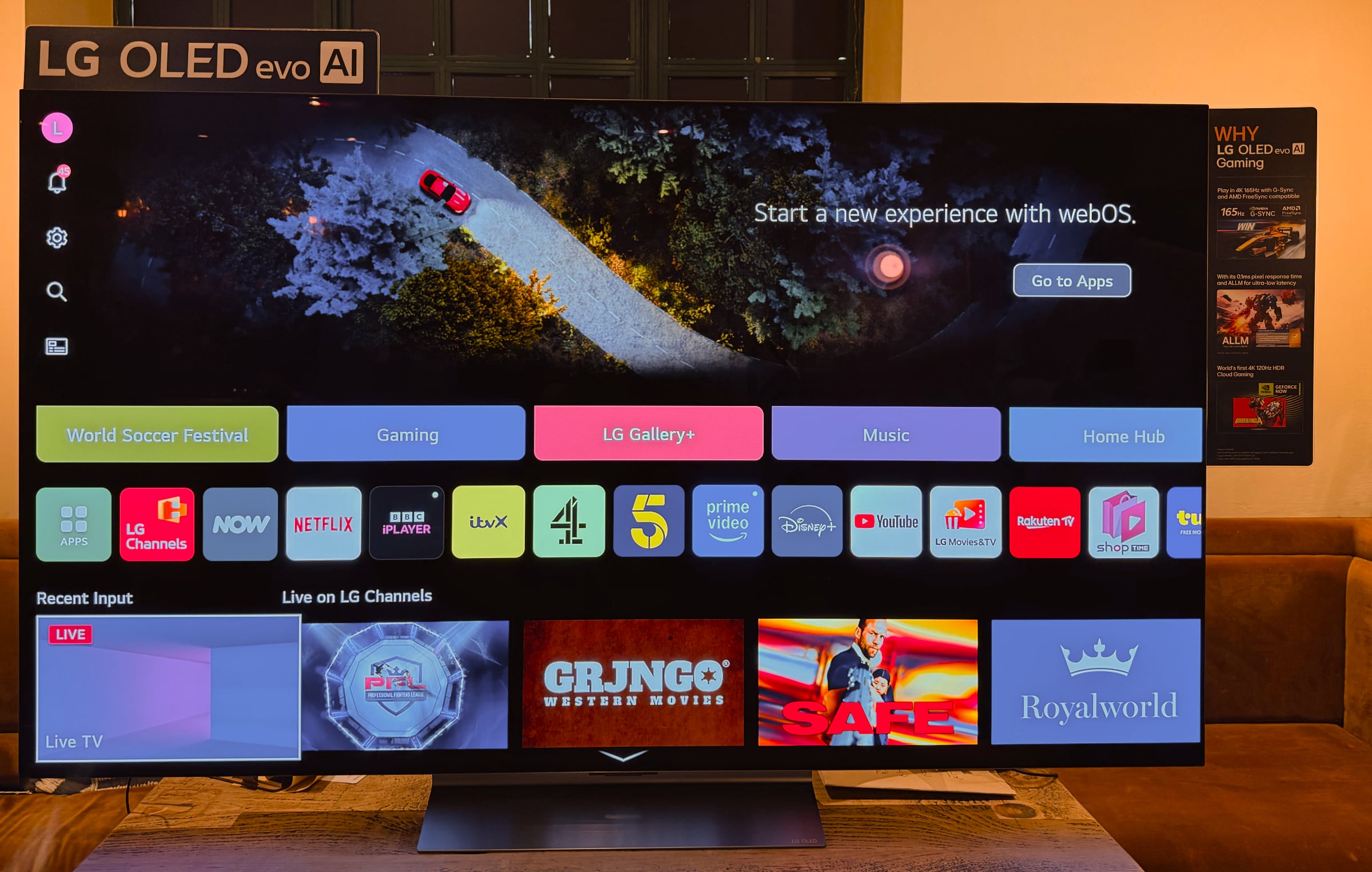
webOS 26 looks largely the same but features a simplified menu structure, including a new quick menu with fast access to inputs (as there is no dedicated input button on the new remote) and other settings. webOS 26 appeared slightly faster overall, although in our view it could benefit from even more simplification and more powerful hardware.
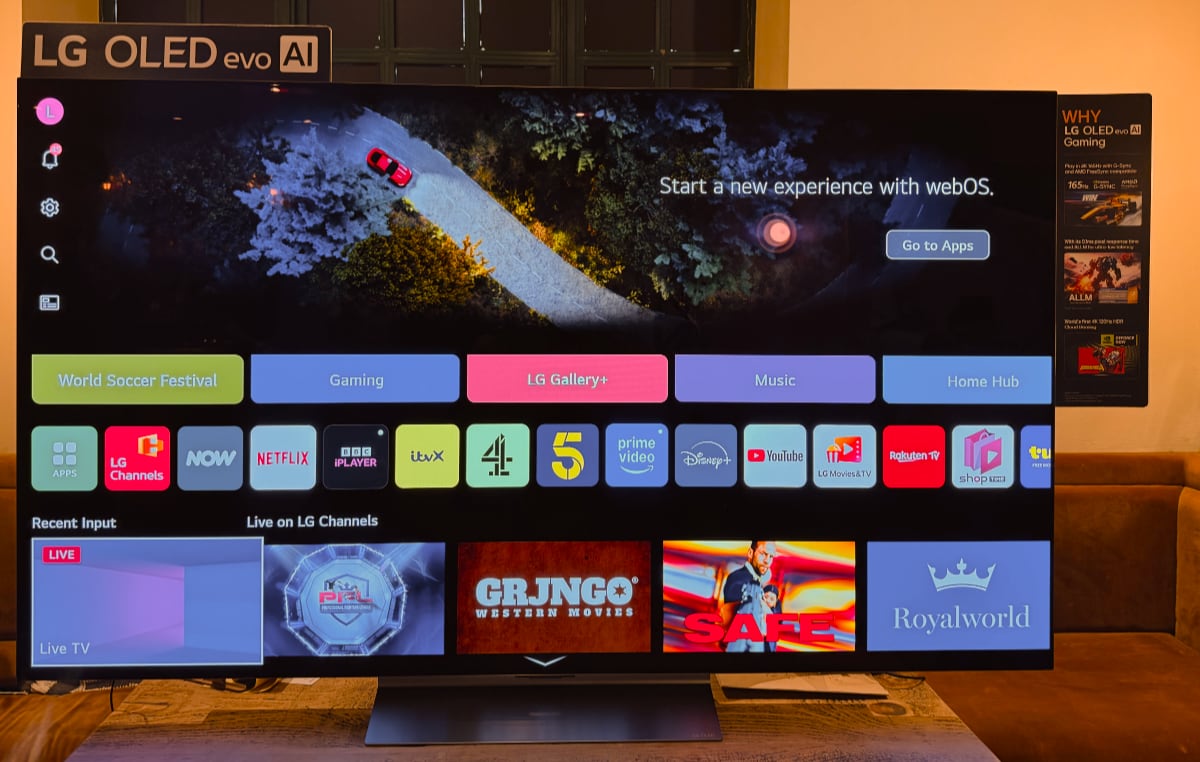 webOS 26 looks identical but adds new features. Photo: FlatpanelsHD
LG's first 'micro RGB'
We also saw LG's first LCD TV with RGB LED backlighting, marketed as 'micro RGB'. We confirmed that MRGB95B uses a VA LCD panel. LG said it has "over 1000" dimming zones, adding that the larger sizes actually approach 2000 zones, although we were not able to verify this on the spot.
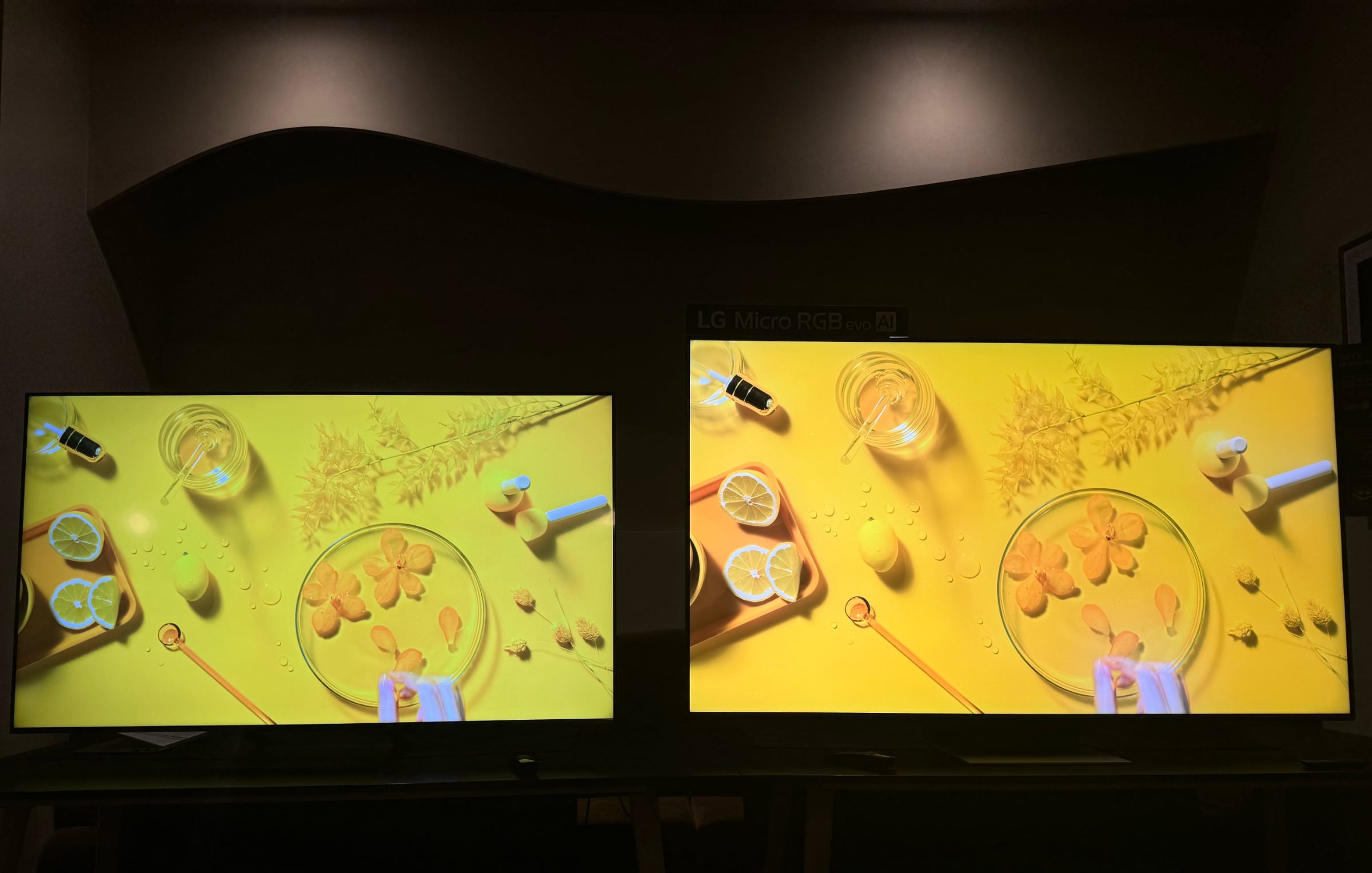
Compared to one of LG's 2025 "QNED" LCD TVs, MRGB95B looked noticeably brighter with more saturated primary and secondary colors, thanks to its "up to 4000 nits" peak brightness and wider Rec.2020 color gamut. Overall, however, it still looked very much like an LCD TV, with limited black depth and contrast, the typical LCD "haze", narrow viewing angles and other inherent LCD limitations, even with the extremely colorful demo content. We suspect that dark or high-contrast content will expose these limitations to most viewers, as the primary driver of HDR picture quality on LCD TVs remains the number of dimming zones.
LG's first attempt at RGB LED LCD does not come close to matching its own OLED TVs in reference picture quality. In our view, LG's OLED C-series delivers significantly better picture quality, arguably even the B-series. On the other hand LCD TVs with RGB LED deliver very high fullscreen brightness and very saturated colors, if you switch into Vivid mode or just want a TV with plenty of surplus brightness for a bright viewing environment.
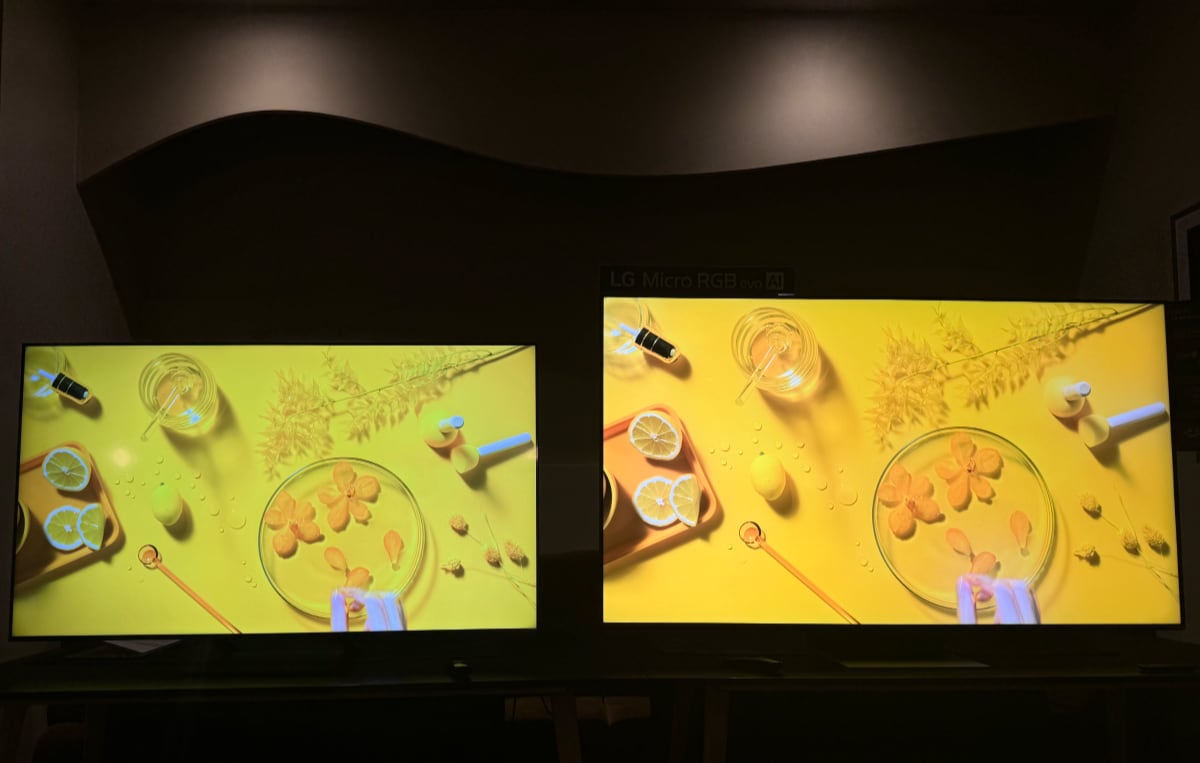 Last year's "QNED" LCD TV (left) versus LG's first "micro RGB" LCD TV, which delivers more saturated colors. Photo: FlatpanelsHD