Philips has today unveiled its 2026 OLED TVs, the first with Dolby Vision 2 in any form. OLED951 and OLED911 have the best panel while OLED811 promises twice the peak brightness.
In 2026, Philips is looking to cement its position as one of the leading TV makers with high-end and affordable OLED TVs, as well as RGB miniLED LCD and affordable LCD TVs, which we have covered here.
Philips' OLED models are direct alternatives to LG's OLED models, with a couple of key advantages over LG this year, including Dolby Vision 2 Max.
First OLED TVs with Dolby Vision 2
In January, in a joint announcement with Dolby, Philips was the first OLED TV maker to announce support for Dolby Vision 2.
No other OLED brand has announced support in the meantime, so it appears that Philips will beat all other OLED makers to support not just Dolby Vision 2, but Dolby Vision 2 Max, which is the higher tier with additional features, as explained in our article here.
While we are still waiting for Dolby Vision 2 content, which is needed to get the benefits of Dolby Vision 2 on TVs, it future-proofs Philips' OLED TVs in a way that competitors like LG and Samsung cannot match at this time. Sony has yet to announce 2026 models.
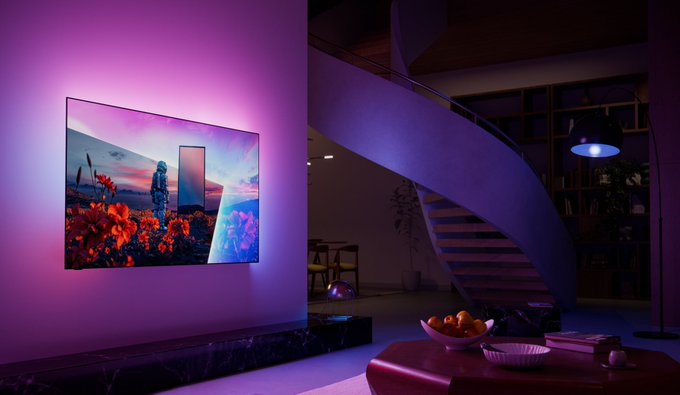
 Philips OLED911
Second-generation Tandem WOLED
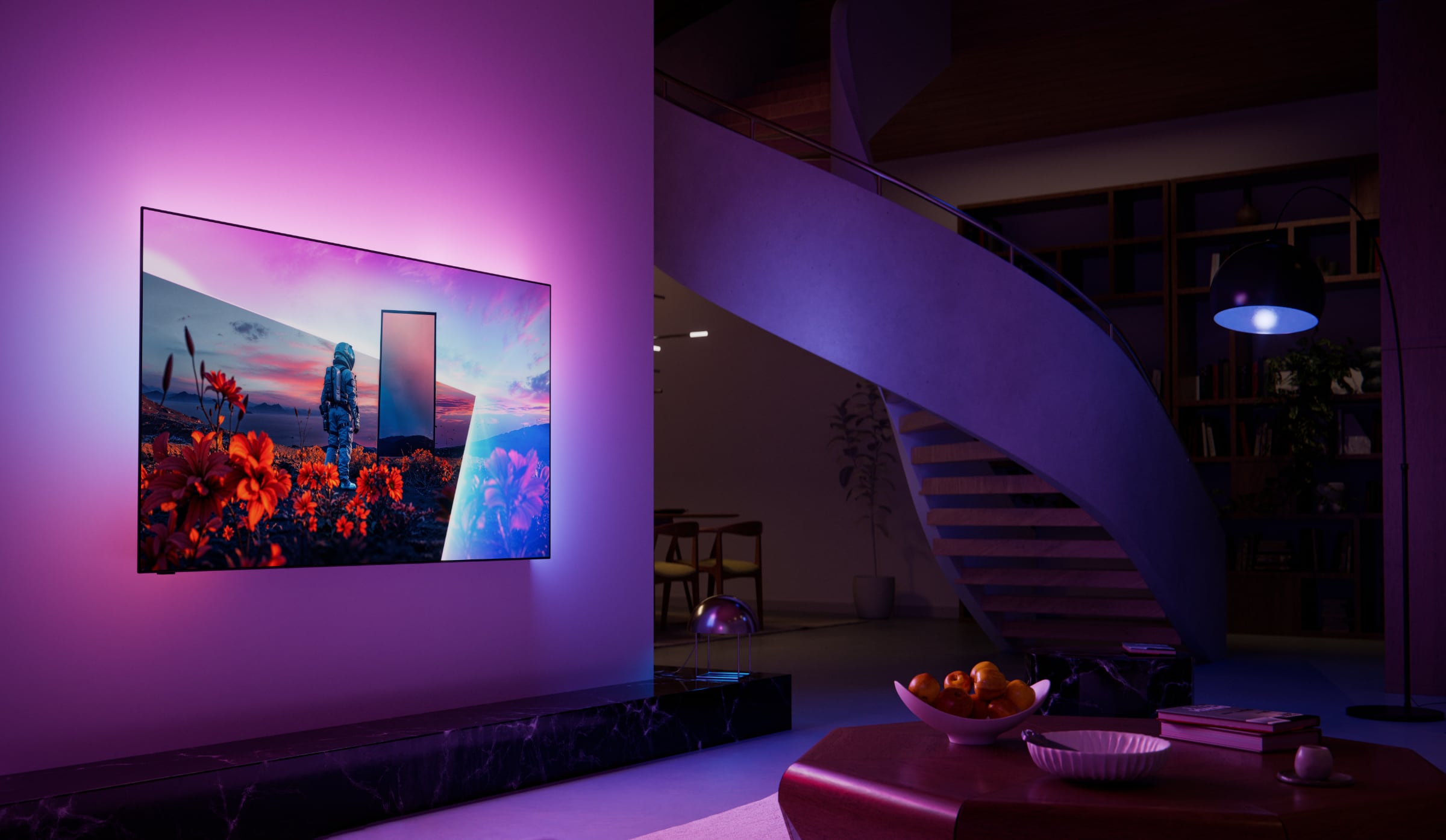
OLED951 and OLED911, which replace last year's OLED950 and OLED910, will both feature the upgraded Tandem WOLED panel – or META 4.0 Primate RGB Tandem – with 165Hz, improved brightness and reduced reflections.
These are high-end OLED TVs that will compete head-to-head with similar TVs with Tandem WOLED or QD-OLED. Philips mentioned 4500 nits peak and over 400 nits fullscreen brightness, but we expect peak brightness to be lower in calibrated mode.
OLED911, which features a 3.1-channel Bowers & Wilkins soundbar, will be available in 77, 65, 55, and for the first time a 48-inch size starting in June. Unfortunately, there are still no 83-inch OLED TVs in Philips' 2026 lineup. OLED951 will be available in 65 and 77 inches starting in September, without Bowers & Wilkins speakers.
 Philips OLED951
OLED811 doubles brightness to 2500 nits
Philips' most popular OLED TV is the mid-range 8-series, and OLED811 replaces the much-acclaimed OLED810. It will be available in the same 42 to 77-inch sizes – no 83-inch here either – starting in June.
OLED811 will also feature Dolby Vision 2 Max, but the biggest change is an upgraded OLED EX panel, with "picture quality performance normally reserved for high-end OLED sets", according to Philips. Specifically, Philips said that it can reach up to 2500 nits of peak brightness (55, 65, 77"), which sounds like what panel maker LG Display described to us in our interview earlier this year, and what LG Electronics is doing with its C6H, but only in 77 and 83 inches.
Philips did not explain in its announcement how the panel manages to deliver up to twice the peak brightness of last year's OLED810, so we are seeking answers in Berlin. If true, OLED811 could surpass LG's C6 in picture quality this year in 55 and 65 inches.
OLED811 also features Philips' most advanced video processor, the 10th Gen P5 AI, and the Pentonic 800 chipset with four HDMI 2.1 ports. It has 3-sided Ambilight with support for AmbiScape. The maximum refresh rate increases from 144 to 165Hz.
 Philips OLED811
 First model with OLED SE
Lastly, Philips unveiled OLED761, which replaces last year's OLED760/OLED770. It is the company's first model to feature the new, more affordable OLED SE panel that FlatpanelsHD was first to report on in January.
While the OLED SE panel exists in 83 inches, Philips will not be using it, launching OLED761 in only 55, 65, and 77 inches starting in June. On the other hand, OLED761 is now expected to reach 1000 nits of brightness and should be cheaper to better compete with mid-range miniLED LCD TVs.
OLED761 also features four HDMI 2.1 ports and 3-sided Ambilight with AmbiScape, but a less powerful 7th generation P5 video processor. It does not support Dolby Vision 2.
Normally, Philips' 7-series was the only OLED to run Titan OS, while the higher-end models were Google TVs. This year, however, Philips will be using Titan OS across its range, including its flagship OLED TVs. We are seeking more details and information about the exact consequences.
Overall, Philips is making major improvements and changes to its OLED lineup in 2026, so we are eager to examine and test them later this year. Check below for specifications in the TV Database.
2026 Philips OLED TVs – specifications
FlatpanelsHD