LG is rolling out a broader push into wireless TV audio this year in partnership with Dolby. FlatpanelsHD had the chance to listen to their first Dolby Atmos FlexConnect speakers.
Last year, we wrote that Dolby Atmos FlexConnect shows promise and a path beyond soundbars when we tested the first products of this kind from TCL.
For years, the soundbar has sat beneath the TV because it requires a physical audio connection. However, HDMI has not been practical for two or more separate speakers. Wireless audio platforms free up placement, allowing users to position speakers more flexibly – though still tied to power cables. That flexibility is reflected in the name FlexConnect, which will compete with Sonos.
Pros and cons of FlexConnect
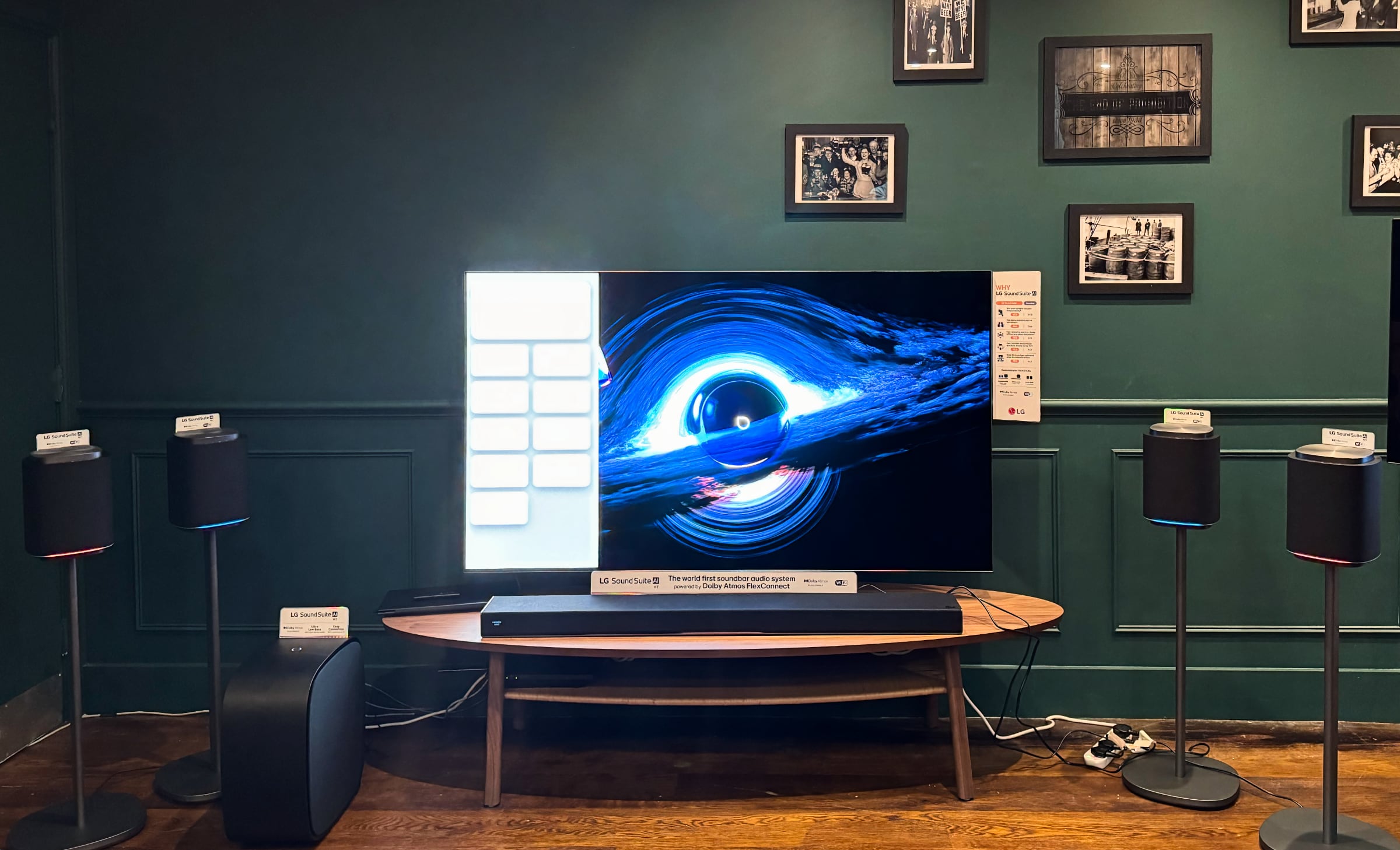
In December, LG revealed plans to launch products built on Dolby's FlexConnect platform, including a 3.1.2-channel soundbar (H7), two types of satellite speakers (2.1.2-channel M5 and 4.1.2-channel M7), and an 8" subwoofer (W7).
The soundbar is an external FlexConnect hub and can connect to any TV from any brand via HDMI. FlexConnect is also built into LG OLED TVs from 2026 and 2025 via an update, allowing the user to connect extra speakers wirelessly directly to the TV without needing the soundbar.
FlatpanelsHD saw them all in action at LG's recent launch event in London.
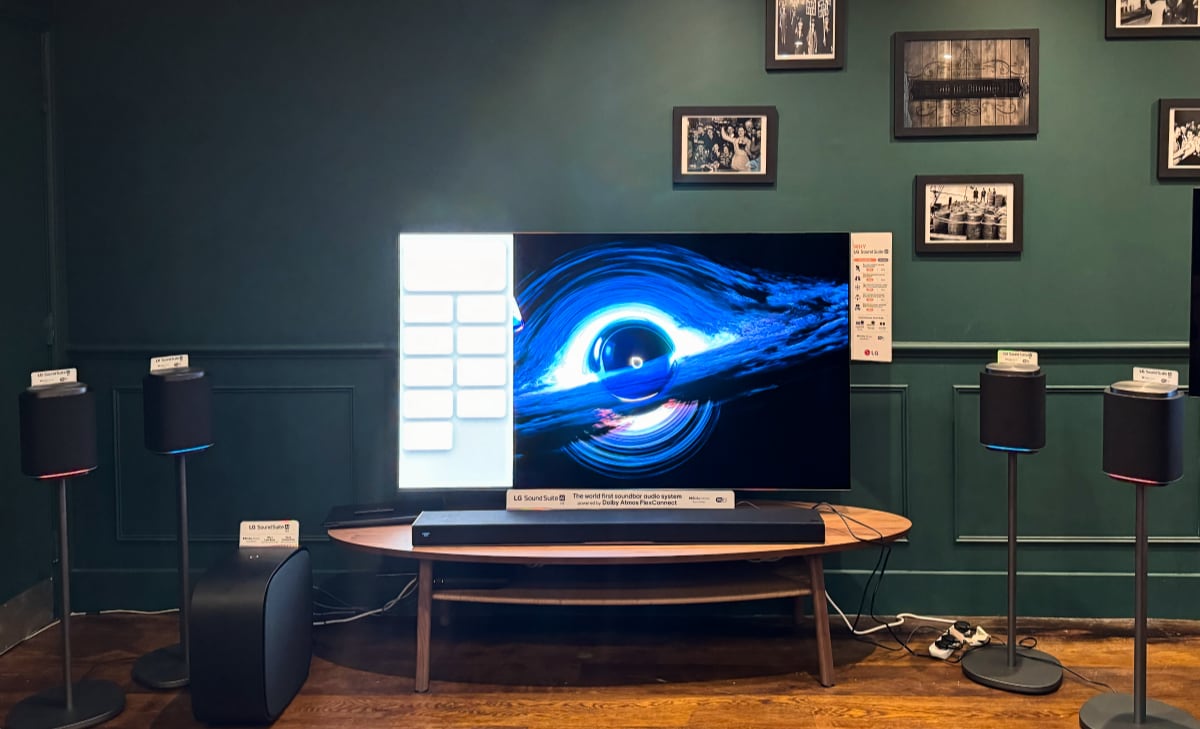 LG's soundbar (H7), satellites (M7) and subwoofer (W7). Photo: FlatpanelsHD
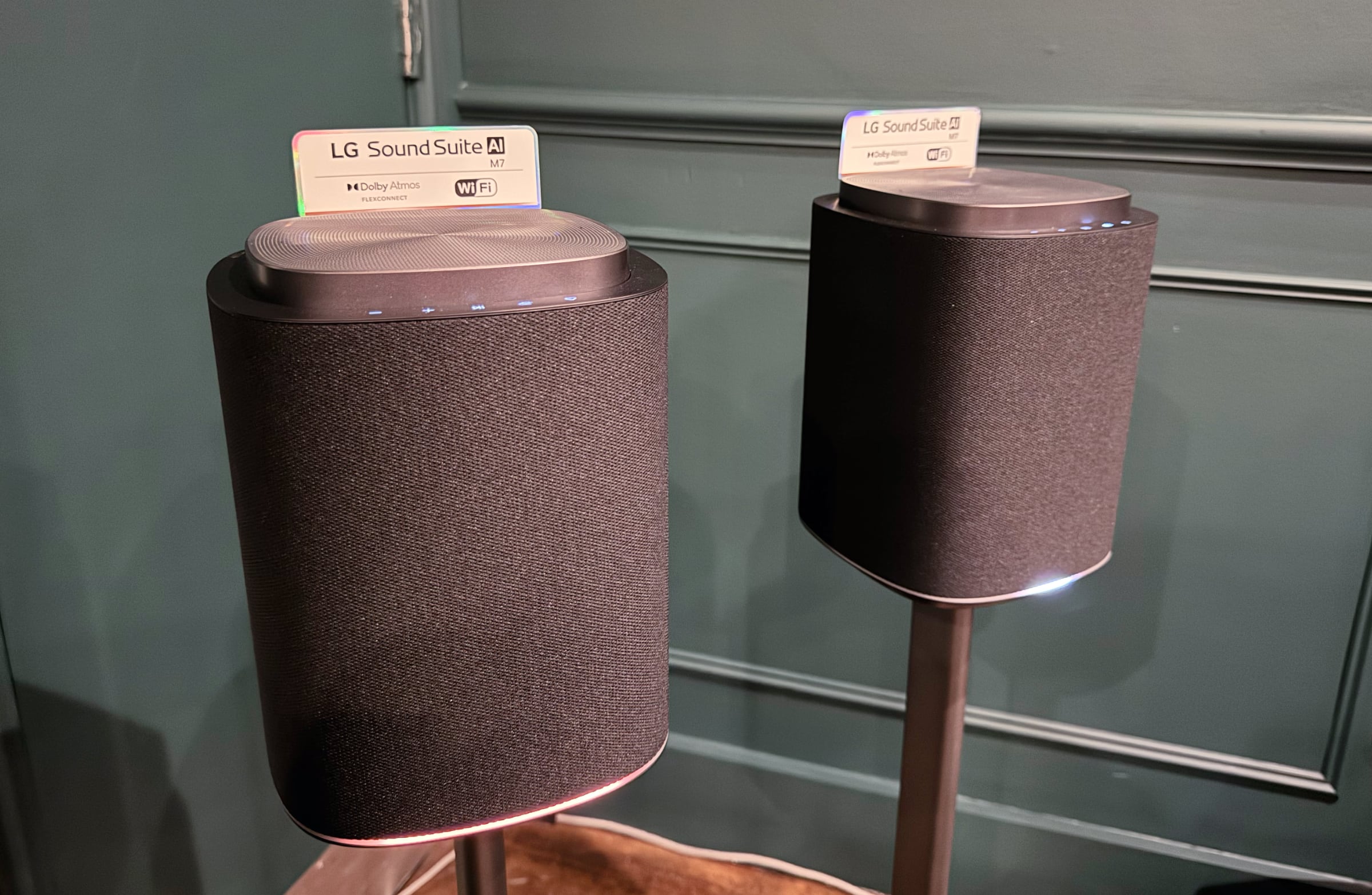
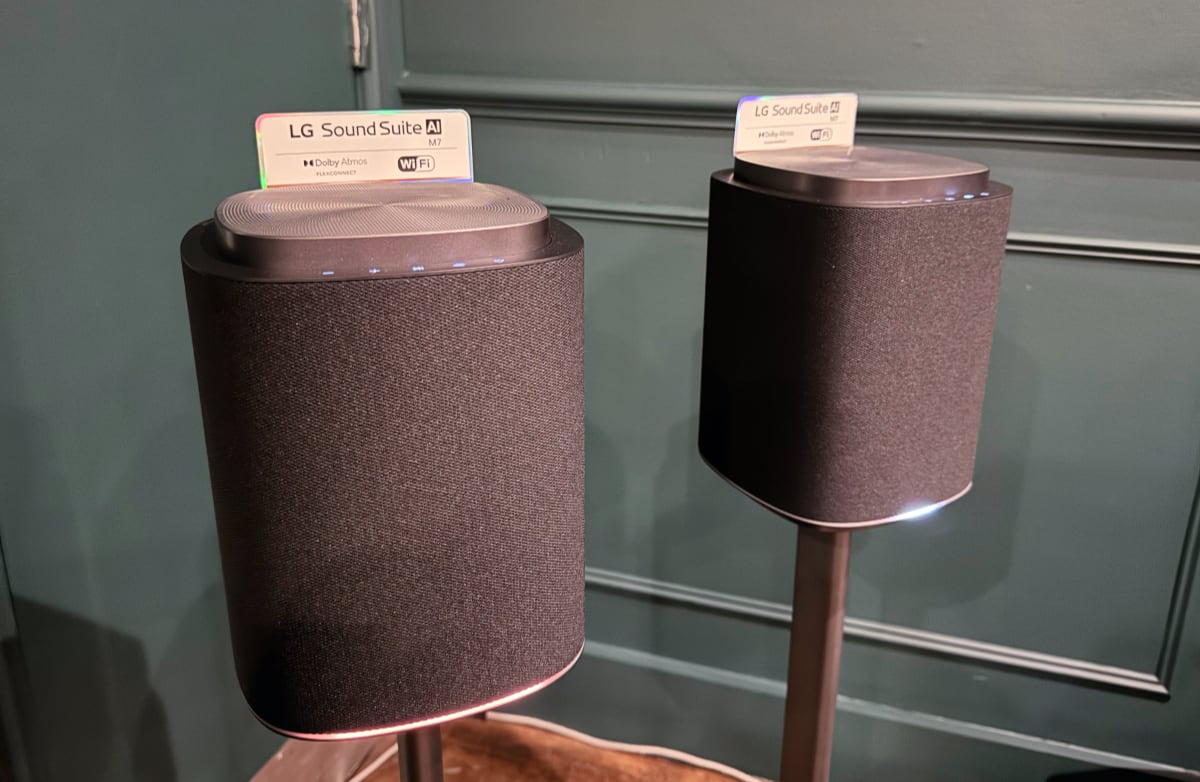 LG M7 are better suited for music and can also connect wirelessly to LG TVs for TV audio. Photo: Flatpanels
Sounds promising
The idea of pairing wireless audio with a soundbar is not new – it is how Sonos has worked for years. Still, FlexConnect adds extra flexibility by allowing additional front speakers to be connected wirelessly, in addition to rear speakers and a subwoofer.
We initially listened to the H7 soundbar with two M7 rear speakers and a W7 subwoofer with scenes from Batman v Superman. It was a good experience, considering that the system's hub is a relatively compact soundbar. The sound improved noticeably with two additional front speakers, but vocals were slightly weak and the Atmos experience was not optimal.
We also listened to the system in other configurations and with different test clips. As we noted in our article on TCL's FlexConnect, one of the most impressive aspects is that even with speaker placed in odd places, the surround experience is maintained with clear separation between front/rear and left/right – few living rooms allow for perfect speaker placement.
Some of the combinations that stand out as particularly interesting to me personally are TV + subwoofer, TV + front speakers, and TV + front and rear speakers. FlexConnect gives buyers the flexibility to expand the system immediately or later on.
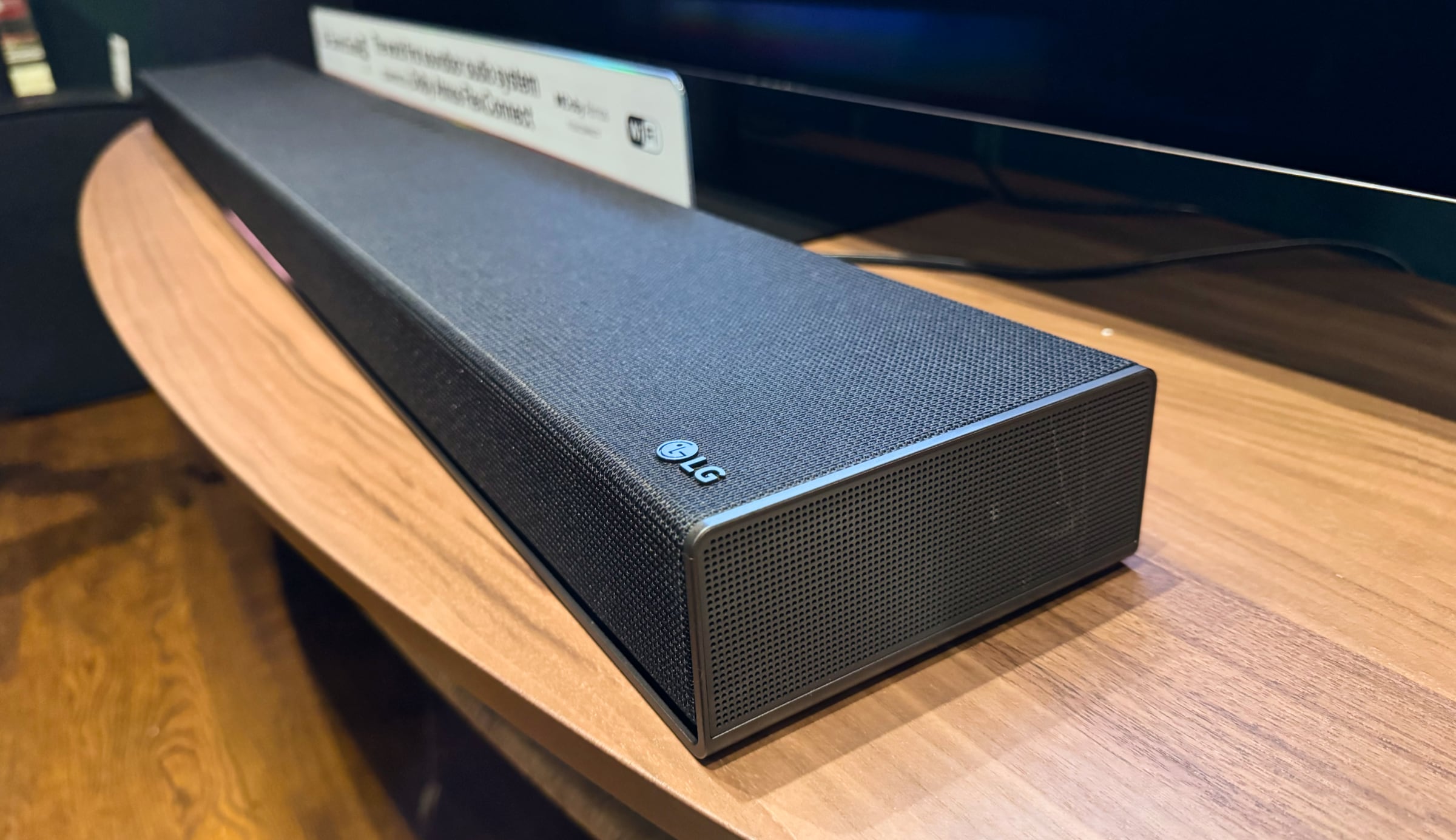
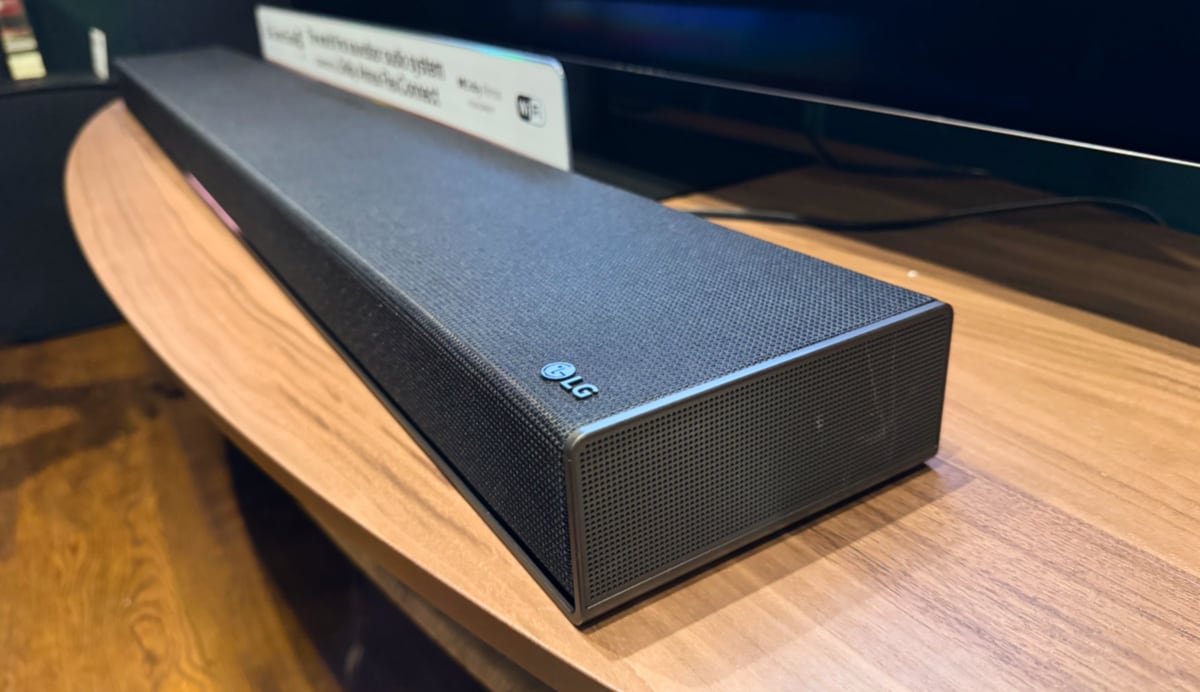 LG H7 is a fairly regular soundbar, but the FlexConnect functionality is unique. Photo: FlatpanelsHD
Dolby Atmos FlexConnect calibration
| How calibration/setup of Dolby Atmos FlexConnect works directly on an LG TV. In this video, only the front speakers are paired, but the process is the same for rear speakers. Alternatively, it can also be done via the mobile app:
|
Flatpanels