Seen as a potential challenger to OLED and QD-OLED, the next-generation EL-QD – also known as NanoLED – display technology continues to advance. There are new OLED and micro-LED panels, too.
Originally known as QLED, a term now used as a marketing label for LCD TVs, the novel display technology is now referred to as EL-QD, NanoLED or QDEL – we do not yet know what the final name will be.
It does not rely on OLED or any other type of light-emitting diode, as the quantum dots themselves directly convert electrical energy into light and color, effectively acting as the light-emitting elements, potentially enabling lower-cost displays with improved picture quality.
Latest EL-QD prototypes
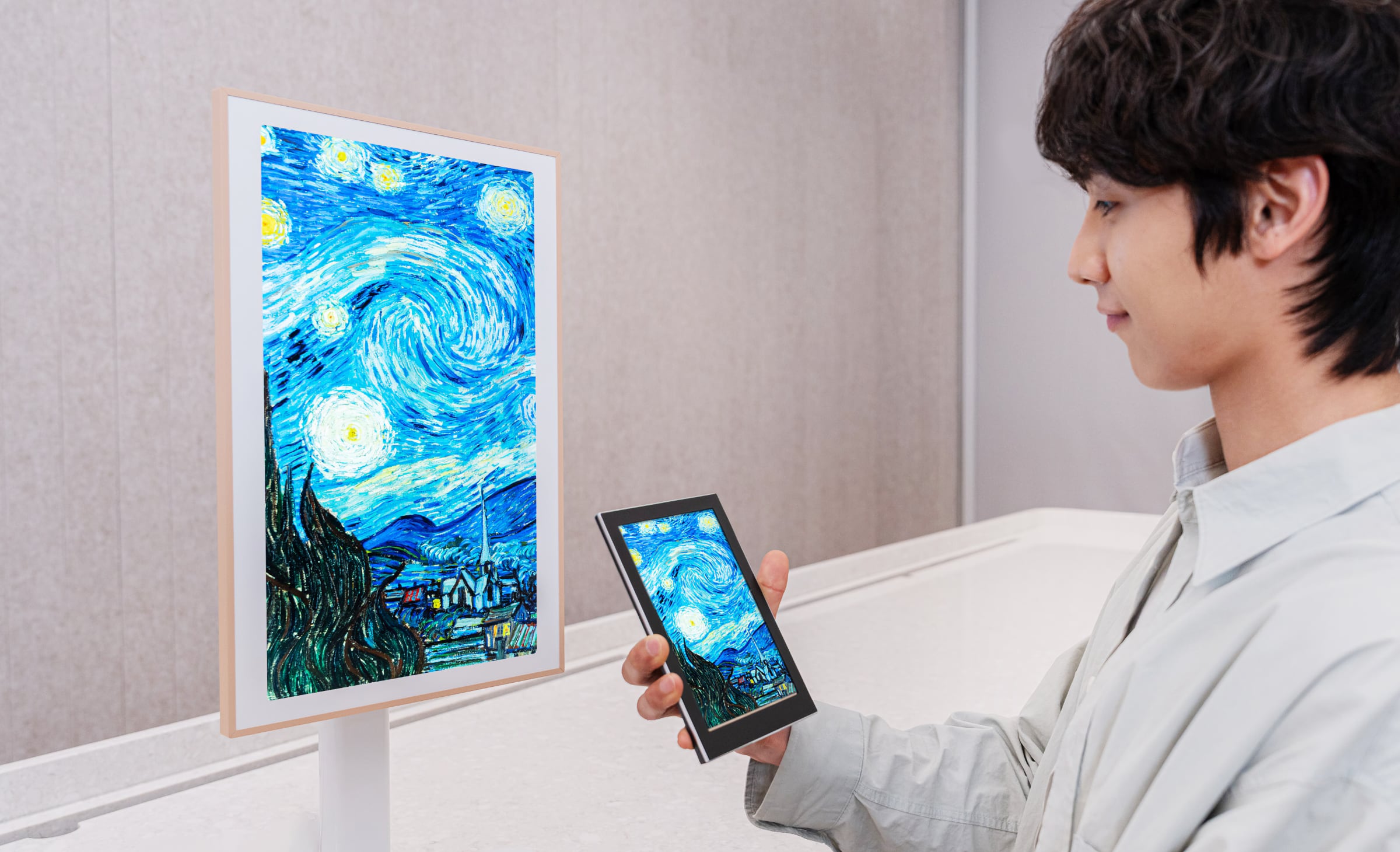
Samsung Display is showcasing its latest EL-QD prototypes at SID Display Week 2026 in Los Angeles this week:
- "EL-QD is a next generation quantum dot display technology in which quantum dot pixels emit light directly through electrical signals without the use of OLED, delivering both high color accuracy and power efficiency," announced Samsung Display and continued:
- "At the exhibition, Samsung Display will present two EL-QD prototypes: an 18 inch panel with 500 nits brightness and a 6.5 inch panel with 400 nits. Compared to the previous year, brightness has improved by 25% and 33%, respectively – from 400 to 500 nits and from 300 to 400 nits."
A company representative added that energy efficiency has also improved. The company still refers to the panels as "prototypes". Nanosys – the company known for quantum dots – has previously said that NanoLED (EL-QD) could arrive in 2029.
 The new 18-inch and 6.5-inch EL-QD (NanoLED) display prototypes. Photo: Samsung Display
 The new 18-inch EL-QD (NanoLED) display prototype. Photo: Samsung Display
More new displays
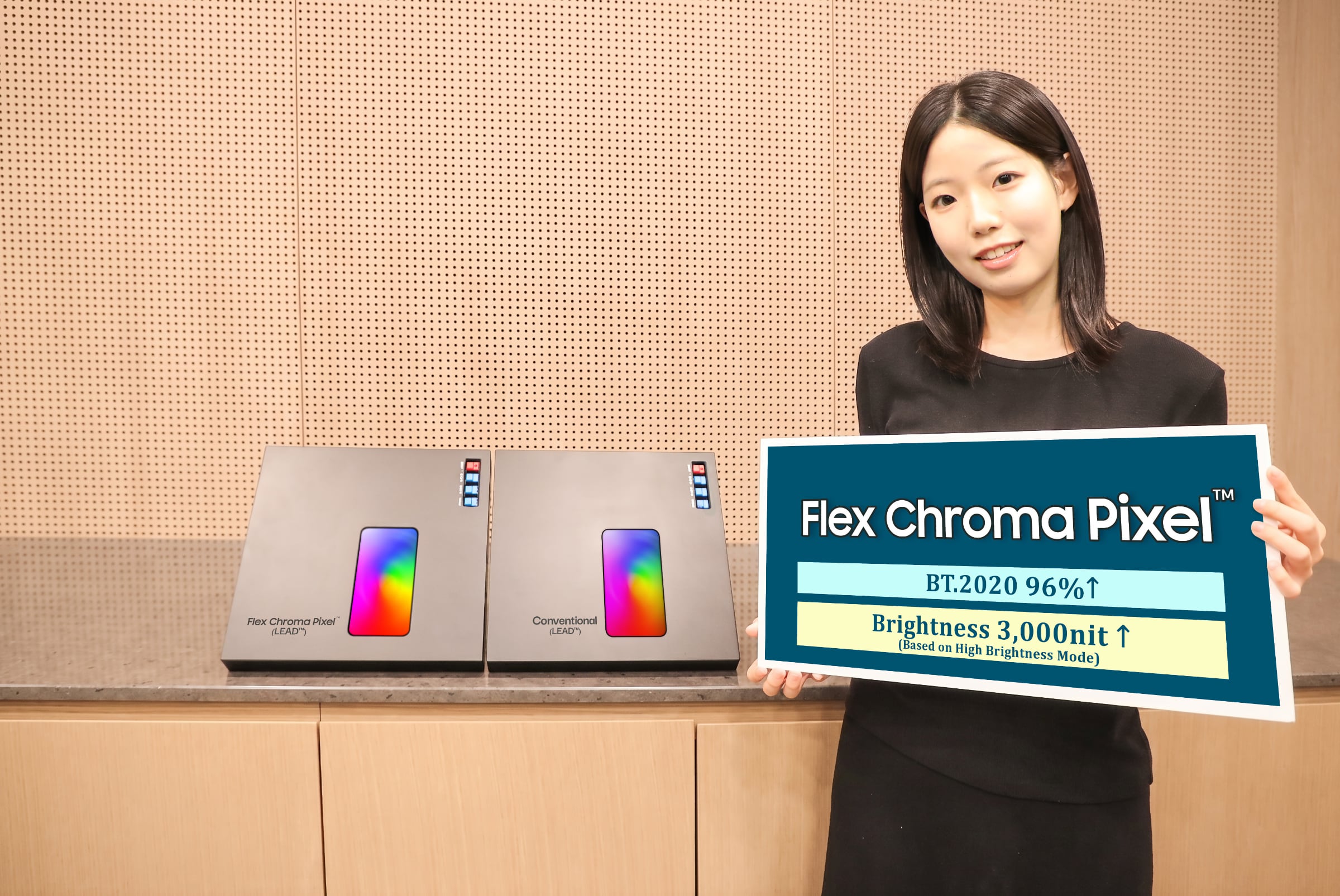
At SID Display Week, Samsung Display is also showcasing its latest OLED smartphone technology, called Flex Chroma Pixel, with up to 3000 nits and 96% BT.2020 color coverage, compared to 70% BT.2020 on most smartphone displays today, it said.
- "Samsung Display applied phosphorescent sensitized fluorescence (PSF), a next-generation emissive material, to enhance OLED color purity and color reproduction. In addition, by incorporating LEAD, Samsung Display’s proprietary low-power, high-brightness polarizer-free OLED technology, the company developed a wide color gamut OLED capable of reaching up to 3,000 nits in HBM without compromising the lifetime of organic materials," the company explained.
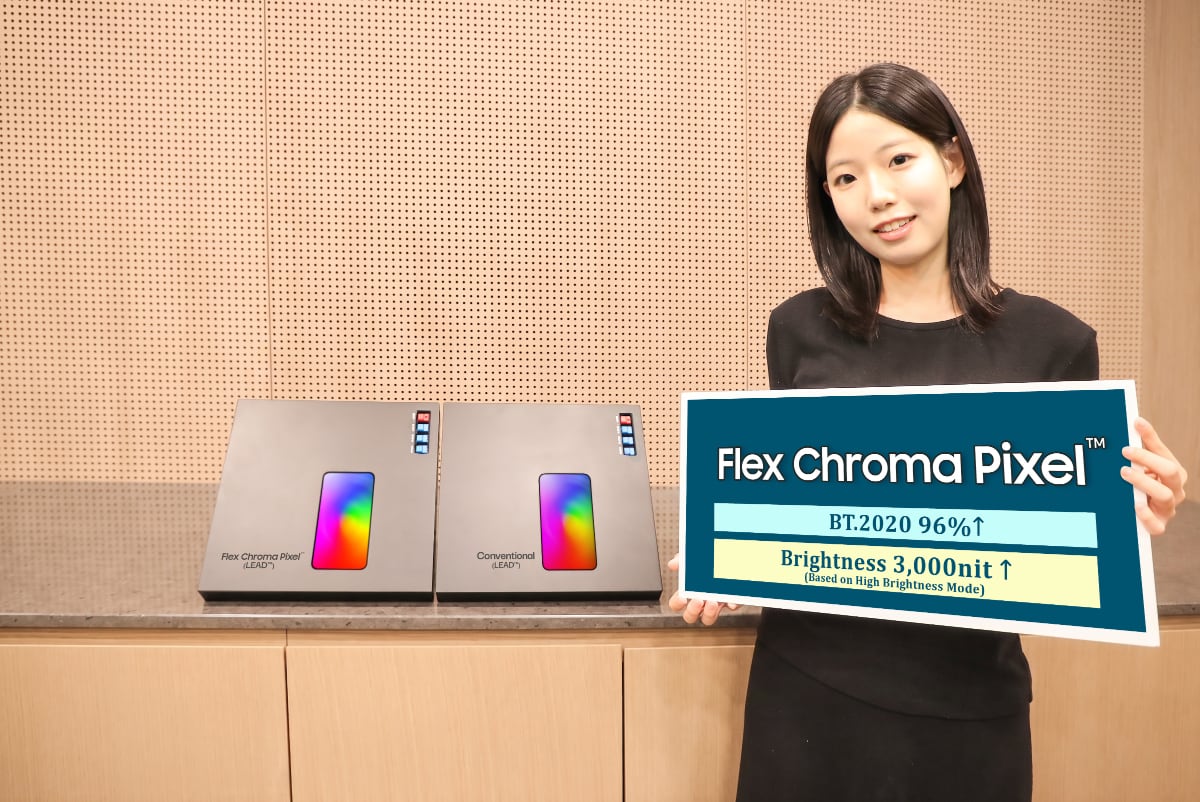 Samsung Display's new Flex Chroma Pixel OLED smartphone display with 96% BT.2020, 3000 nits. Photo: Samsung Display
 Samsung Display imagines that stretchable displays can be used in cars
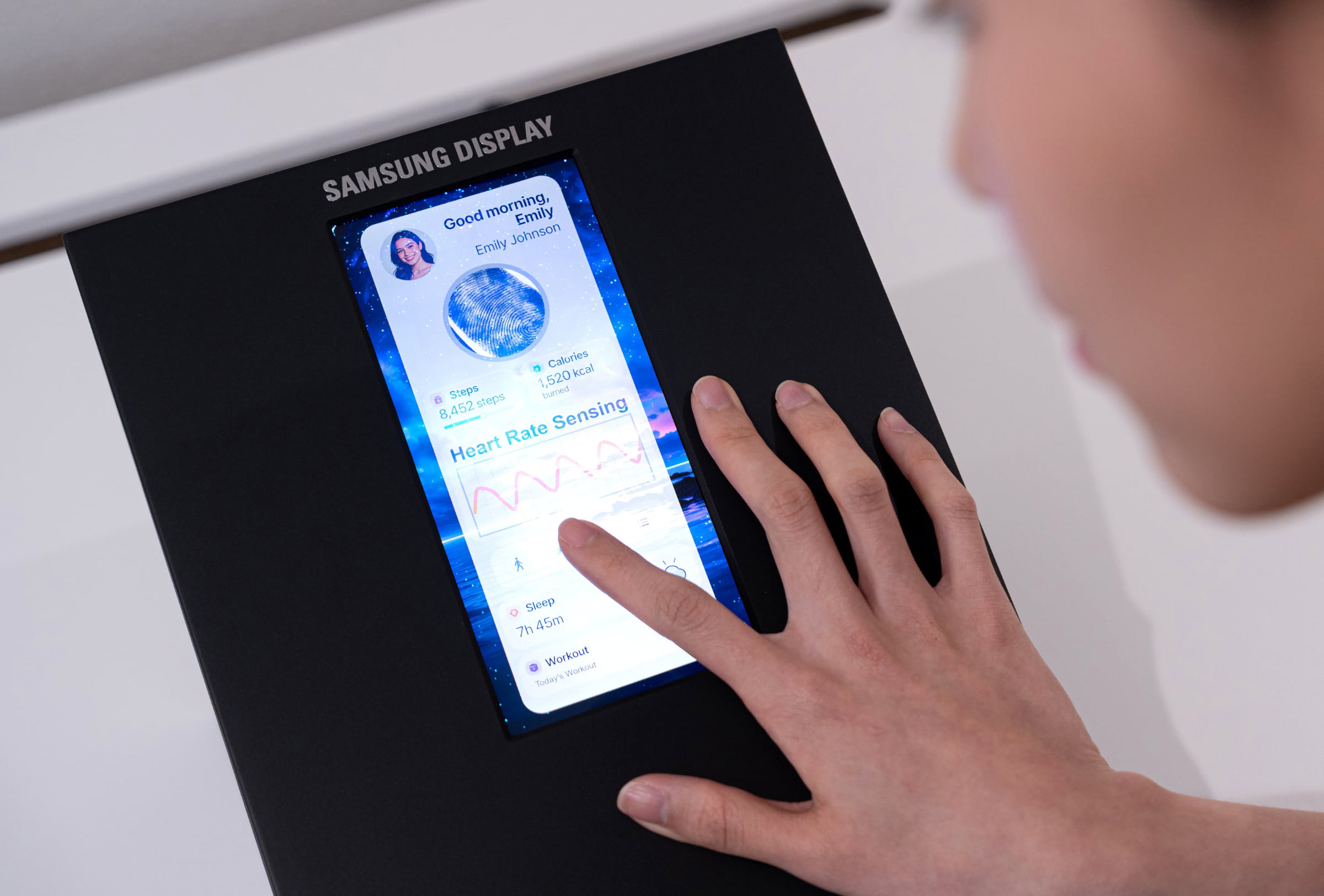
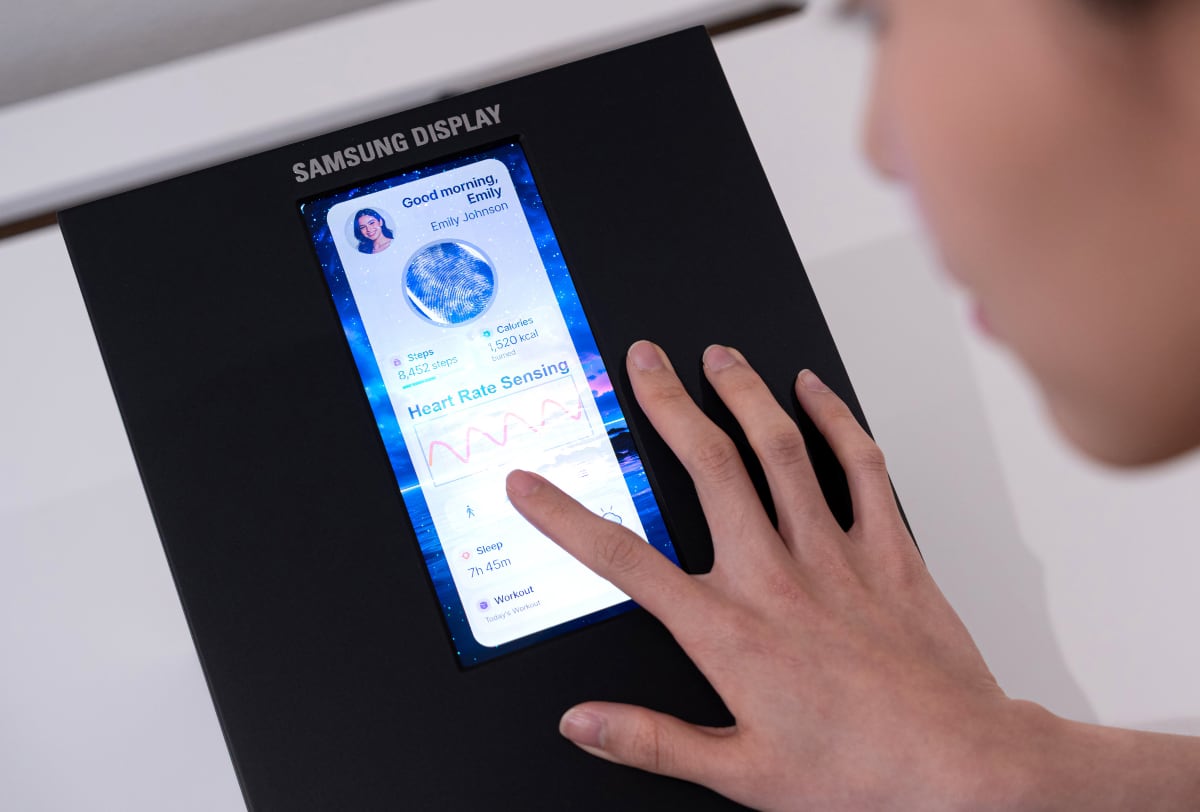 The Sensor OLED Displays also measures heart rate and blood pressure