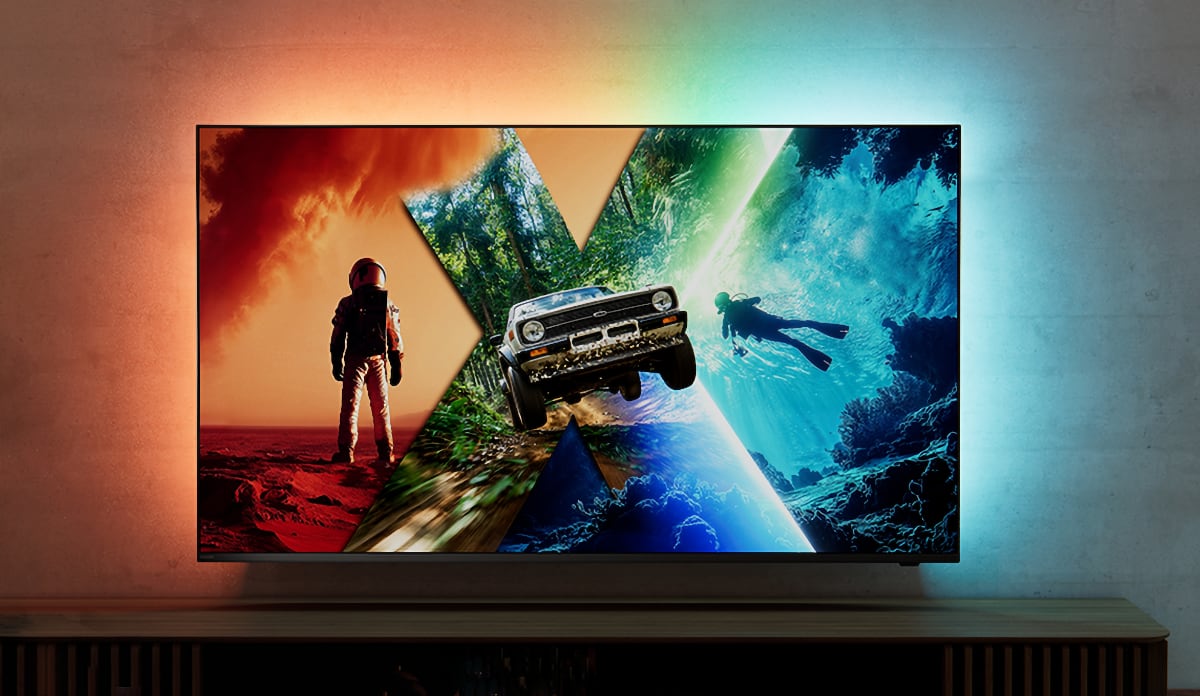
TCL offers both technologies this year but uses 'SQD-miniLED' in its flagship X11L instead of RGB LED, which powers the step-down RM9L. Why? Here is their explanation.
In doing so, TCL is taking a different stance from Hisense, Samsung and Sony, all of which position RGB LED as their most advanced backlight technology for LCD TVs this year.
All of these advanced LCD TVs are set to compete with OLED TVs, which have also gained wider color gamuts and higher brightness levels in recent years.
RGB LED versus 'super' QD-miniLED
The marketing terms can be confusing, which is often the point, but in short RGB LED is the industry umbrella term for what is also marketed as 'micro RGB', 'RGB miniLED', 'TrueRGB' and similar names.
RGB LED should not be confused with micro-LED, which also uses red, green and blue (RGB) light-emitting diodes. RGB LED is a type of backlight that still requires an LCD panel in front, as it only has a few thousand LEDs, whereas Micro-LED is the next step, where the LCD layer is removed entirely because there are millions of RGB LEDs (24.88 million for 4K resolution), but that is a topic for another time.
Illustration: TCL
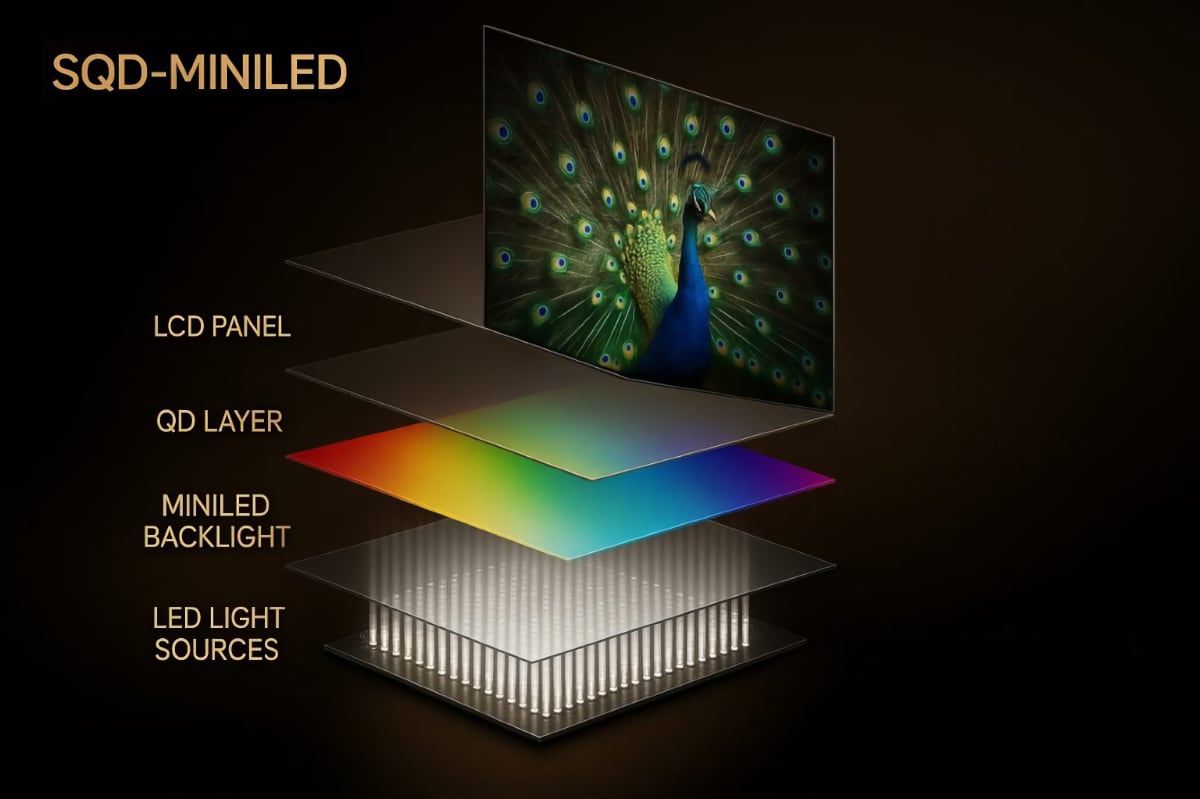
MiniLED is also a type of backlight, but here all diodes emit blue light. This light is converted into red and green, typically using quantum dots (QD), before reaching the LCD panel, which then controls light and color to produce the picture you see on screen. This combination is sometimes referred to as QD-miniLED. The latest iteration uses 'super' quantum dots ('SQD-miniLED'), which deliver even purer colors closer to RGB LED. It works like this:
Illustration: TCL
On top comes local dimming, where the backlight's many LEDs are divided into zones that can be controlled individually behind the LCD panel. If, for example, sunlight appears only in the upper right corner of the picture, the brightness in those specific zones can be increased without affecting the rest of the picture. The more zones, the more precise the control of light and contrast, and the fewer blooming artefacts around bright objects. More zones also enable more dazzling highlights in movies and games.
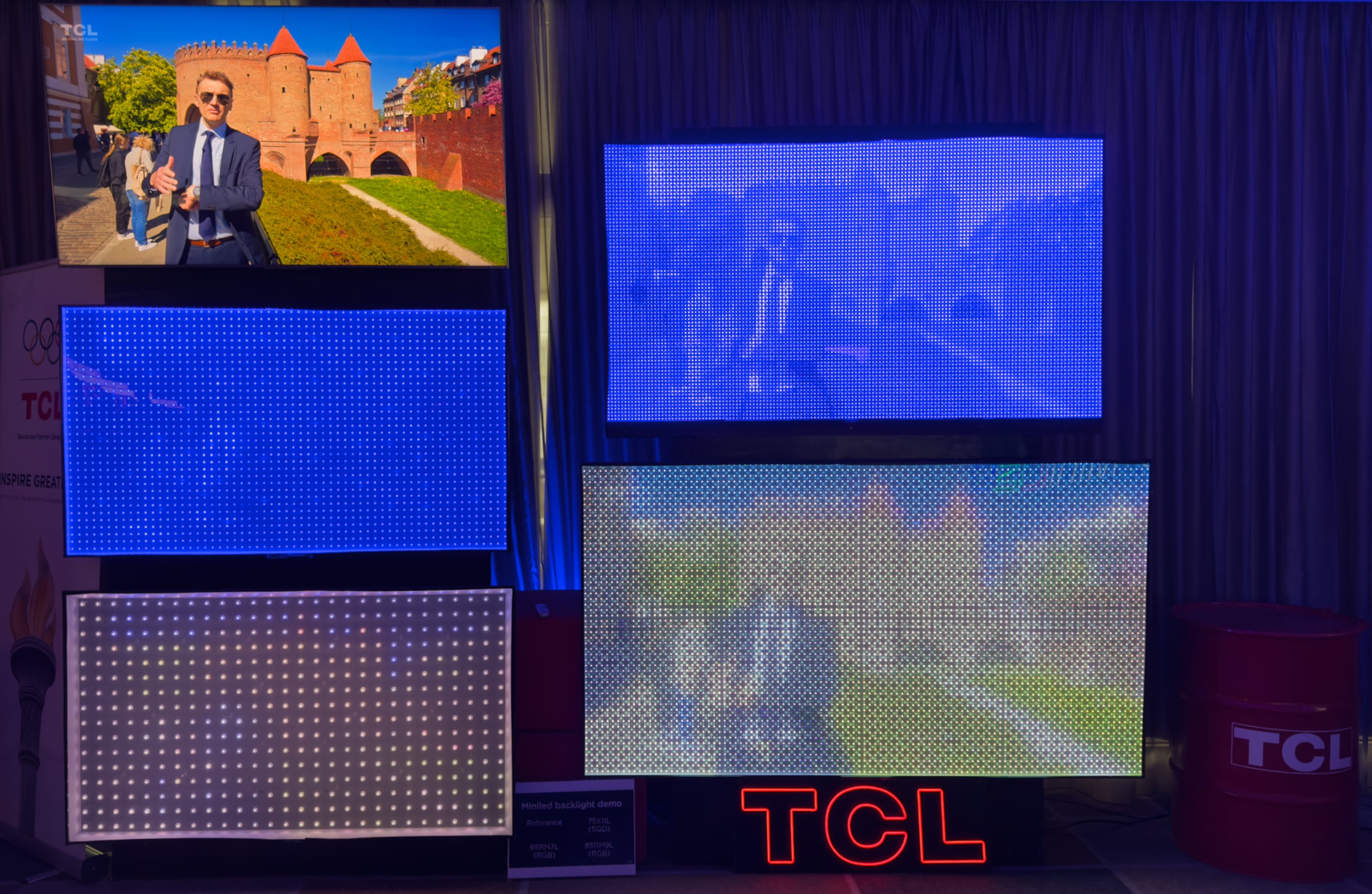
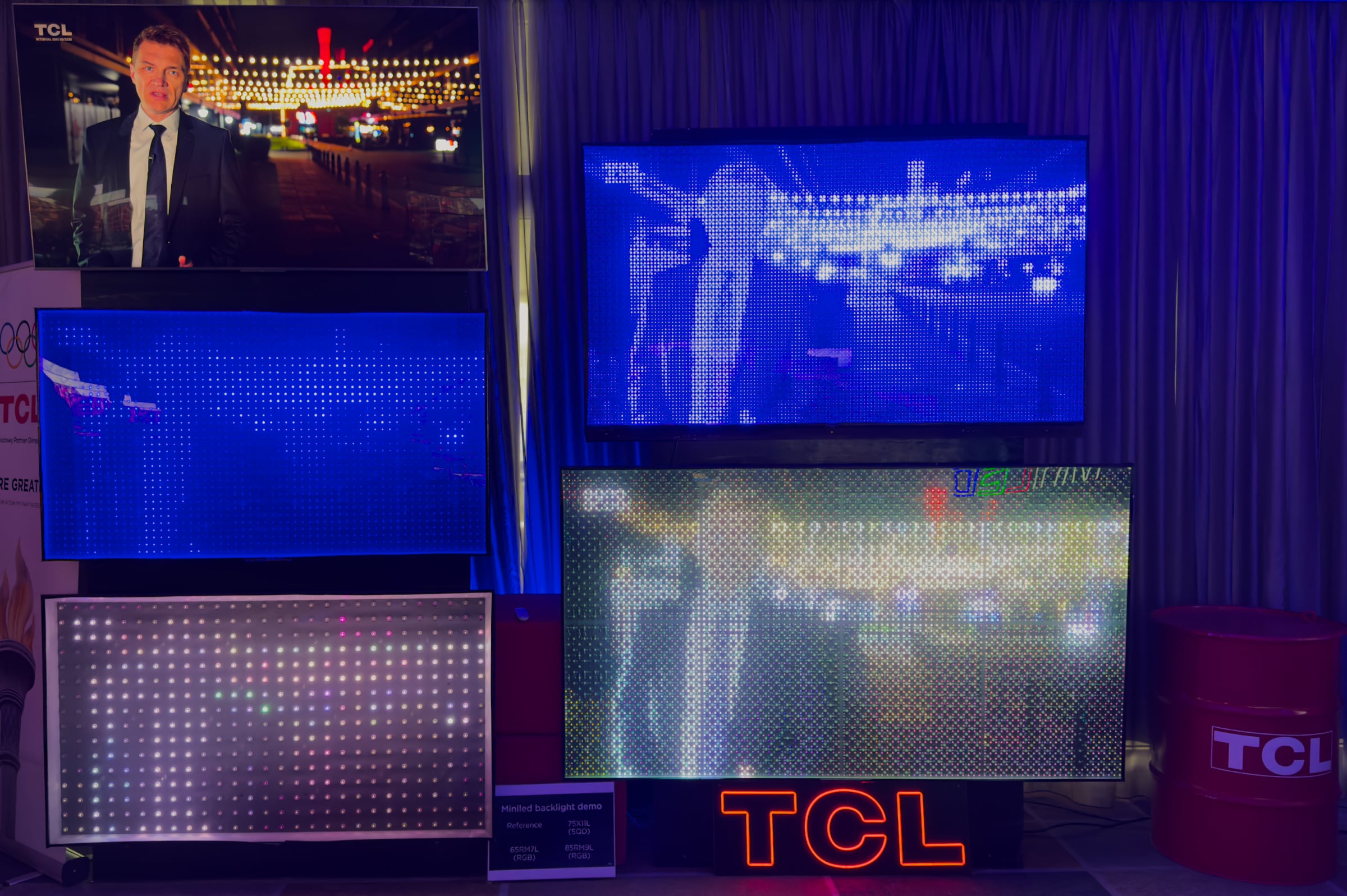
This is illustrated in the photos below, where the LCD panel has been removed so you can see how miniLED and RGB LED backlights and zones work. Top left is a reference picture on a normal TV. Top right is a 75" TCL X11L (11520 zones) with SQD-miniLED, and bottom right is a 85" TCL RM9L (2912 zones) with RGB LED. Note how X11L's 11520 zones can reproduce a rough outline of the original picture. RM9L partially does so with its 2912 zones, but without the reference TV it would perhaps be difficult to see. The 65" RM7L bottom left has only 448 zones, meaning each zone covers 18514 pixels.
Top left: reference TV. Top right: 75" TCL X11L (11520 zones). Bottom right: 85" TCL RM9L (2912 zones). Bottom left: 65" TCL RM7L (448 zones). Photo: Flatpanels Top left: reference TV. Top right: 75" TCL X11L (11520 zones). Bottom right: 85" TCL RM9L (2912 zones). Bottom left: 65" TCL RM7L (448 zones). Photo: Flatpanels
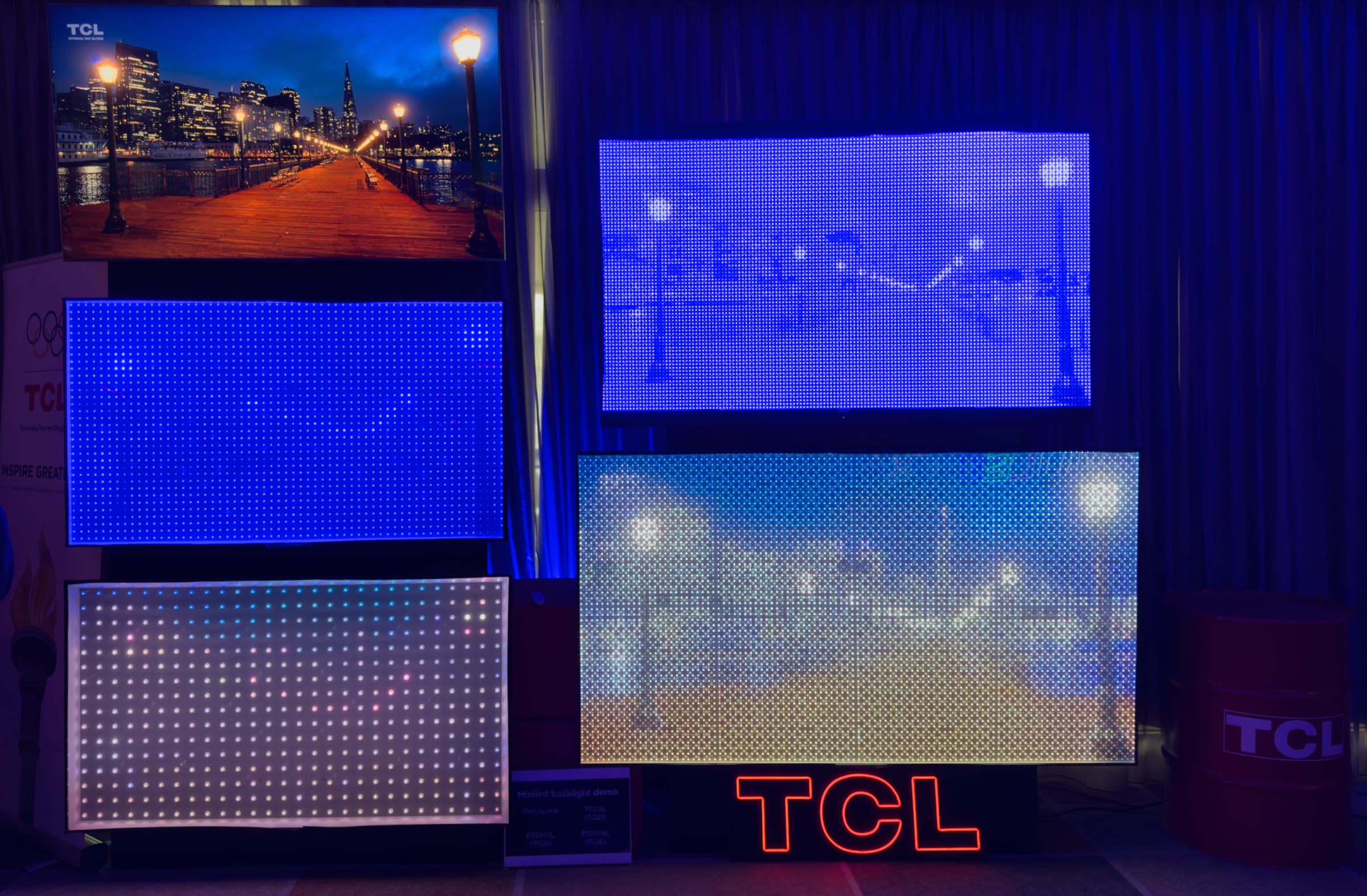
In the third example below, note how the street lamps are more individually illuminated on the TCL X11L at the top. If bright elements in a movie scene cannot be isolated within the LED backlight zones – if there are not enough zones – they cannot achieve high peak brightness (unless the zone fires anyway causing surrounding areas to be overexposed, which does not look good).
This same principle explains why small bright objects can often appear more intense on OLED TVs, even if they have lower peak brightness on paper. The goal for continued development of LCD TVs is to reach so many dimming zones that even the small lights in high-rise buildings – or stars in a night sky – can be lit individually.
Top left: reference image. Top right: 75-inch TCL X11L (11,520 zones). Bottom right: 85-inch TCL RM9L (2,912 zones). Bottom left: 65-inch TCL RM7L (448 zones). Photo: Flatpanels
We recorded TCL Europe Product Development Director Marek Maciejewski's presentation if you want to watch it. Marek also touches on the difference in optical distance between SQD-miniLED and RGB LED:
Video: Flatpanels
Is SQD-miniLED better than RGB?
First, we should note that RGB LED increases color saturation in red, green and blue, enabling LCD TVs to reproduce a wider color gamut closer to the BT.2020 color space, which underpins modern HDR video standards, including Dolby Vision 2 and HDR10+ Advanced. This expanded color gamut is the primary advantage of RGB LED.
At an event in Warsaw, Poland, attended by FlatpanelsHD, TCL argued that the new 'super' quantum dots achieve almost the same coverage of the BT.2020 color space.
The second reason, according to TCL, is that miniLED can currently support more dimming zones. In RGB LED, each zone must include red, green and blue LEDs that are individually controlled, requiring more space for driver electronics, heat management and processing power, which increases cost. RGB LED zone counts are sometimes presented as multiplied by three due to RGB, but this is somewhat optimistic, as only true independently controlled zones meaningfully improve light control, contrast and peak highlights. So be cautious about TV maker's claims about zone counts.
The third reason is 'crosstalk'. Colors from RGB LEDs can "bleed" into nearby objects in the picture. This can, for example, make a face appear slightly bluish against a blue sky or reddish due to a red cap. This effect can be observed in isolation if you on an RGB LED LCD TV put a bright colored object on a black background; the halo will now appear in the same color as the bright object.
FlatpanelsHD has observed this several times since RGB LED was introduced last year, but ultimately it can depend on the algorithm controlling the LEDs. How often do they switch to white light (equal RGB intensity)? Is the algorithm conservative or aggressive? And most importantly, how many zones are there? Today there are only a few thousand, but ideally there should be hundreds of thousands – at which point we approach micro-LED.
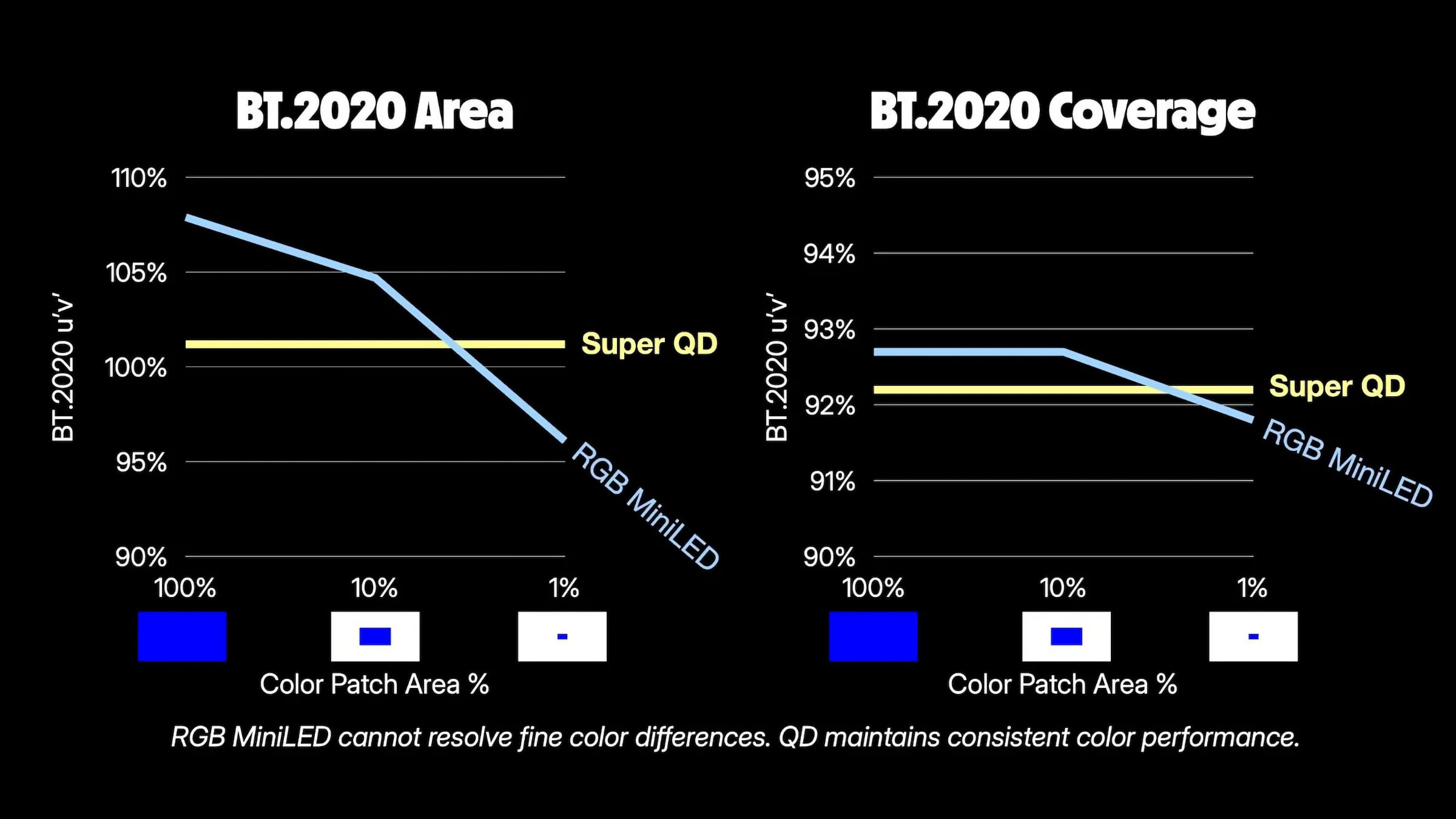
Crosstalk can also work the other way. White elements overlapping colored areas can reduce color saturation or luminance due to the way RGB LEDs are driven. Since crosstalk depends heavily on each scene, it is difficult to quantify, but in practice it can affect BT.2020 coverage on RGB LED LCD TVs, while miniLED remains more color consistent across different types of scenes.
What The Verge observed at a demonstration during Display Week 2026 illustrates this. In these graphs by Nanosys, it is quantified how BT.2020 coverage varies depending on whether the blue field covers 100%, 10% or 1% of the screen. Nanosys develops quantum dots, so of course it has a clear interest in downplaying RGB LED tech – which does not use quantum dots.
Photo: Nanosys via The Verge
Reviews will have the final say
Conversely, RGB LED may deliver slightly higher color saturation in certain less complex scenes when HDR content fully utilizes the BT.2020 color space. We have seen this in highly saturated demo material, and occasionally on TCL RM9L compared to TCL X11L.
Nevertheless, several of TCL's arguments are compelling, and we fundamentally agree that the number of dimming zones is the key driver of LCD TV picture quality development – just as OLED benefits from each pixel acting as its own zone.
However, the claims need to be tested before any conclusions can be drawn. We will do so in upcoming reviews of TCL X11L, RM9L and 2026 models from other manufacturers.
Sign up for FlatpanelsHD's newsletter
The latest news, in-depth articles, reviews, and exclusives in your inbox.