The milestone means that we can look forward to OLED displays exceeding 500 nits of full-screen brightness, up from 250-350 nits typically seen today in OLEDs.
VESA's DisplayHDR certification program has historically been not only irrelevant but counterproductive, promoting mediocre LCD panels as HDR-capable when they were nowhere close. That is why FlatpanelsHD has advised readers to ignore it.
This remains true for the standard DisplayHDR tiers, but the much stricter True Black tiers are starting to make the program relevant. They also sometimes reveal specifications that monitor manufacturers are not disclosing themselves, such as full-screen brightness.
First DisplayHDR 1000 True Black panels
DisplayHDR 1000 True Black is currently the most stringent tier, requiring monitors to deliver at least 500 nits of full-screen brightness and 1000 nits peak brightness (8% window) while simultaneously maintaining black levels below 0.0005 nits – true black. Only self-emissive technologies such as OLED can compete at this level.
At Computex 2026 this week, LG Display and Samsung Display highlighted the first panels to achieve the specification.
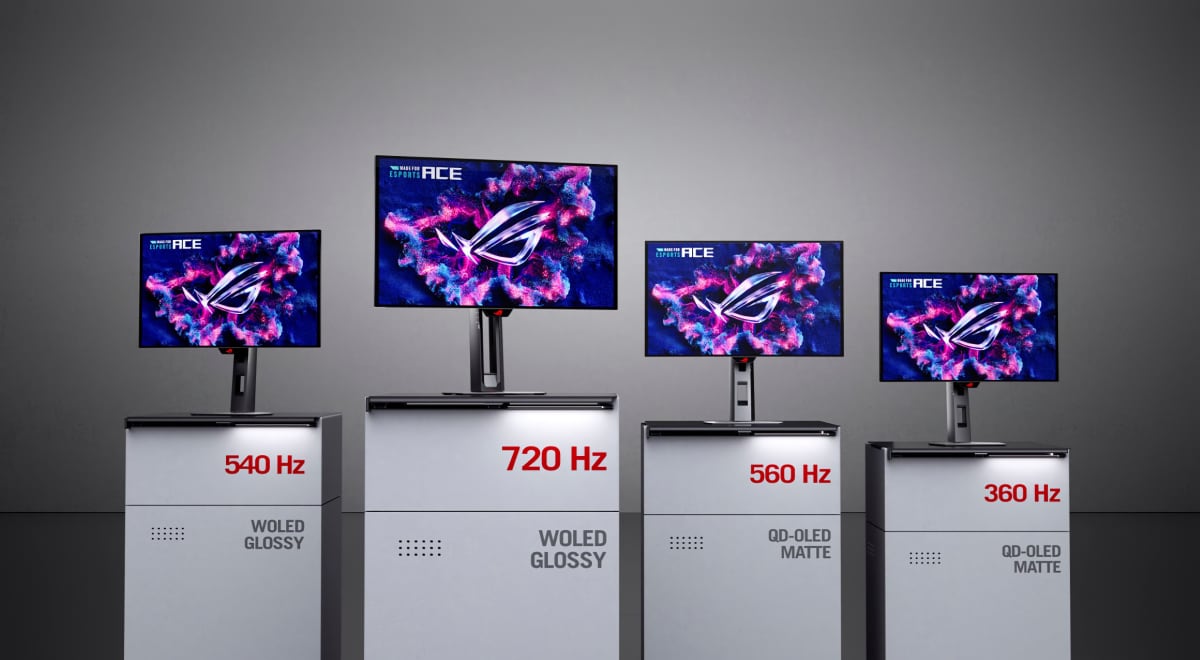
LG Display's panel is a 27-inch 1440p WOLED panel with RGWB pixels and a 540Hz refresh rate, designed for gaming.
- "A Gaming OLED that reaches the level of the DisplayHDR True Black 1000 standard set by the Video Electronics Standards Association (VESA), delivering accurate color reproduction as intended by content creators. The panel reaches peak brightness of 2,000 nits, offering highly vivid visuals based on enhanced contrast," announced LG Display.
Samsung Display's upcoming UT OLED panels will achieve DisplayHDR 1000 True Black. Photo: Samsung Display
Samsung Display's panel is an extremely thin tandem AMOLED laptop panel. It is not the first time Samsung Display has showcased this, and it will be part of the company's Ultra-Thin (UT) OLED lineup, which will soon enter mass production at the display maker's upcoming 8.6G OLED plant.
- "Crucially, the Ultra Slim design achieves this thinness without compromising core performance metrics, such as perfect black expression and rapid response times. Laptops equipped with Samsung OLED have achieved up to the 'True Black 1000' tier under VESA's DisplayHDR certification," announced Samsung Display.
OLED panels exceeding 500 nits full-screen
LG Display confirmed that its panel reaches 540 nits of full-screen brightness, a notable step up from today's OLED panels and finally on par with bright LCD monitors.
Samsung Display did not disclose the full-screen brightness of its panel, but it must exceed 500 nits to qualify for DisplayHDR 1000 True Black certification.
It marks the next step for OLED technology, which is also reaching peak brightness levels of up to 4600 nits (Vivid mode) on TV panels this year, as measured in our LG G6 review.
Sign up for FlatpanelsHD's newsletter
The latest news, in-depth articles, reviews, and exclusives in your inbox.