Sony launches its first 'True RGB' – RGB LED – LCD TVs alongside more affordable mid-range LCD models. Several of last year's models, including the QD-OLED flagship, will carry over into 2026, but there is also a new, lower-cost OLED TV on the horizon. Here's Sony's 2026 lineup.
We have redesigned our TV line-up overview to include more data and technical information (under TV models click on to expand the view). We are also introducing an interactive TV compare tool (use to add TVs to compare tool). It's all powered by the TV Database.
With 'True RGB', Sony is finally launching the LCD TVs with RGB LED backlights that it has been teasing for nearly two years. These are the Bravia 9 II and Bravia 7 II, which Flatpanels recently previewed to share first impressions and technical details.
The main advantage of RGB LED is a wider color gamut, closer to BT.2020, which forms the foundation of modern HDR video standards – meaning you need HDR content to fully benefit from it. These are still LCD TVs, but Sony has switched to a new panel from TCL CSOT with wider viewing angles.
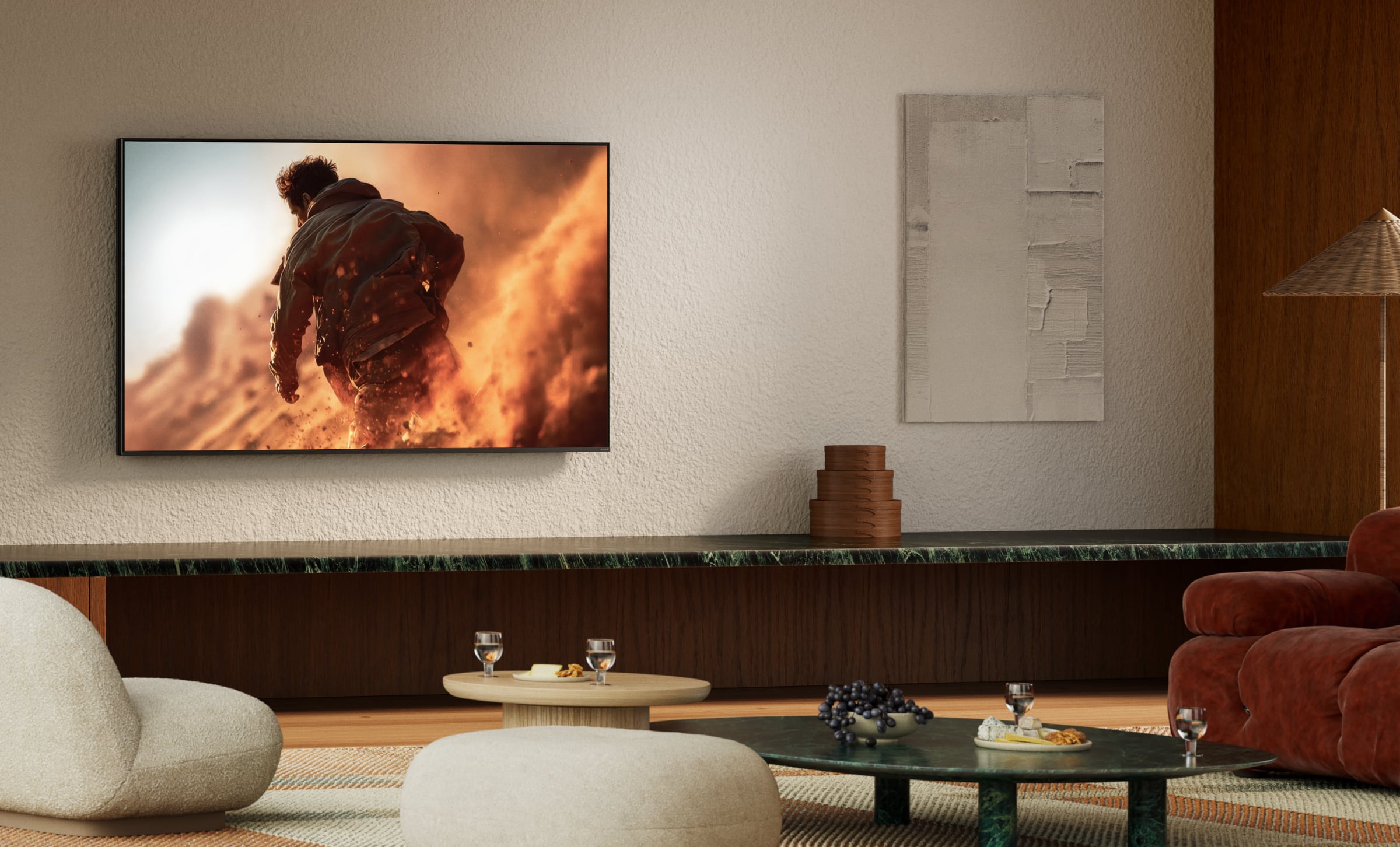
This year's new flagship, Sony Bravia 9 II
Ad:
While RGB LED is mainly about color reproduction, black levels, contrast and brightness still depend primarily on the number of local dimming zones in the backlight. The 75-inch Bravia 9 II, for example, has 1530 dimming zones (4590 RGB zones) compared to 1512 zones in the Bravia 9 from 2024.
Bravia 9 II has been positioned as Sony's LCD flagship, while the Bravia 8 II continues as Sony's QD-OLED flagship (available only in 55 and 65 inches). Bravia 9 II will be available in sizes up to 115 inches. All sizes below 115 inches feature a matte screen film. They can reach up to 4000 nits of brightness.
Also read: Sony sets its sights on 4000 nits as HDR's next frontier
Bravia 7 II also uses Sony's True RGB backlight technology but offers fewer dimming zones and lower peak brightness. It will be available in sizes up to 98 inches.
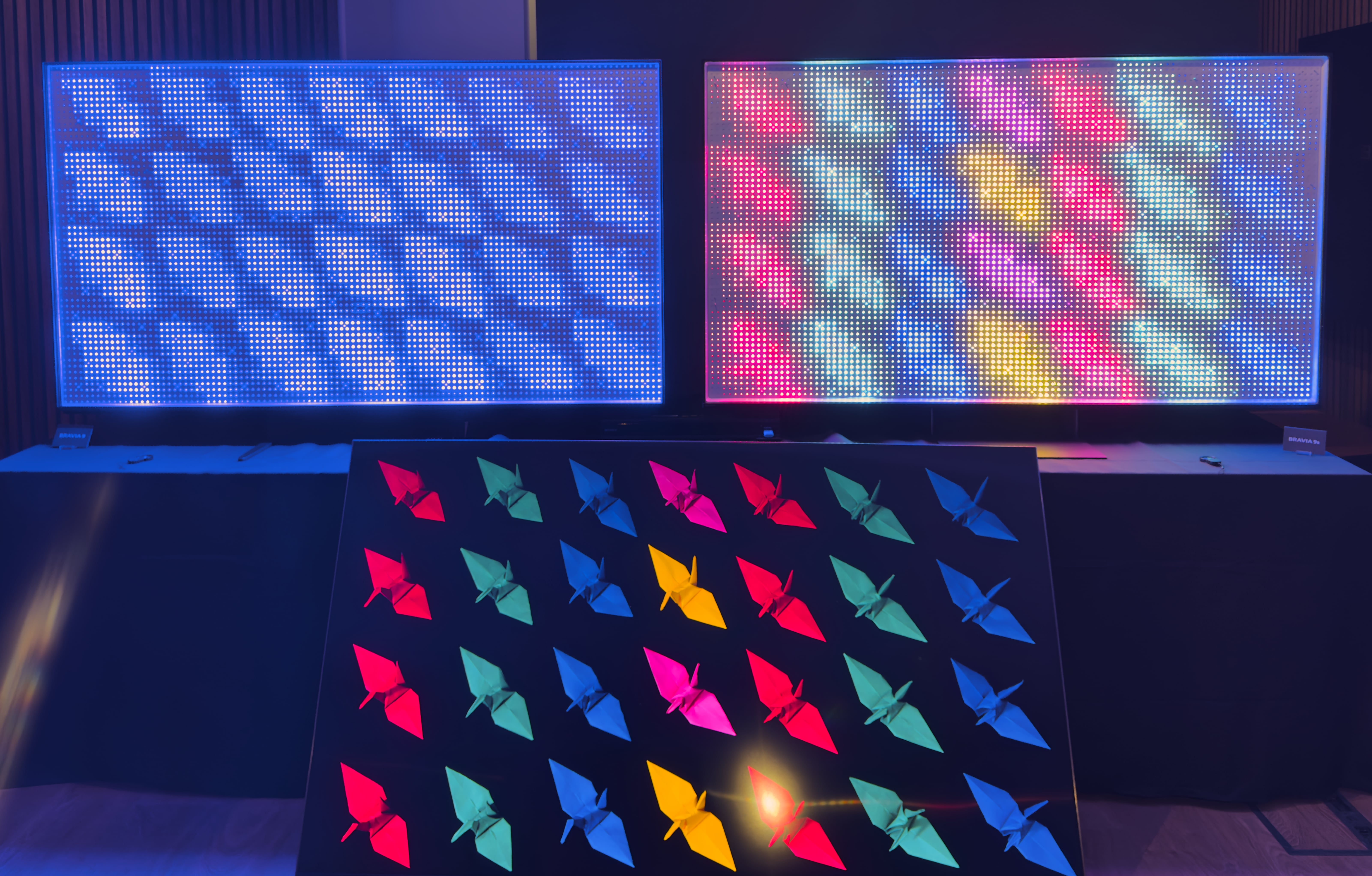
Sony's 'True RGB' (top right) backlight now uses red, green, and blue LEDs. Top left shows a traditional miniLED backlight using blue LEDs. Bottom: reference picture. Photo: Flatpanels
Sony's 'True RGB' will this year compete with other LCD TVs featuring RGB LED, a technology that nearly all major TV makers are adopting in 2026.
Some brands promote it as 'micro RGB' or 'RGB miniLED', but it is more or less the same approach as Sony's 'True RGB', although be aware that some RGB LED models may not have independent red, green and blue LEDs or not feature dimming zones (only edge LED).
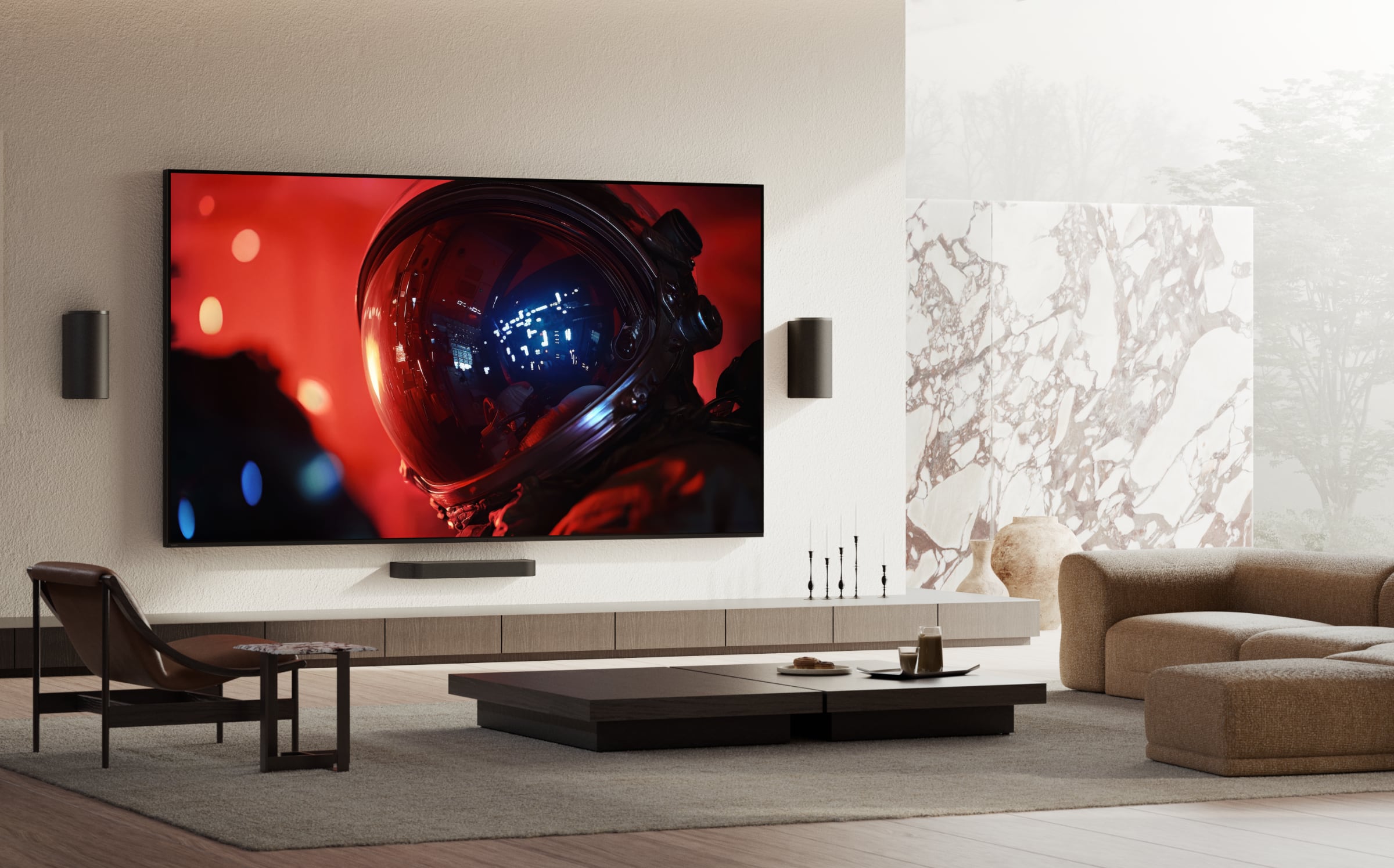
Sony's first 115" TV will launch as part of the Bravia 9 II range. Photo: Flatpanels
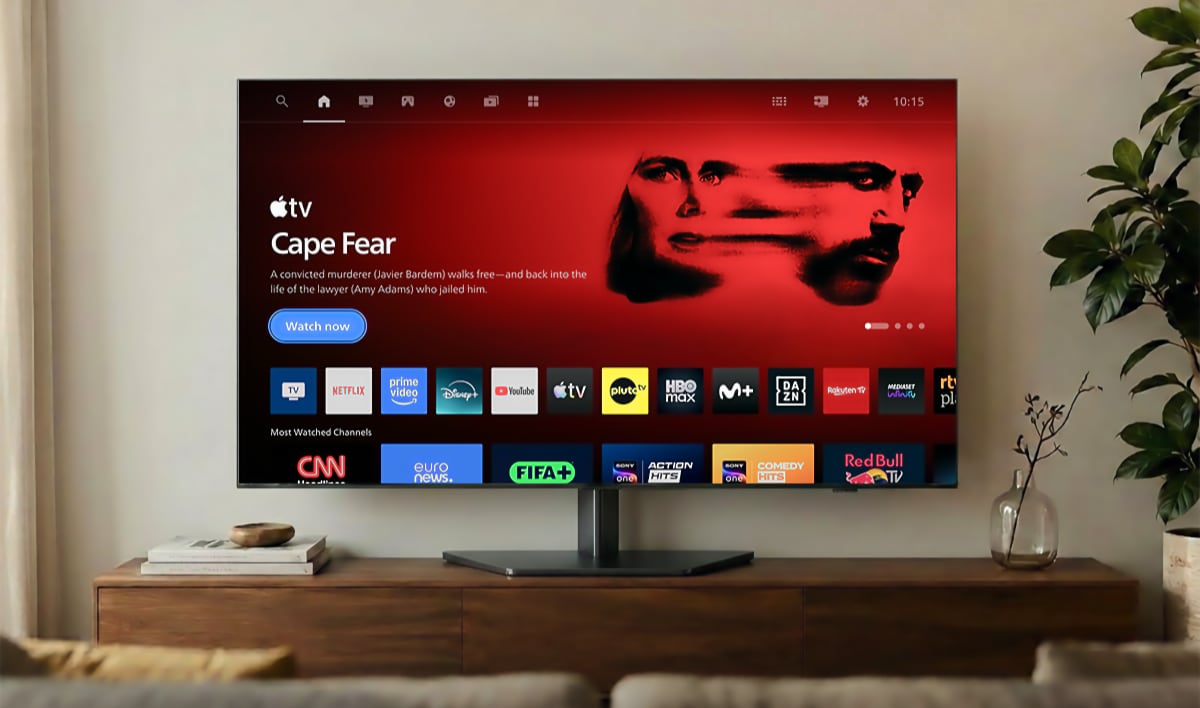
Sony is also launching two more affordable mid-range models, Bravia 3 II and Bravia 2 II. These do not feature RGB LED or even miniLED backlights, but still run Google TV with all its features, including built-in Google Cast (Chromecast) and access to a wide range of local and international streaming apps. Bravia 3 II will, for the first time, be available in a 100-inch size from Sony.
Additionally, there are leaked details of a new Bravia 6 range of OLED TVs. Bravia 6 is expected to become Sony's most affordable OLED TV to date. Our lineup overview will be updated once the information is confirmed.
Alongside the 2026 models, last year's Bravia II (QD-OLED) and the 2024 Bravia 8 (WOLED) will continue. Bravia 5 (LCD) also remains on sale. Sony's model range therefore looks as shown below, but our lineup overview focuses on the 2026 models, which can be compared side-by-side further down. Models from earlier years can be compared side-by-side in the TV database. Sony is now following a two-year cycle, meaning models are updated every second year instead of annually. From April 2027, the new Bravia company structure will take effect, with TCL owning half and Sony the other half.
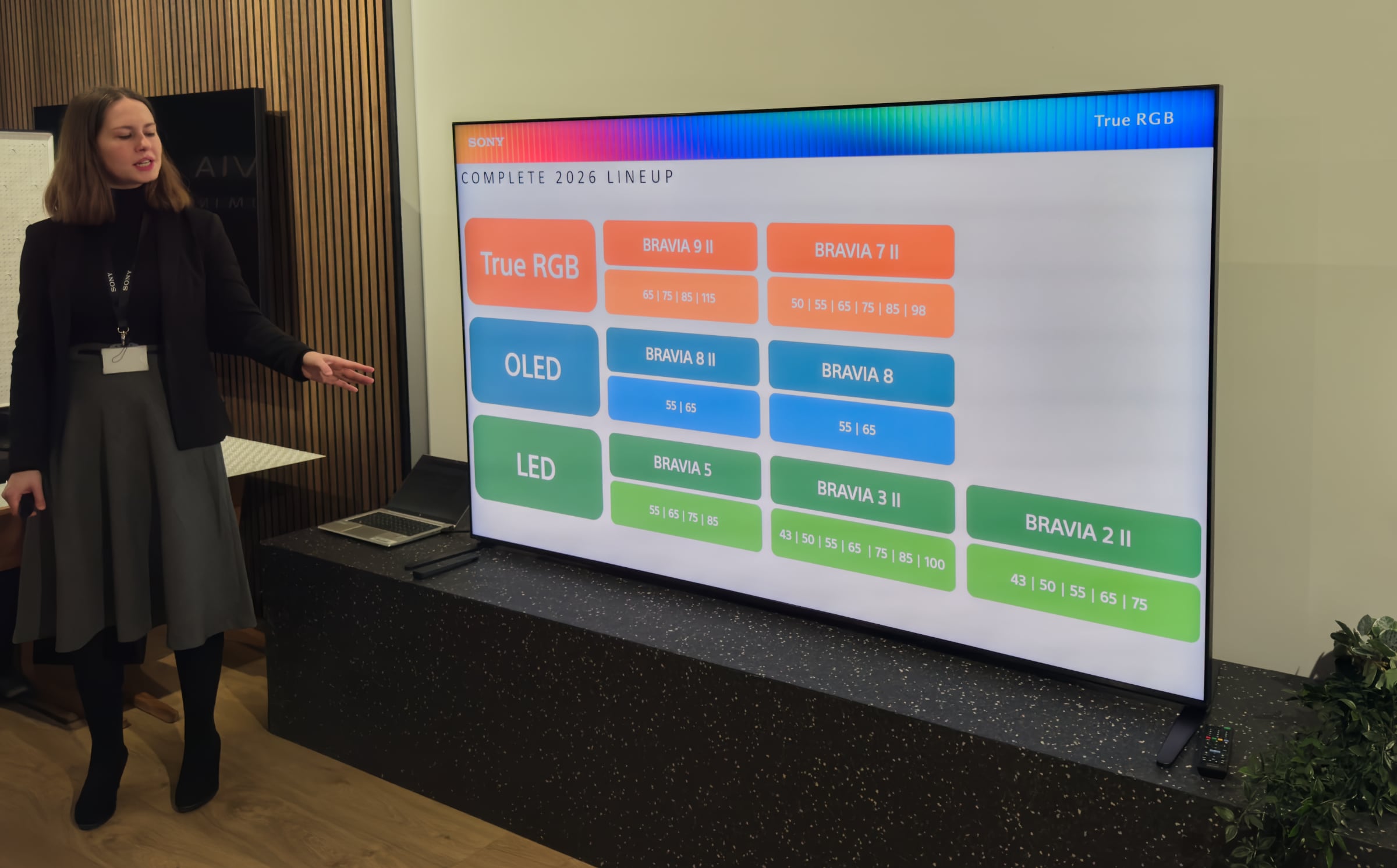
Sony's 2026 TV lineup. Note that many models are carryovers. Photo: Flatpanels
A curious detail this year is that Bravia 9 II and Bravia 7 II continue to use the older Pentonic 1000 chip, which limits them to two HDMI 2.1 ports. By contrast, the much cheaper Bravia 3 II uses a Pentonic 800 chip with four HDMI 2.1 ports.
HDMI 2.1 is still primarily used for gaming consoles and PCs. Sony supports 4K120, VRR and ALLM on its HDMI 2.1 ports, along with ARC and eARC for audio output.
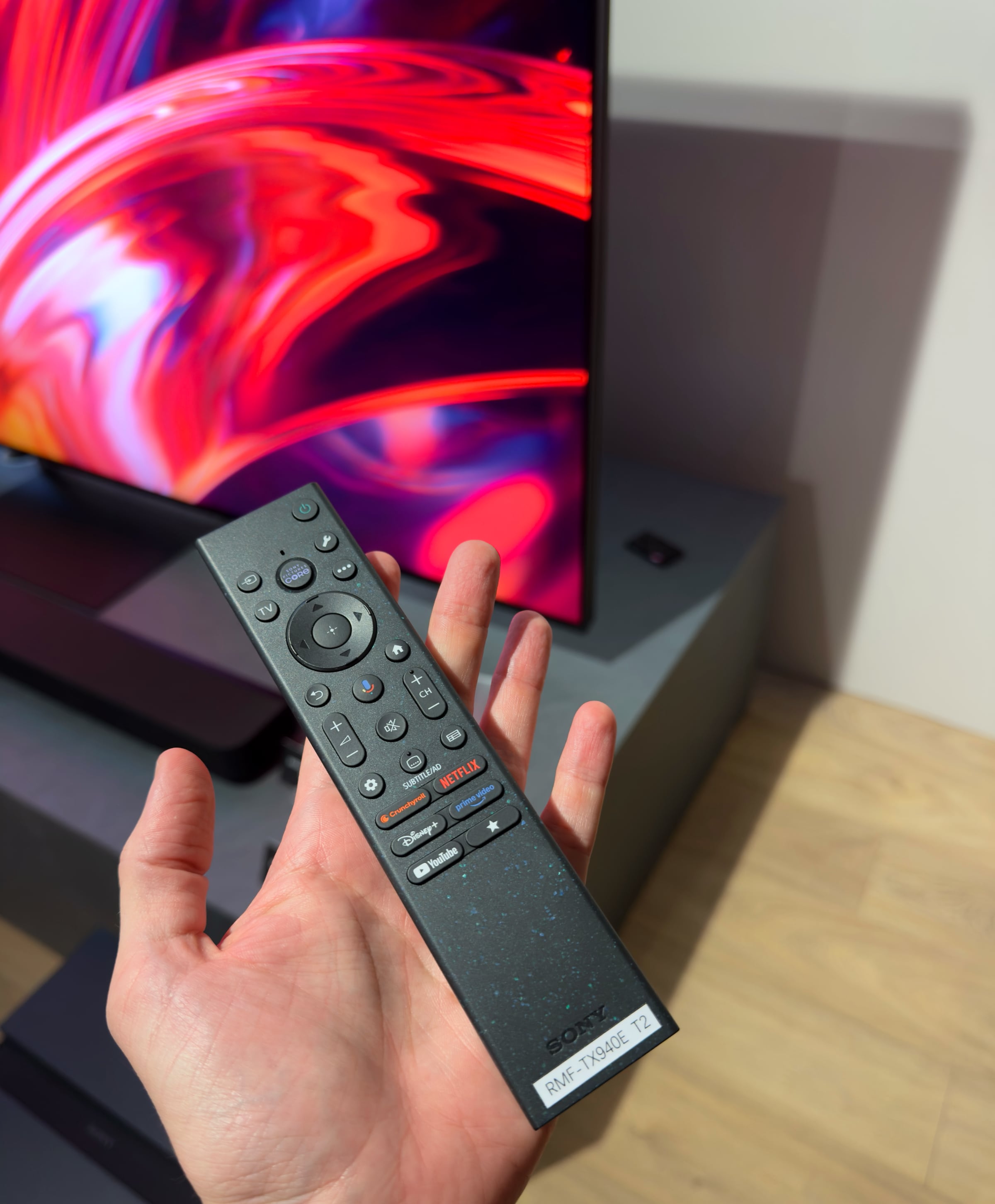
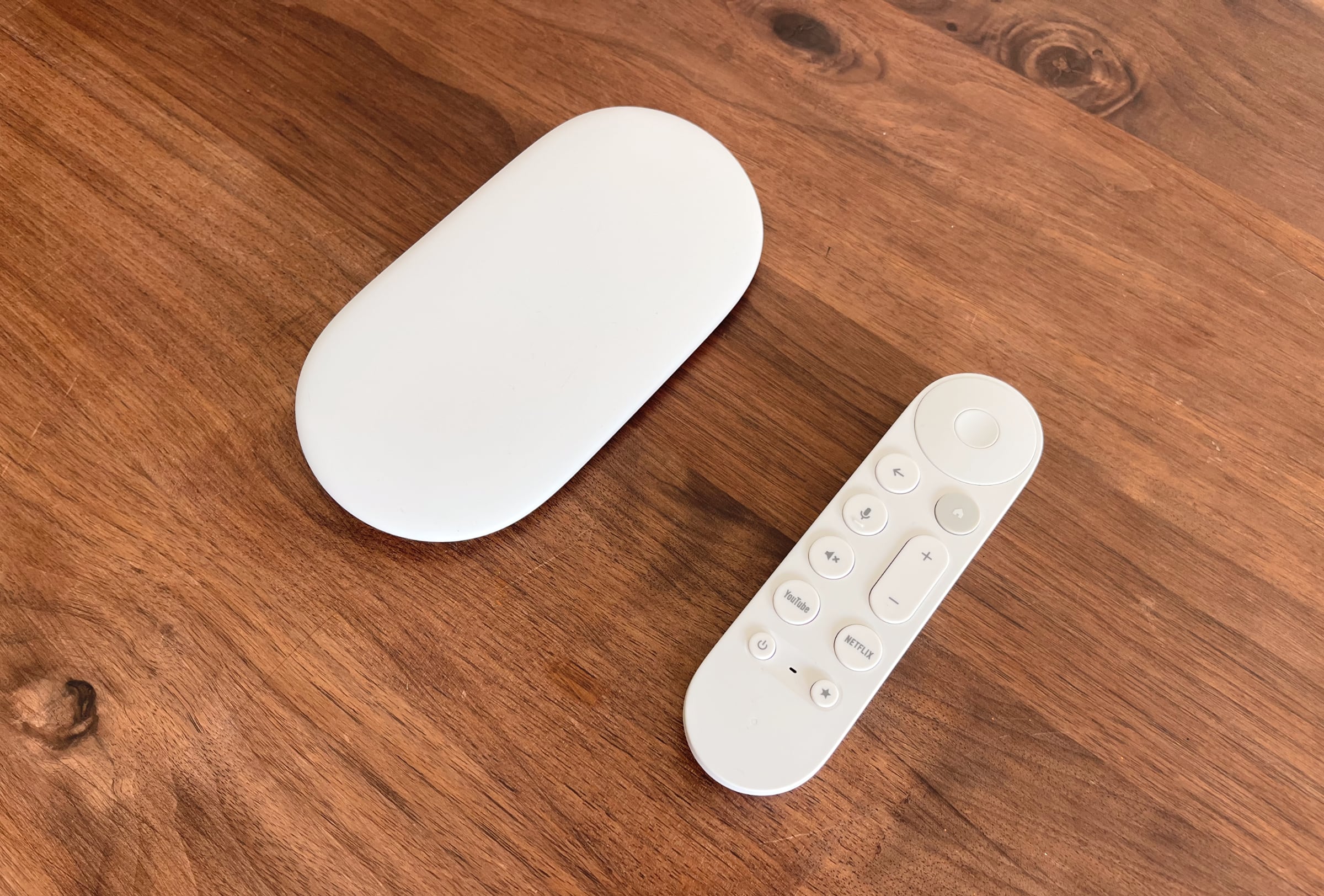
Sony's remote is now backlit and rechargeable
In terms of audio, Bravia 9 II features a 2.2.2-channel system with upward-firing speakers for Dolby Atmos and DTS:X. This is Sony's Acoustic Multi-Audio+, where sound is also emitted from the TV frame to make dialog feel more direct. Bravia 7 II features a 2.2-channel system without upward-firing speakers.
Another consequence of the Pentonic 1000 chip not being upgraded is that Sony cannot yet support Dolby Vision 2. The company told Flatpanels that it is neither for nor against Dolby Vision 2, but in 2026 it will continue to offer standard Dolby Vision.
This year's Sony remote features backlit buttons that automatically light up in the dark when picked up, and it is now rechargeable via USB-C.
Another new feature from Sony this year is Direct Connect, which allows up to two Sony Rear 9 or Rear 8 speakers and one Sub 9, Sub 8, or Sub 7 to connect wirelessly to the TV. In such a setup, the TV speakers act as left, centre, and right front channels. This is not FlexConnect but a proprietary system that only works with Sony speakers.
There is also a new My Cinema interface, which brings picture and sound settings into a more visual and user-friendly layout. It also allows users to customise picture and sound settings individually per streaming app. Picture and sound profiles can be created for different scenarios, such as daytime and evening viewing.
Sony Bravia 7 II
Ad:
Additionally, Sony's 2026 models support AV1 hardware decoding, but still not VVC (H.266), the successor to HEVC (H.265). The TVs support HDR10, HLG and Dolby Vision, but Sony is still ignoring HDR10+. Other existing features include Wi-Fi 6, PS5 features, ATSC 3.0 tuners, Sony Pictures Core (formerly Bravia Core), Dolby Atmos, DTS:X, IMAX Enhanced, Acoustic Multi-Audio+ and Voice Zoom 4.
A few years ago, Sony switched back to using the same model names across Europe, North America and other regions, but has shifted to a two-year model cycle. As a result, the 2026 models do not have a dedicated naming designation and are typically referred to as Mark 2, indicated by "II". However, note that the 2025 QD-OLED model, Bravia 8 II, is also a Mark 2. As a refresher for previous years: "L" denotes the 2023 generation: AL/XL = 2023, AK/ZK/XK = 2022, AJ/ZJ/XJ = 2021, AH/XH/ZH = 2020, AG/XG/ZG = 2019, AF/XF = 2018, A/XE = 2017, XD = 2016, XC = 2015, XB = 2014, XA = 2013.
Sony's 2026 high-end models are expected to launch globally in July onwards. Suggested retail prices are listed below, and market prices with links to retailers will be added later.
TV models
Compare
Select up to 5 TVs from the list (vertical scroll on smartphone screens) with . Press 'Close' to return to the TV model line-up view. Remove TVs with 'x', or use 'Reset' to remove all TVs.
Sign up for FlatpanelsHD's newsletter
The latest news, in-depth articles, reviews, and exclusives in your inbox.