RGB LED – also known as 'Micro RGB', 'Mini RGB', 'True RGB' and 'RGB-miniLED' – has made its way into LCD TVs. But what exactly is it, what is it good for, and which TVs have it?
First and foremost: These are still LCD TVs.
RGB LED refers instead to the type of backlight, which TV makers have started using in their marketing for LCD TVs following the launch of OLED TVs, which set a new standard in the market. In this case it is an LCD TV with a RGB LED backlight rather than, say, miniLED or "QLED".
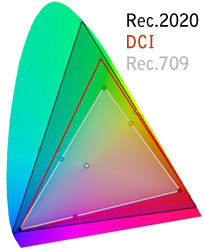
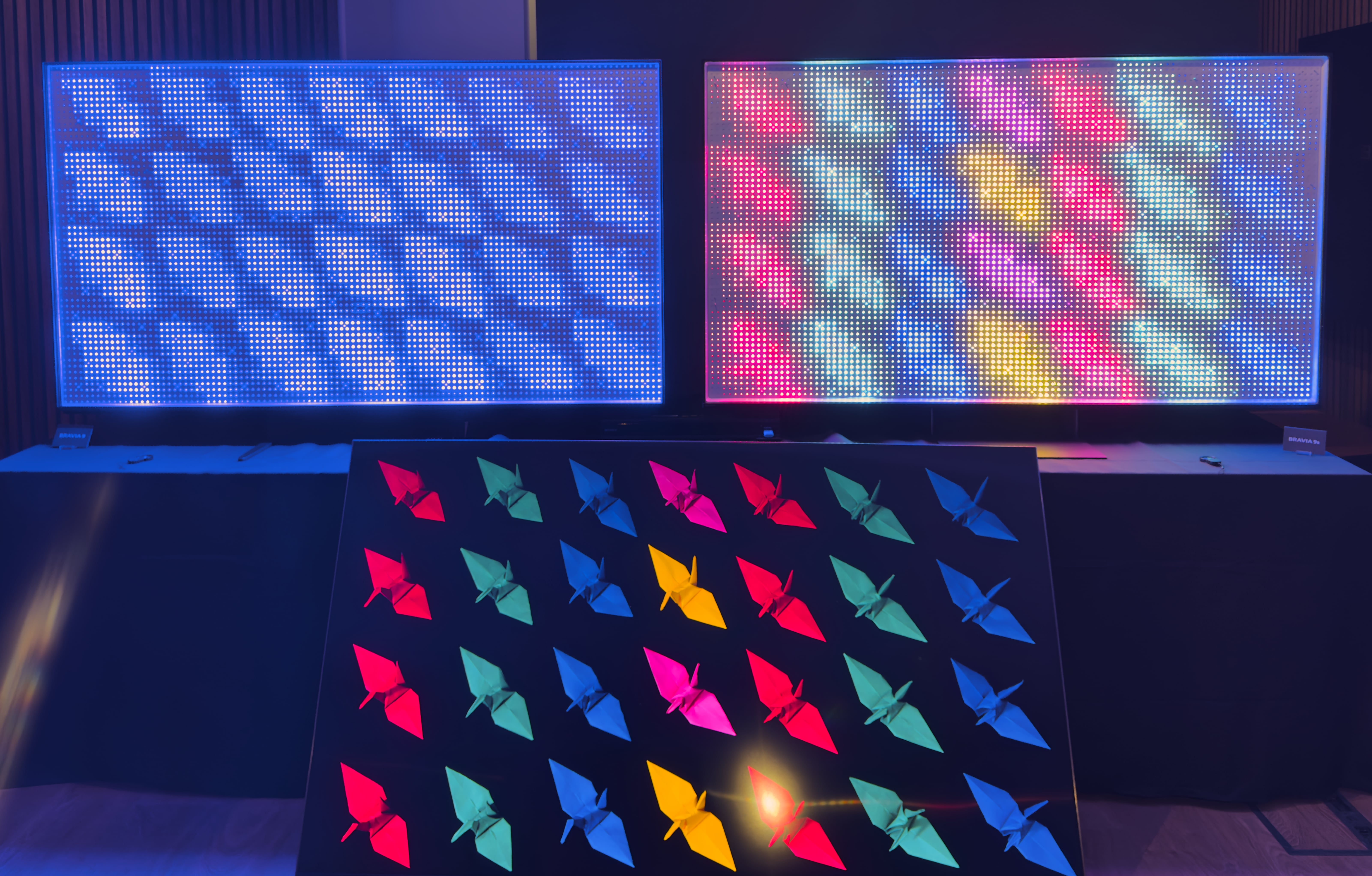
RGB stands for red, green and blue, while LED stands for light emitting diode. Because the LEDs are now red, green and blue – instead of all being blue as in miniLED and conventional LED – the TV can display more natural colors closer to the BT.2020 color space, which is the foundation of modern HDR video standards. RGB LED can also reduce power consumption, as the red, green and blue LEDs can be controlled independently depending on the colors in the movie scene.
In practice, this can result in more accurate reds in roses, more natural sky blues and more true-to-life greens in grass. These are among the colors that can fall outside Rec.709 (the HD standard) and DCI-P3 (the HDR standard). To take advantage of this, HDR content is required – films, series, sports or console games.
RGB LED cannot stand alone
An LCD TV can be thought of as a sandwich. The layer closets to you is the LCD panel, which can be either VA LCD or IPS LCD. This panel contains the many millions of pixels that regulate light and color – but do not generate light themselves. At the back sits the backlight, such as RGB LED, which produces the light. In between are several other layers that help distribute the light and create a picture.
The number of RGB LEDs is typically counted in the low thousands, so they cannot create a picture without the help of the LCD panel in front. The LEDs can often be controlled in zones, which helps with contrast. This is called zone dimming, or dimming zones.
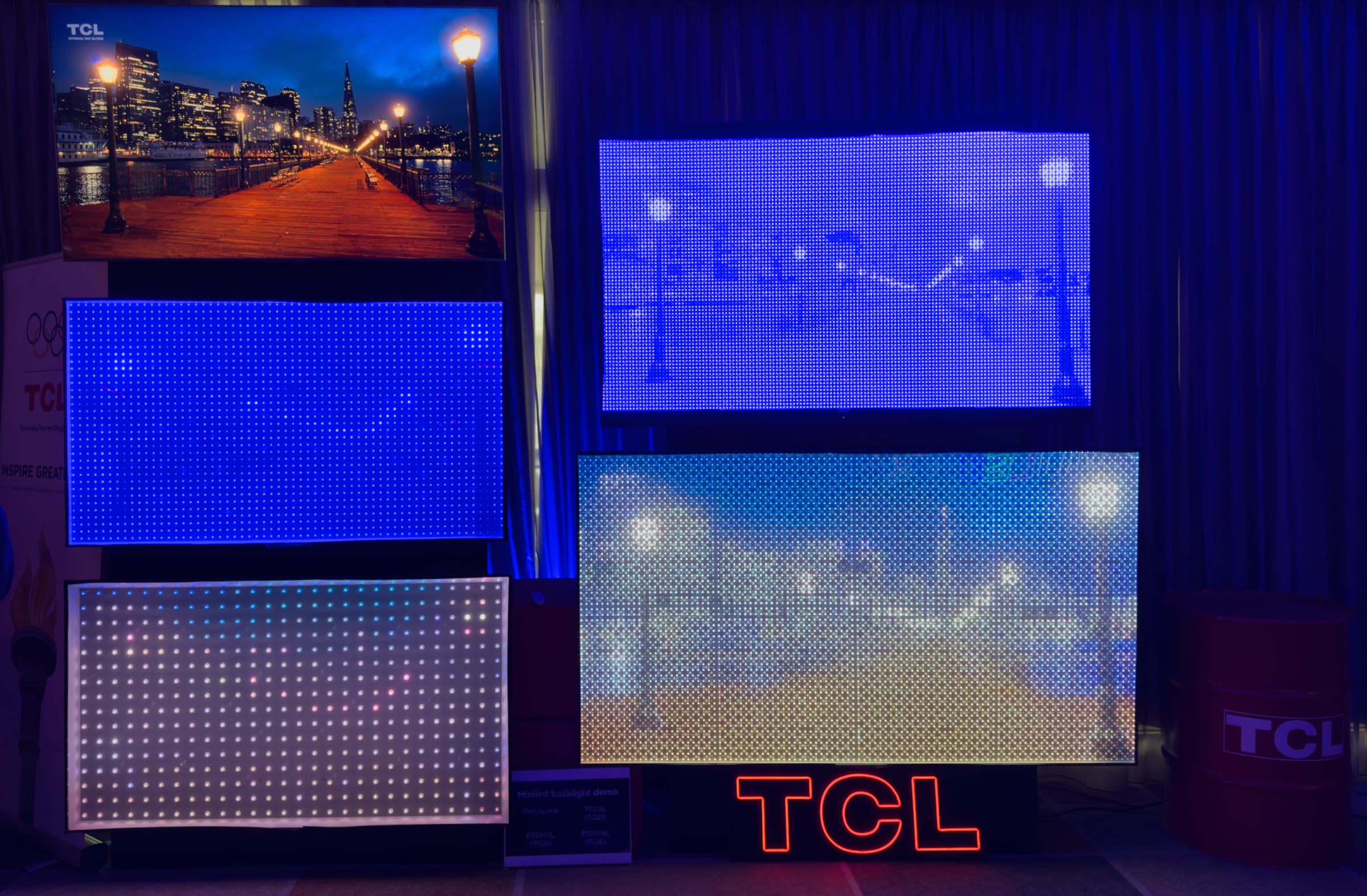
Top left: miniLED (LCD panel removed). Top right: RGB LED (LCD panel removed). Bottom: reference image (LCD panel in front). Photo: Flatpanels
The RGB LEDs generate light in red, green and blue, which expands the color gamut, but it is the job of the dimming zones to make light control more granular so that different parts of the image are lit optimally. The more dimming zones, the more precise the light control and contrast – the most important component of picture quality. Some TV brands report the zone count multiplied by three (what we called RGB zones), because the red, green and blue LEDs can each be controlled separately, but this does not accurately reflect the number of dimming zones.
In other words, RGB LED cannot stand alone. Ultimately, the number of dimming zones matters significantly more than the presence of RGB LED in itself. The combination of the two provides additional benefits, but it is not the only way to expand the color gamut on an LCD TV.
The number of dimming zones matters more than miniLED vs. RGB LED. Top right shows what 11520 zones (miniLED) can do versus 2912 zones (RGB LED) bottom right and 448 zones (RGB LED) bottom left. Photo: Flatpanels
Downsides of RGB LED
RGB LED is not without drawbacks and is currently more expensive than miniLED. RGB LED can also suffer from varying degrees of color crosstalk, where light from certain colored LEDs "bleeds" into adjacent colors in the picture. Because the RGB LED backlight controls red, green and blue LEDs independently, color saturation can also shift from scene to scene as the three color channels light up at different intensities depending on the color composition of specific movie scene.
It is also more difficult to increase the number of dimming zones with RGB LED than it is with miniLED.
Also read: Why SQD-miniLED is better than RGB LED, according to TCL
A further consideration is that RGB LED does not necessarily have zone dimming at all. RGB LED can – just like miniLED – be edge-lit. This means the LCD panel is illuminated by LEDs along the edge of the panel rather than LEDs directly behind it. With edge lighting, light is distributed using a diffuser layer behind the LCD panel. Edge lighting does not deliver high-end picture quality, as the LCD panel alone must regulate the light, binding the TV to the panel's inherent contrast ratio of between 1000:1 and 5000:1. In other words, blacks will not be particularly deep and brightness will not be particularly high – and certainly not both at the same time. Edge lighting can also produce uniformity issues in the picture.
In the TV database, FlatpanelsHD lists the backlight type for LCD TVs.
Is RGB LED worth the money? FlatpanelsHD will be taking a closer look at this in our reviews over the coming months.
What RGB LED is not
RGB LED is a new type of backlight for LCD TVs. It is not a new display technology. The limitations inherent in the LCD panel are not eliminated. RGB LED cannot, for example, change a panel's narrow viewing angles or slow pixel response time.
Despite the similarity in name, it is also not micro-LED. This newer display technology, which is still trying to find its way to the TV market, uses RGB LEDs reduced so much in size that they can act as individual pixels – that is 24.89 million LEDs for 4K resolution (3840x2160 x 3). Micro-LED is a self-emissive display technology – just like OLED.
TV models with RGB LED
From the TV database, FlatpanelsHD has compiled a list of all LCD models with RGB LED backlighting, regardless of whether the TV makers calls it 'Micro RGB', 'Mini RGB', 'True RGB' or 'RGB-miniLED'. The list is updated automatically as new models are added to the TV database.
Feature:
TV brand:
Sign up for FlatpanelsHD's newsletter
The latest news, in-depth articles, reviews, and exclusives in your inbox.