LG Display has today announced its new "a dream OLED" production method, which eliminates the fine metal masks that add costs and reduce display performance.
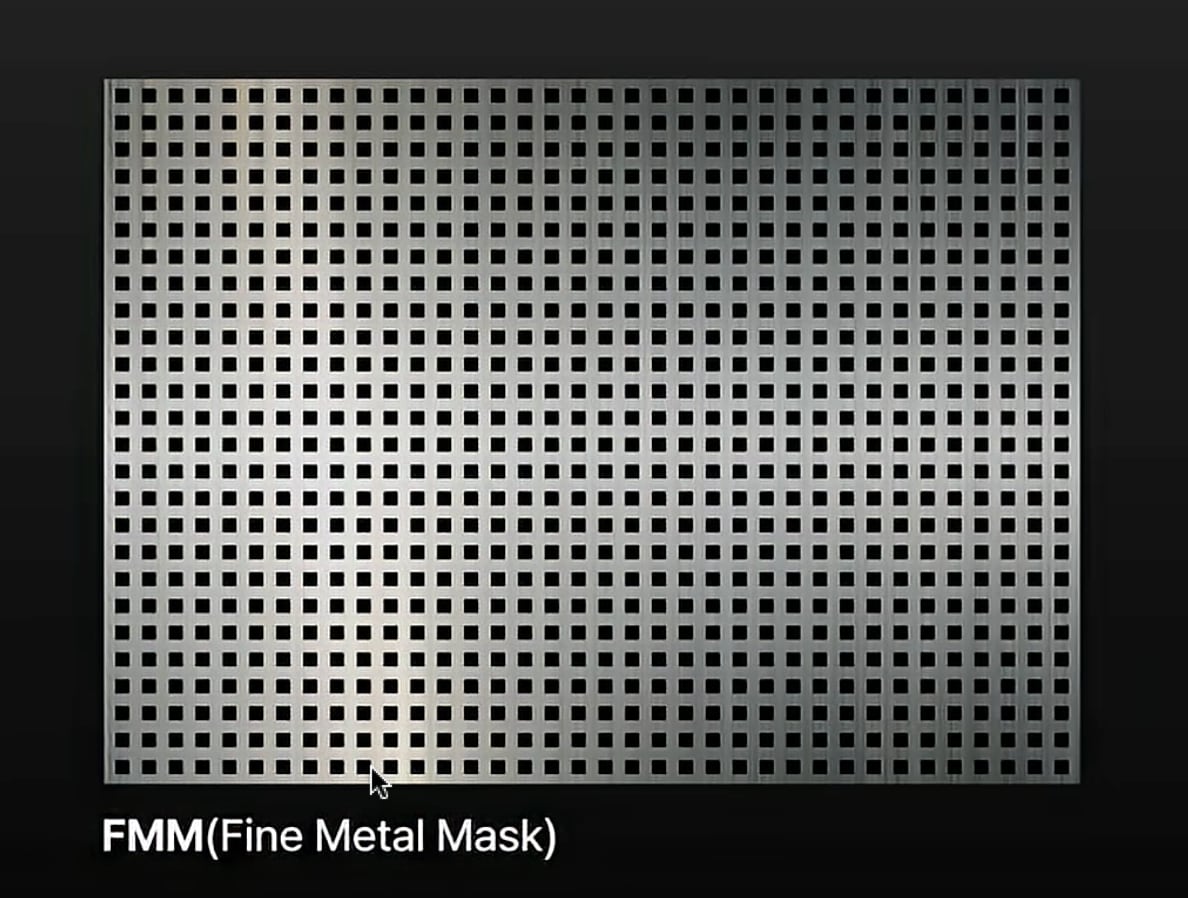
Illustration of a Fine metal mask (FMM)
For more than a decade, LG Display has produced OLED panels using a conventional fine metal mask (FMM) process, evaporating OLED materials through tiny holes in metal plates. It works well but is costly and not so flexible.
Today, it announced that it has successfully developed the Flipp method, which deposits RGB pixels in sequence without using metal masks (FMMs). The process is explained in more details in the video at the bottom.
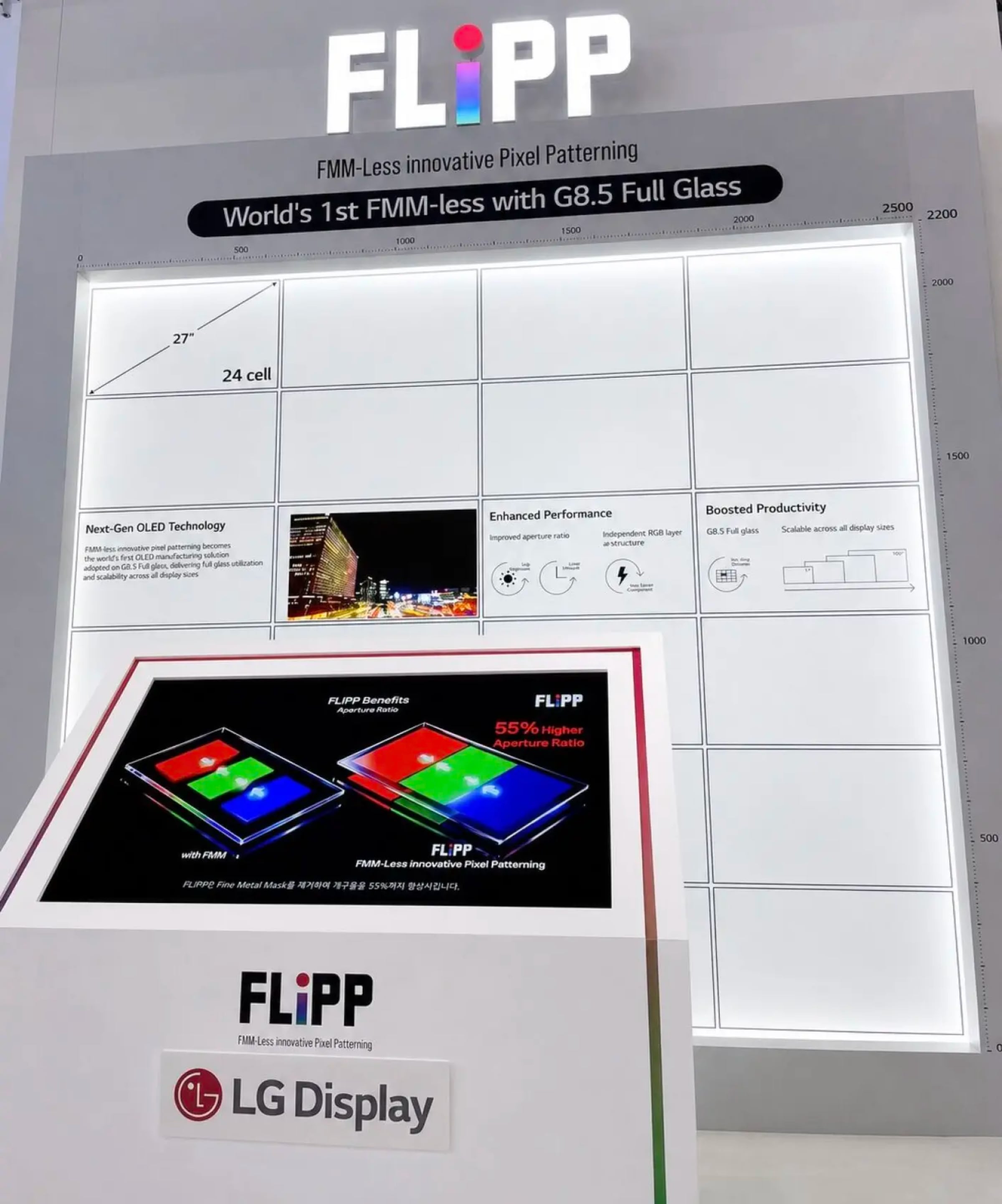
- "Compared with panels produced using FMMs under identical conditions, FLiPP enables displays to increase brightness by 1.6 times, extend lifespan by 2.4 times, and reduce power consumption by 13%. This is because FLiPP improves the aperture ratio – the proportion of the total display area occupied by RGB pixels – by approximately 55%."
First on an 8.5-generation plant
Flipp is similar to Japan Display's eLeap manufacturing process, which Japan Display has struggled to commercialize. Reports last year claimed that the two companies had started some form of collaboration, but in today's announcement LG Display describes 'Flipp' as "its own proprietary technology".
Flipp can be produced LGD's existing 8.5G OLED plant.
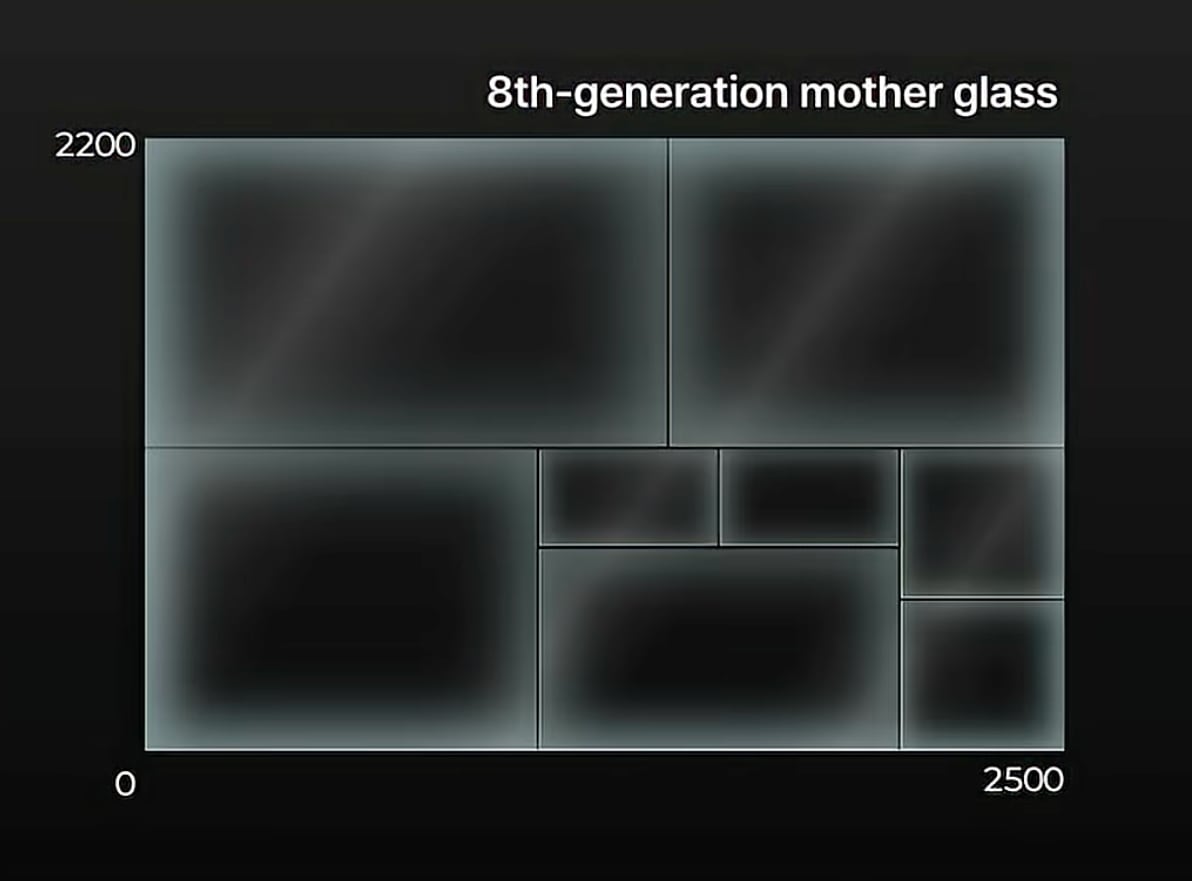
- "Leveraging its existing large-sized Tandem WOLED production infrastructure and technical expertise, FLiPP has allowed LG Display to become the first display company to manufacture FMM-less OLEDs using 8.5th-generation mother glass as a single whole piece," the company said.
Besides Japan Display, China's Visionox has also announced plans to produce OLED panels without using metal masks in 2027, while TCL CSOT is gearing up for inkjet printing of OLED displays. Samsung Display is exploring the concept.
For TVs, monitors, tablets and more
LG Display explained that the new production method will be used to produce RGB OLED panels in a range of sizes for different types of devices including TVs, monitors, laptops, VR/AR and more.
- "One of FLiPP’s greatest advantages is that it is free from panel size and resolution constraints. In theory, it can be used to produce displays ranging from 1 inch to 100 inches and can be applied not only to conventional panels but also to VR and AR displays, making it a virtually universal, 'ultimate technology'," the company said and added:
- "Starting with IT applications such as tablets and monitors, it will expand its range of FLiPP-manufactured panels to cover a range of products from 1-inch wearable devices to ultra-large TVs." Flipp OLED. Photo: LG Display
The company is planning to invest 3 trillion Won on the technology with production starting by late 2027 at the earliest.
LG Display has previously used the "dream" reference for OLED, but back then to describe phosphorescent blue OLED (PHOLED). It is currently unclear if Flipp will switch to using blue PHOLED or not.
As TCL CSOT, BOE and other Chinese display makers are about to enter the OLED market in earnest, we have been hearing about a lot of advances from South Korea's LG Display and Samsung Display recently. LG Display is also developing cheaper 2-layer OLED panels.
How Flipp OLEDs are produced
As explained by LG Display:
Flatpanels
Sign up for FlatpanelsHD's newsletter
The latest news, in-depth articles, reviews, and exclusives in your inbox.