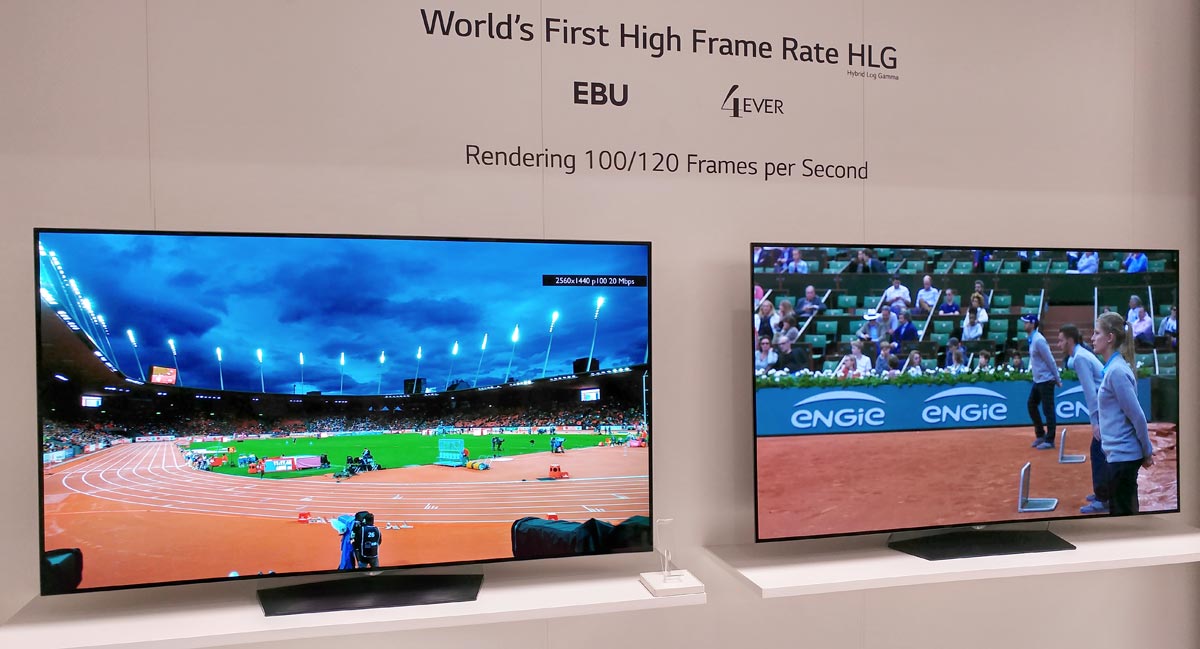
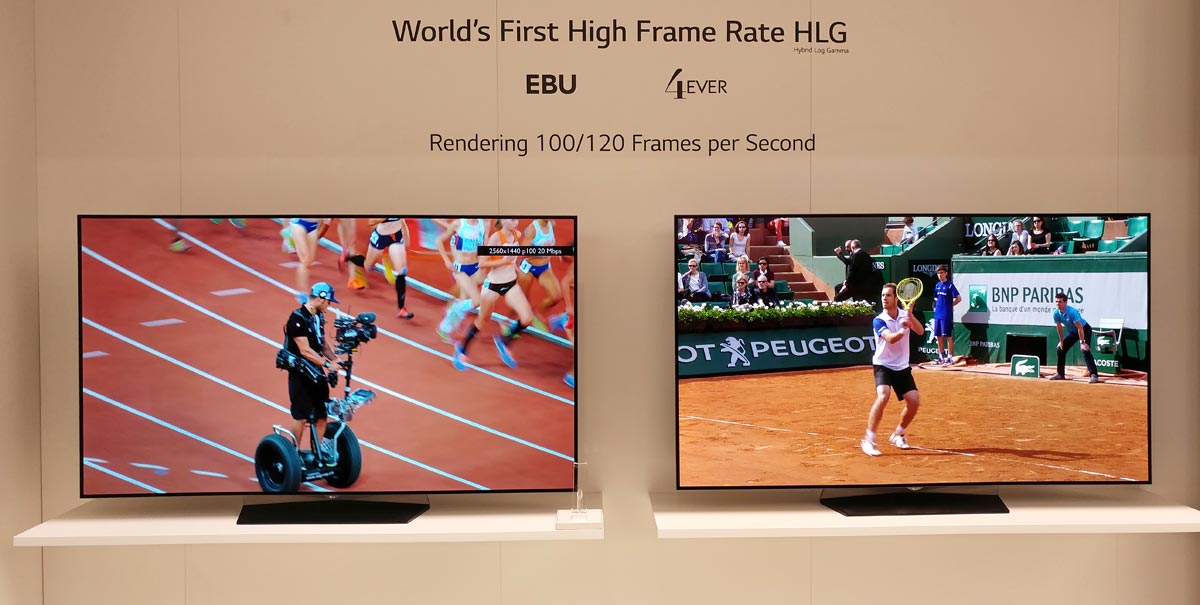
The next frontier for the industry - after 4K and HDR (high dynamic range) - is HFR (high frame rate). At IFA 2016, LG is demonstrating how HFR can drastically improve picture quality on OLED TVs.
HFR = High Frame Rate
Not to be confused with HDR, which stands for “high dynamic range”, the HFR abbreviation stands for “high frame rate”. HFR describes the ability to reproduce 100 or 120 frames per second for extremely smooth video.
To understand HFR consider that, for decades, movies have been shot in 24 frames per second. That may sound low compared to modern standards but some in the movie industry argue that it helps give films the special “movie look”. TV programs are usually shot in 25 or 30 frames per second, and console games are rendered in up to 60 frames per second.
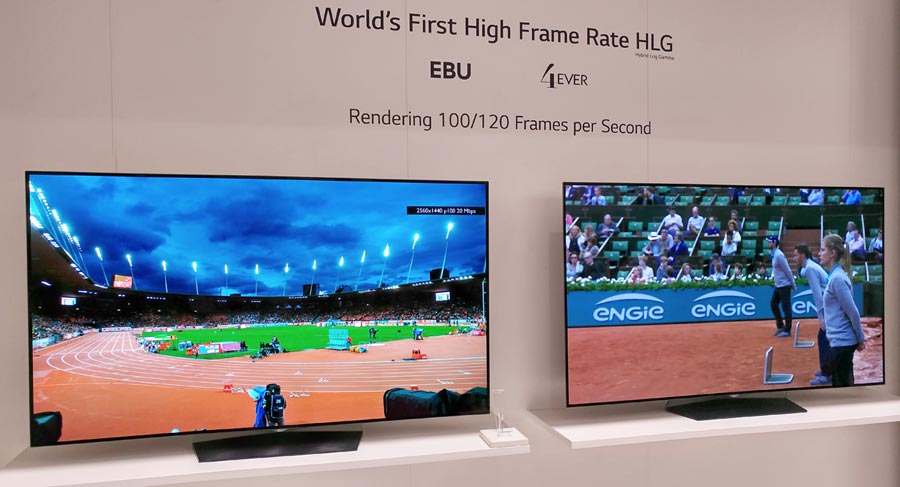
100 or 120 fps (for Europe and the US, respectively) is a major improvement and the industry has dubbed it HFR. With HFR videos will look far smoother, sharper and realistic, and ultimately improve picture quality drastically since most of what we see on our TVs are after all moving images.
LG demonstrates HFR on OLED
LG argues that OLEDs are incredibly fast as each pixel can, theoretically, change color tone in less than 0.01 ms, much faster than any LCD panel today. That makes OLED perfect for HFR, says LG.
This is what LG is demonstrating at IFA 2016 in Berlin. We spoke to LG about it before IFA started and a spokesperson told us that LG is using specialized OLED panels that can best be described as prototypes. To enable HFR the picture processing engine also has been upgraded to support 100/120 frames per second from the input signal to the output picture.
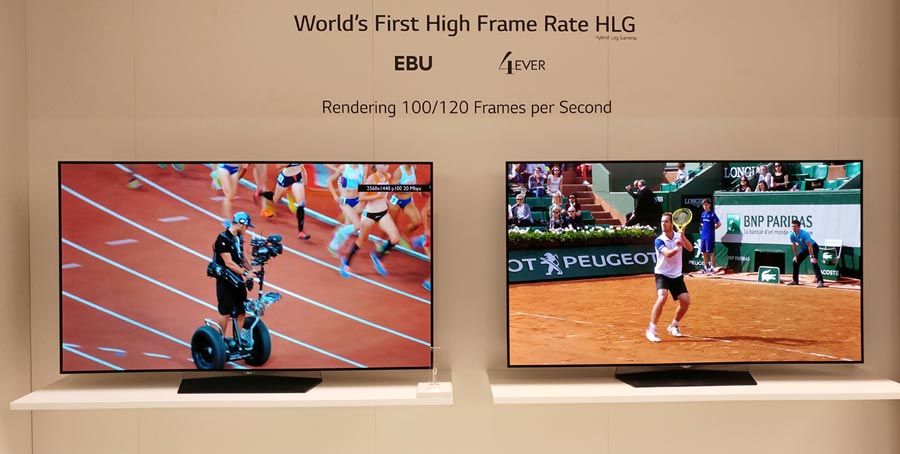
But that is not all. LG is combining HFR with HDR and Ultra HD resolution to show how current and future picture developments will improve the viewing experience.
In the photos, you can see that the input signal is 2560x1440 at 100fps with 20Mb/s bitrate. LG demonstrated several resolutions up to 4K at 100fps with 25 Mb/s bitrate.
The current 2016 OLED TVs from LG do not support HFR and cannot be updated to do so. We asked LG about its plans for HFR but were told that the company cannot comment on future products. However, LG says that it is demonstrating the technology at IFA because HFR is now technically possible on consumer OLEDs.
When exactly LG is planning to release its first HFR-capable OLED TVs is anyone’s guess but we hope to see them sooner rather than later.