UHD Blu-ray remains the best home entertainment format, but the same cannot be said for 3D Blu-ray. Here is why Apple's 3D format is significantly better – and why it is just the beginning.
3D TVs may be gone, but 3D fans are still around, enjoying 3D in cinemas, on projectors or more recently through headsets. Or simply on on one of the last great 3D TVs; LG's 2016 OLED with passive 3D, one of which FlatpanelsHD still owns (LG E6).
Still, it seems to have flown under the radar that Apple has not only revived 3D movie distribution for the home market but also introduced much-improved 3D formats and by far the best 3D viewing device yet.
3D Blu-ray stuck in the past
The Blu-ray 3D format was introduced in late 2009 as an extension of the Blu-ray Disc specification. For the most part, it required new Blu-ray players, although the PlayStation 3 was updated via firmware to support it.
 Life of Pi was great in 3D, but the Blu-ray 3D format hasn't kept up
Why Apple's 3D format is better
In January 2024, Apple revived 3D movie distribution by adding 3D titles to its catalog in the Apple TV app. Apple also announced that it would upgrade your purchased movies to 3D free of charge if a 3D version exists or is added later.
In addition, Apple introduced a new 3D format that, for the first time, supports 4K, Dolby Vision HDR, 48fps HFR (High Frame Rate) and spatial audio (including Dolby Atmos), significantly improving the 3D movie experience.
Apple uses a 3D extension of the HEVC H.265 codec called MV-HEVC (Multiview High Efficiency Video Coding), providing more efficient compression and significantly higher effective bitrates.
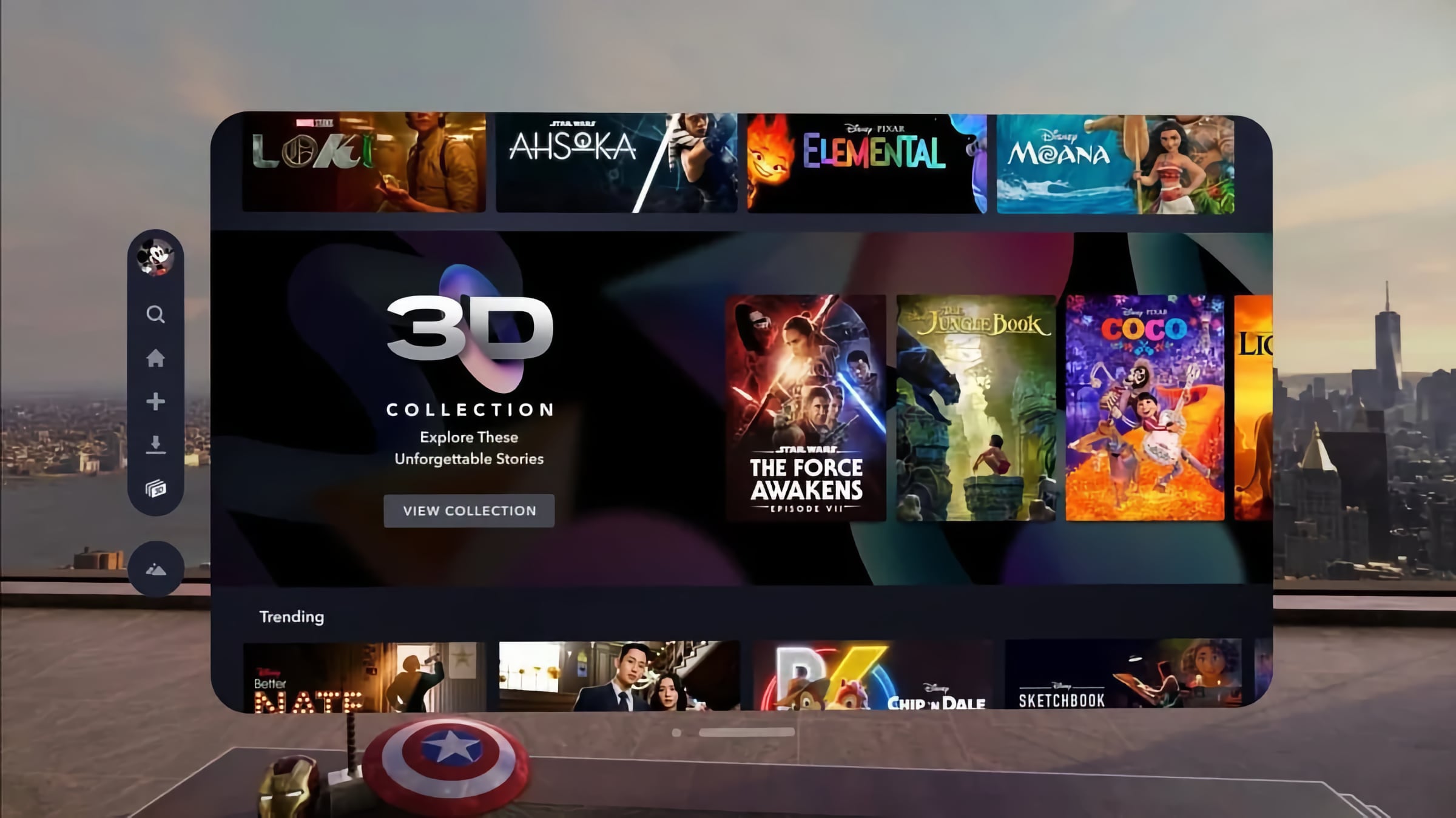
Disney was a launch partner and soon began offering 3D 4K movies in the Disney+ app alongside the Apple TV app.
The only part that is not improved with Apple's 3D format over Blu-ray 3D is lossless audio. Blu-ray 3D carries Dolby Atmos in Dolby TrueHD and DTS:X in DTS-HD MA, i.e. lossless quality, while Apple still offers only Dolby Atmos in lossy Dolby Digital Plus.
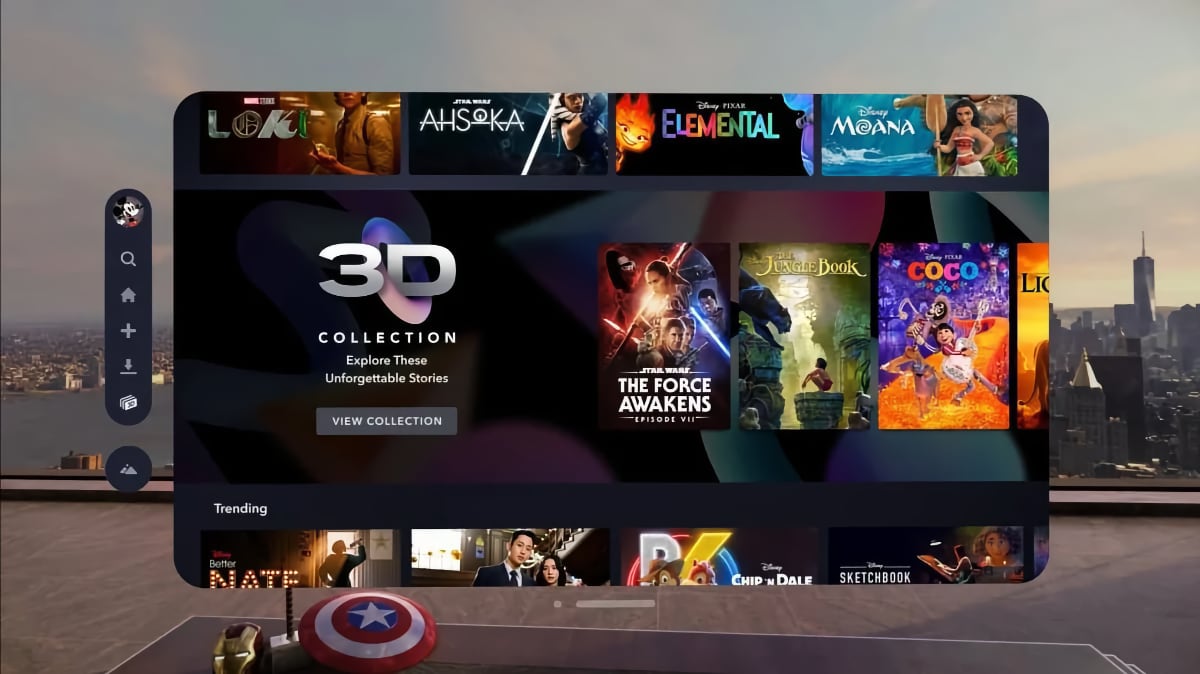 There are over 300 movies available on visionOS in the Apple TV app and Disney+. Photo: Disney
The best 3D viewing experience
Rather than reviving 3D on TVs or projectors, Apple focused on delivering the experience inside a headset, specifically the Apple Vision Pro, which remains the only device supporting the new 3D format.
If you can tolerate Apple's somewhat bulky headset, the 3D experience is dramatically better than Blu-ray 3D thanks to the combination of 4K 3D content and Vision Pro's superb micro-OLED displays with over 4K per eye. The virtual screen inside can be made nearly as large as you like, and it feels truly massive. Any 3D fan should try it.
FlatpanelsHD maintains the 3D movie database, showing that more than 300 3D titles are available through the Apple TV app, plus a handful on Disney+. Only one title currently supports 48fps HFR: Avatar: The Way of Water.
 Apple's virtual cinema environment in Apple Vision Pro. You can make the screen much larger if you want. Photo: Apple
The 3D revolution
The industry has already begun to move beyond 3D on flat virtual screens. Often described as "immersive" or 180/360 experiences, this content fully surrounds you in a virtual 3D world, essentially taking over your vision.
You may have tried similar experiences on Meta Quest, but they are hampered by the poor, low-resolution LCD panels in all Quest headsets and the lack of hardware support for MV-HEVC, making Quest essentially a blown-up HD experience with poor contrast.
Apple has its own immersive format called Apple Immersive Video, which again works only on Apple Vision Pro. Some of the first experiences are stunning on the headset's 4K micro-OLED displays. These titles are filmed with a special camera from Blackmagic at up to 8K 3D 90fps. Apple is experimenting with documentaries, music videos, concerts and even sports content in this immersive format.
Having seen some of these experiences on Apple Vision Pro, I still think about them often. They are several generations ahead of Meta's offerings – almost incomparable. It is better than the biggest IMAX cinema. If a company can bring this experience to lightweight glasses or similar hardware, they will own the future of entertainment.