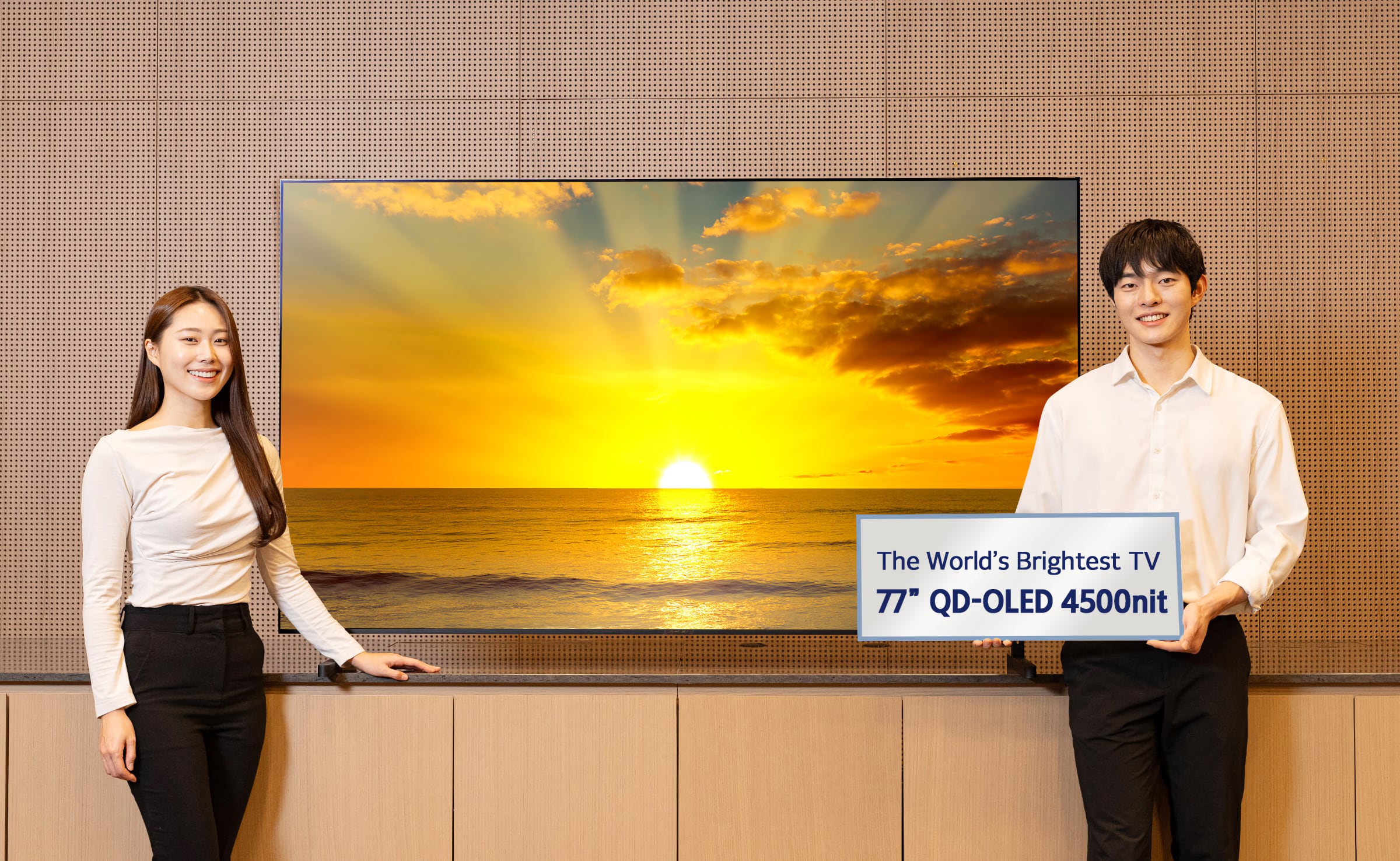
At CES 2026, Samsung Display will showcase the 2026 QD-OLED TV panel capable of 4500 nits brightness, a 5000ppi RGB micro-OLED for headsets, and more new displays and technologies.
Samsung Display is the manufacturer of all QD-OLED panels, including those used in Samsung and Sony TVs, so the announcement is a preview of what to expect from some of the 2026 flagship TVs.
- "On display for the first time is the 2026 QD-OLED TV model, featuring newly optimized organic materials and supporting a peak brightness of 4,500 nits, among the highest brightness levels achieved for a self-emissive display. QD-OLED achieves its peak luminance by combining the maximum brightness of each RGB component. Compared to competing products with similar peak brightness, QD-OLED demonstrates the potential for more vivid color reproduction and higher perceptual brightness, further enhancing compatibility with AI-based picture quality optimization technologies," the company announced.
At CES 2026, Samsung Display will also reveal its QD-OLED monitor panels that switch from triangular to RGB 'V-stripe' pixels.
4500 nits, but...
While the panel may be able to reach 4500 nits under certain conditions, at a specific color temperature or testing setup, 2026 TVs incorporating the panel are not likely to achieve the same peak brightness levels in calibrated mode.
As a reminder, last year at CES 2025, Samsung Display claimed that the 2025 QD-OLED panel could hit 4000 nits. However, FlatpanelsHD measured the Samsung S95F and Sony Bravia 8 II models at 2069 and 1689 nits peak brightness (1% window), respectively.
Samsung Display did not comment on full-screen brightness, which surpasses 400 nits (Samsung S95F) last year – FlatpanelsHD is chasing more details. Update: 450 nits full-screen, confirms Samsung Display.
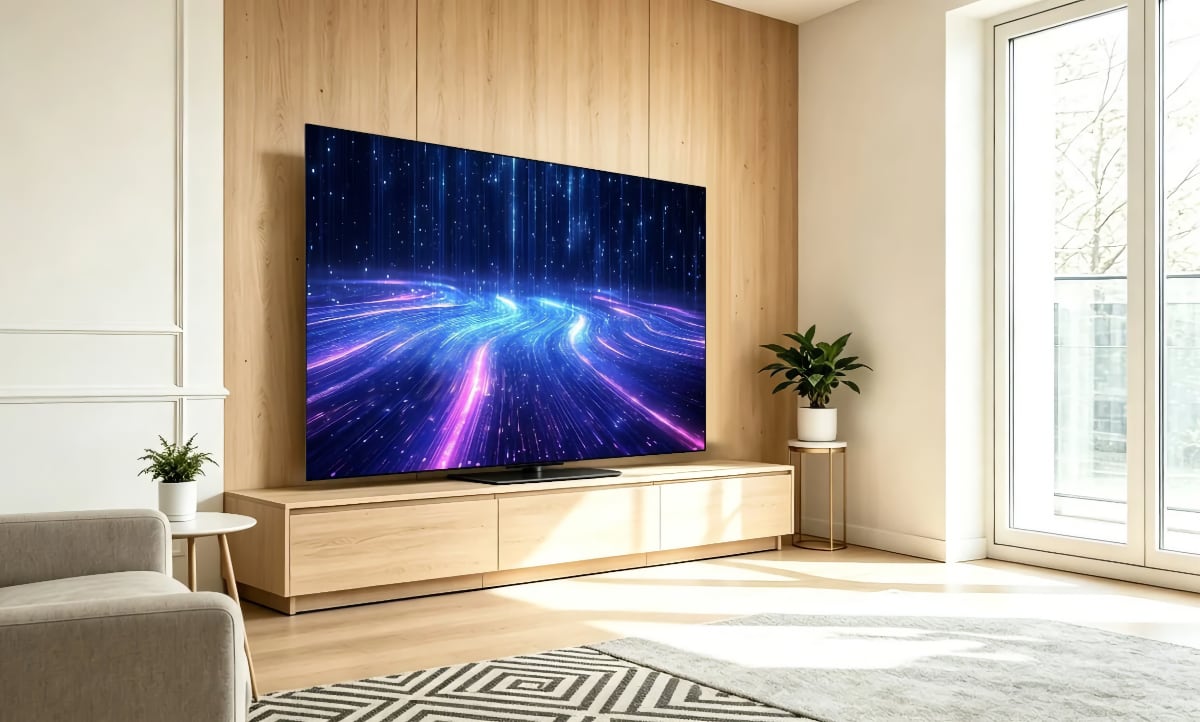
 2026 QD-OLED TV panel. Photo: Samsung Display
RGB micro-OLED for headsets
At CES 2026, Samsung Display will also showcase a next-generation micro-OLED, or OLEDoS (OLED-on-Silicon), intended for headsets.
It is an RGB micro-OLED delivering better color than state-of-the-art headsets such as Apple Vision Pro, which uses micro-WOLED that does not fully reach DCI-P3. At 1.4 inches, Samsung Display's RGB micro-OLED is the same size, but it delivers a significantly higher 5000 ppi pixel density compared to approximately 3400 ppi in Apple Vision Pro. It appears to be the same panel first announced in May, where it was said to deliver 15000 nits peak brightness, 99% DCI-P3 and 120Hz.
- "Measuring just 1.4 inches – similar in size to a watch face – the display boasts a pixel density of 5,000 PPI (Pixel Per Inch), with a pixel count nearly three times that of a 4K TV," said Samsung Display.
 Samsung Display's 5000ppi micro-OLED is headed for future VR headsets