QD-OLED is brighter with up to 1500 nits peak brightness and more colorful with up to 90% Rec.2020 as compared to LG Display's WOLED technology, according to Samsung Display. We saw it in action.
QD-OLED specs
FlatpanelsHD just came out of a QD-OLED tech demo presented by Samsung Display at CES 2022. We will have more details to share later but here are some of the hard figures that were provided, demonstrated and measured.
Initially, Samsung Display will mass-produce 55- and 65-inch 4K QD-OLED panels for TVs (Sony A95K, Samsung) as well as a 34-inch panel for monitors (Alienware, Samsung). This is the plan for year one and Samsung Display will decide on the path for next year and beyond later based on partner and market reactions.
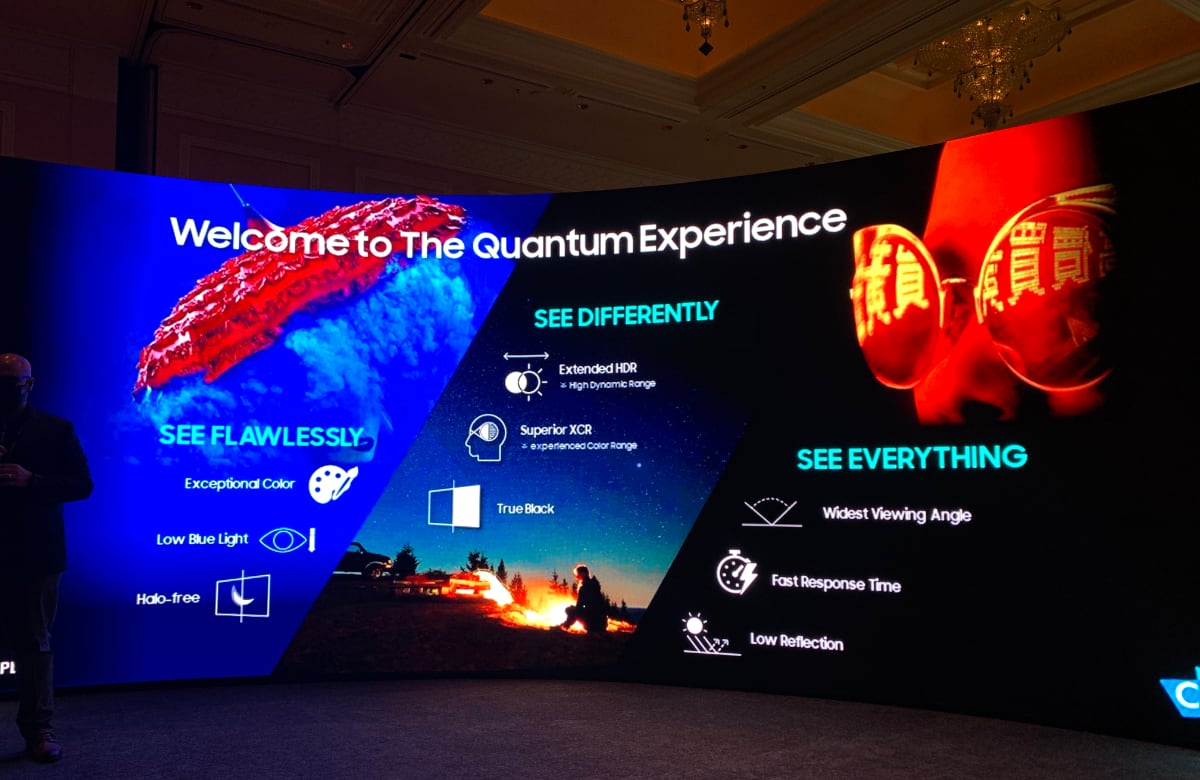
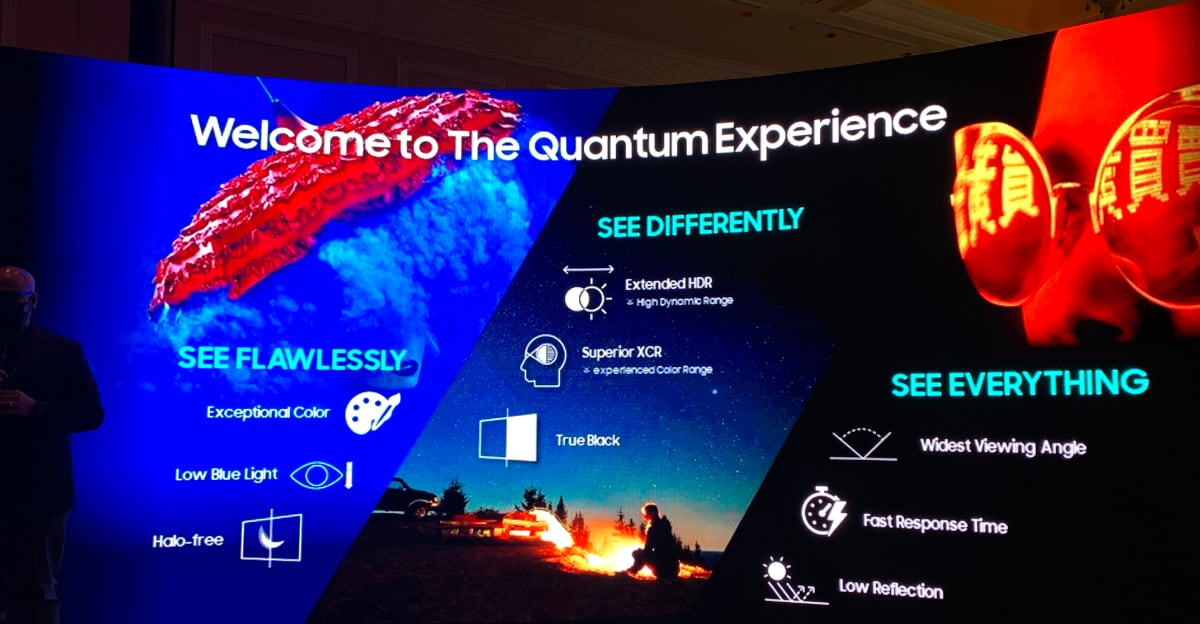
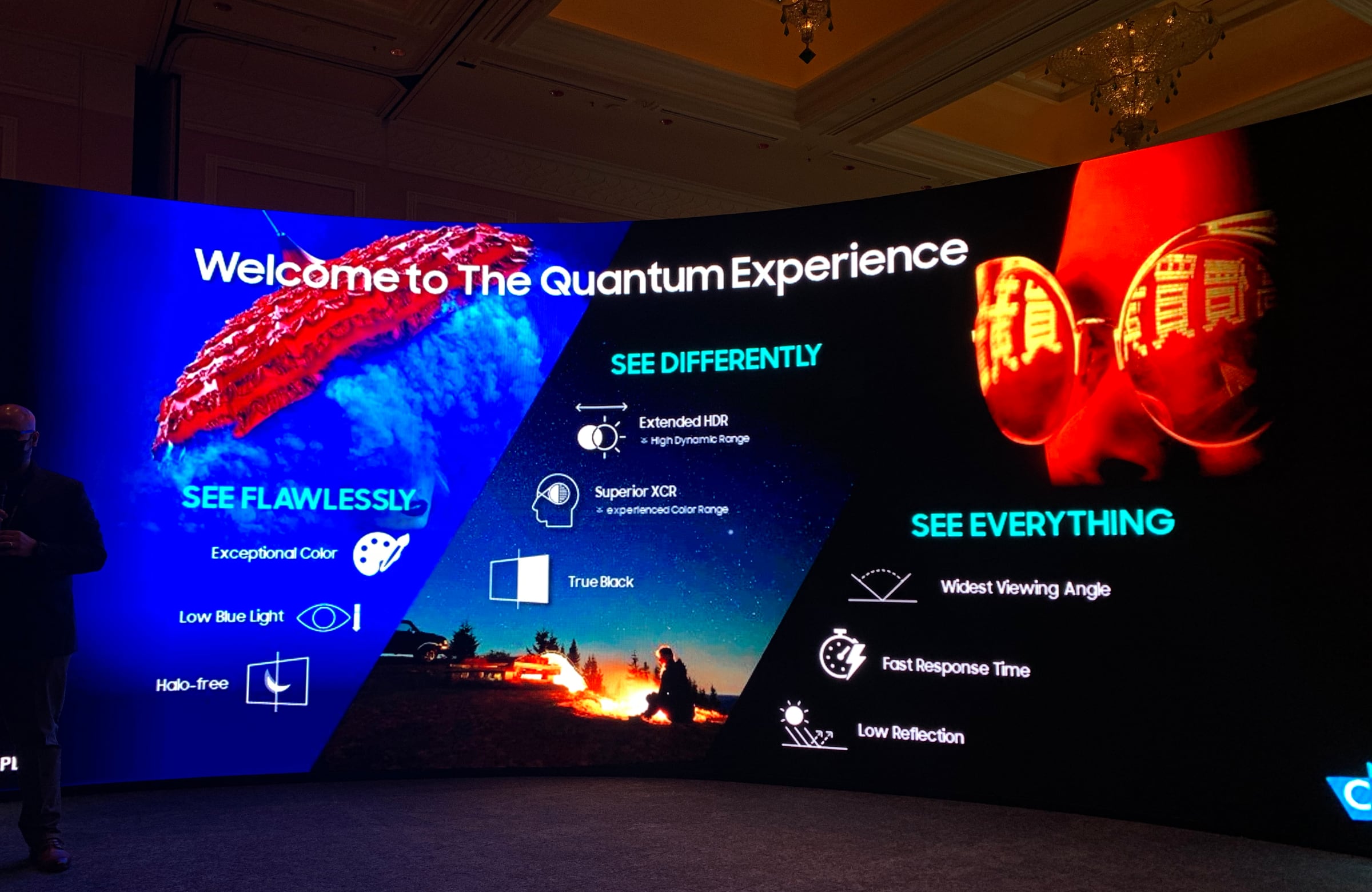
From the presentation with Samsung Display. Photo: FlatpanelsHD
Unlike LG Display's WOLED that is currently found in all OLED TVs on the market, Samsung Display's QD-OLED uses blue OLED with red and green quantum dot color converters – not filters. This allows them to create purer color and Samsung demonstrated the benefits by comparing the panels side-by-side.
Samsung Display claims 90.3% coverage of Rec.2020 for the 55- and 65-inch QD-OLED TV panels and 80.7% Rec.2020 for the 34-inch monitor panel. Obviously, we will have to test this to confirm. LG Display's WOLED hovers around 69-72% Rec.2020, based on our own measurements and the TV brand.
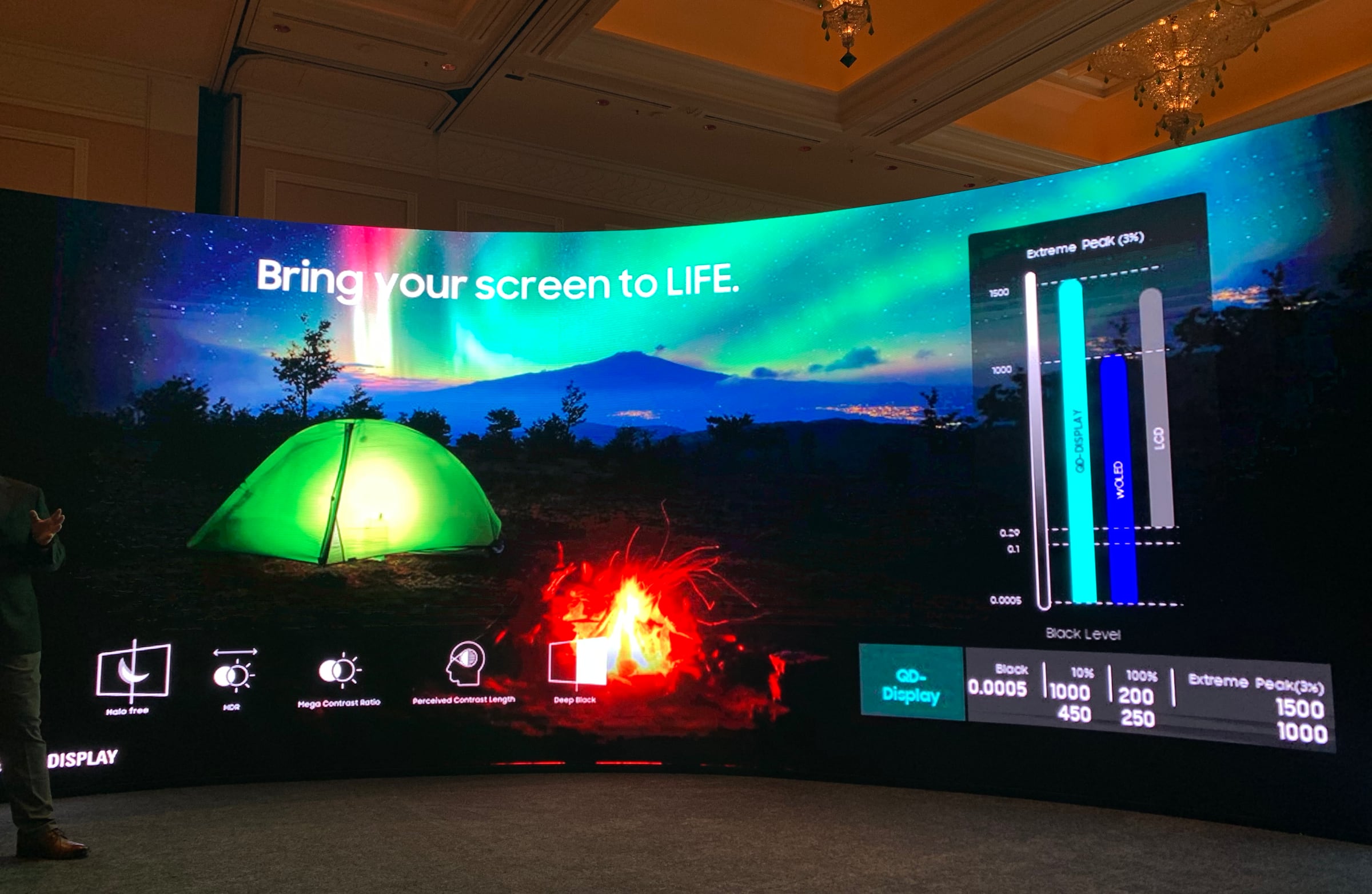
What Samsung Display did measure during the demo was peak brightness (white), which hit over 1000 nits on a 10% window. This compares to around 700-1000 nits for LG Display's WOLED panel. QD-OLED should hit 1500 nits on a 3% window, according to the company, but this was not measured during the demonstration. The 34-inch monitor should hit 1000 nits (3% window) and 450 nits (10% window). Fullscreen should be 200 and 250 nits for QD-OLED TVs and monitors, respectively.
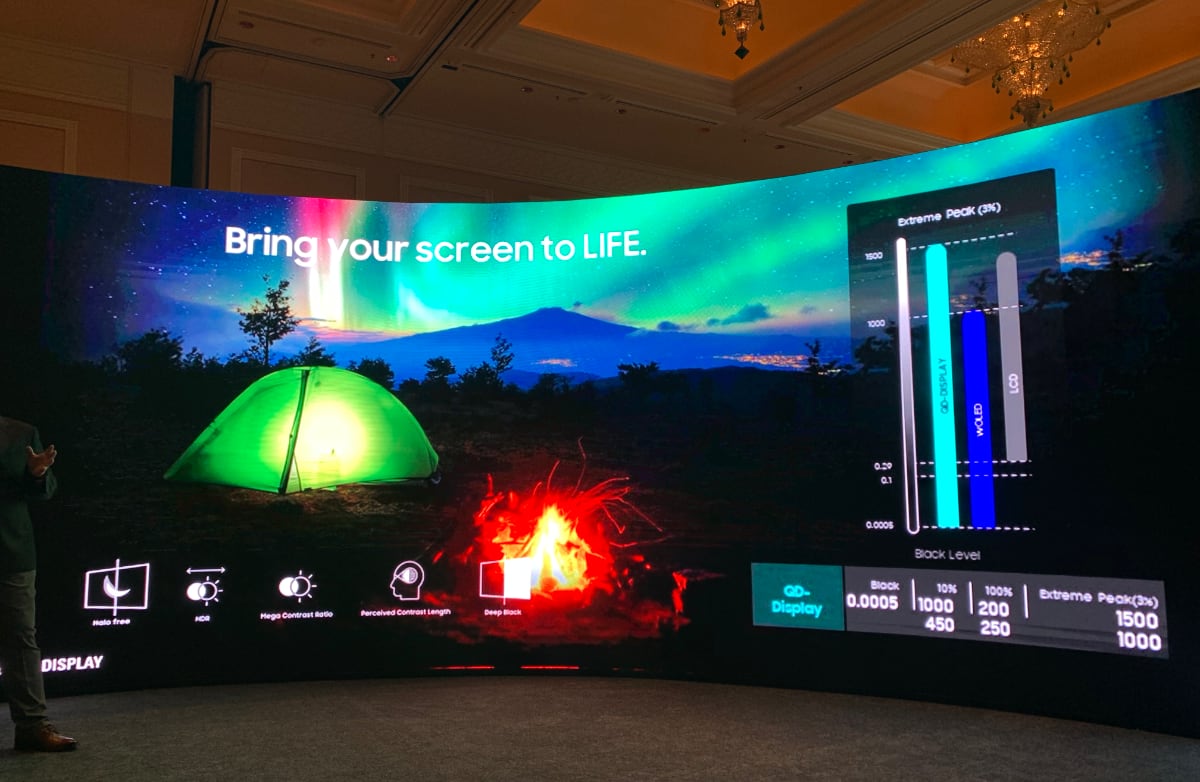
From the presentation with Samsung Display. Photo: FlatpanelsHD
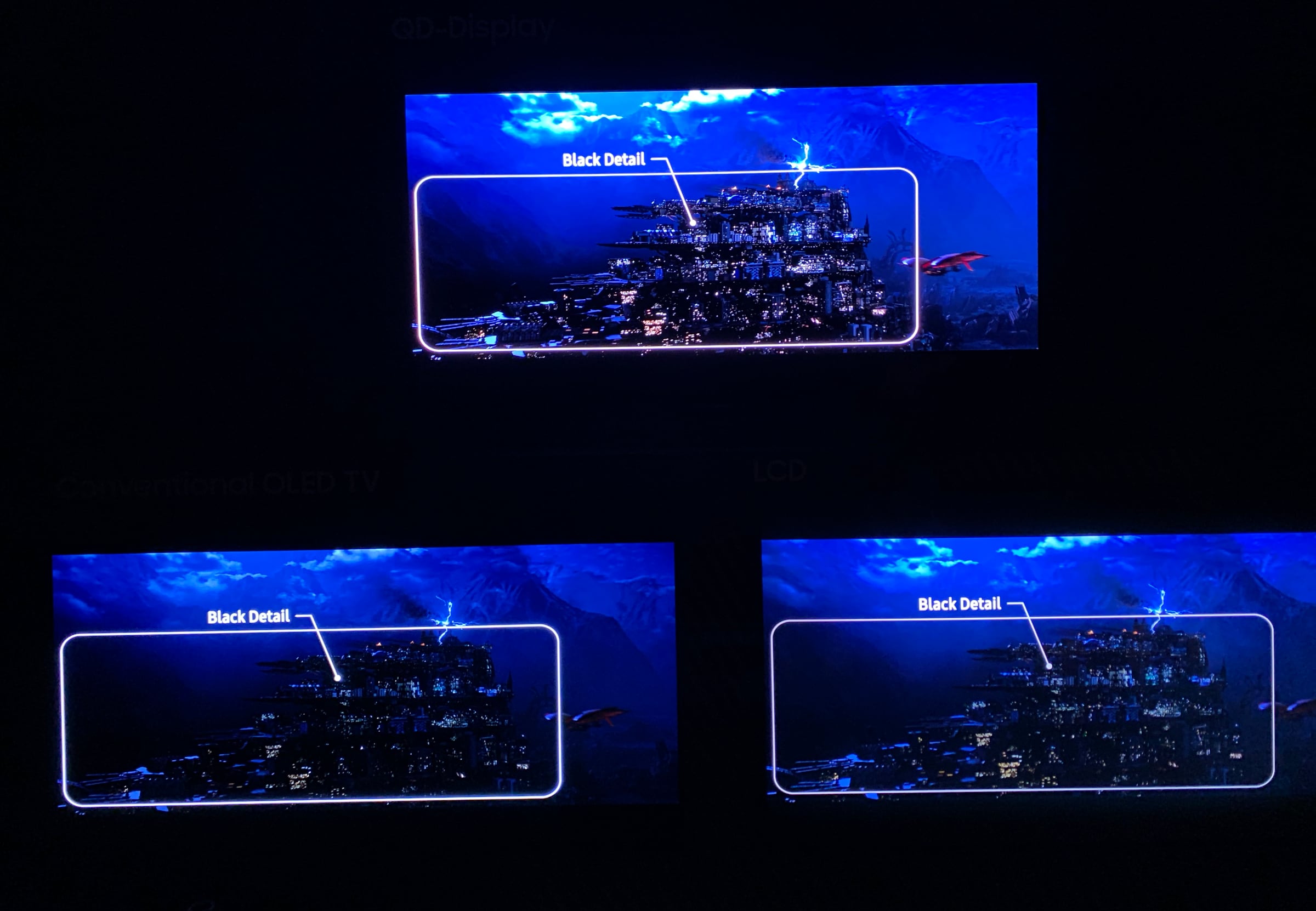
Black is more or less equal to LG Display's WOLED panel type, so in essence Samsung Display is promising an even wider dynamic range. We have many thoughts and impressions to share in this area later.
The first generation of QD-OLED panels are 10-bit with a maximum refresh rate of 144Hz for TVs and a maximum of 175Hz for monitors, but this is not the limit. Future generations can go much higher, if necessary.
WOLED already has excellent viewing angles but QD-OLED will be even better because it is a top emission lambertian emitter. We saw this demonstrated and it was convincing but it is perhaps not the most important factor. A more interesting benefit of this panel structure is that QD-OLED has visibly fewer reflections in the screen. And it is not because of a special coating, Samsung Display confirmed.
We will have more to report on response time and motion, burn-in risks, color, HDR, VRR, and of course our hands-on impressions later. Stay tuned.
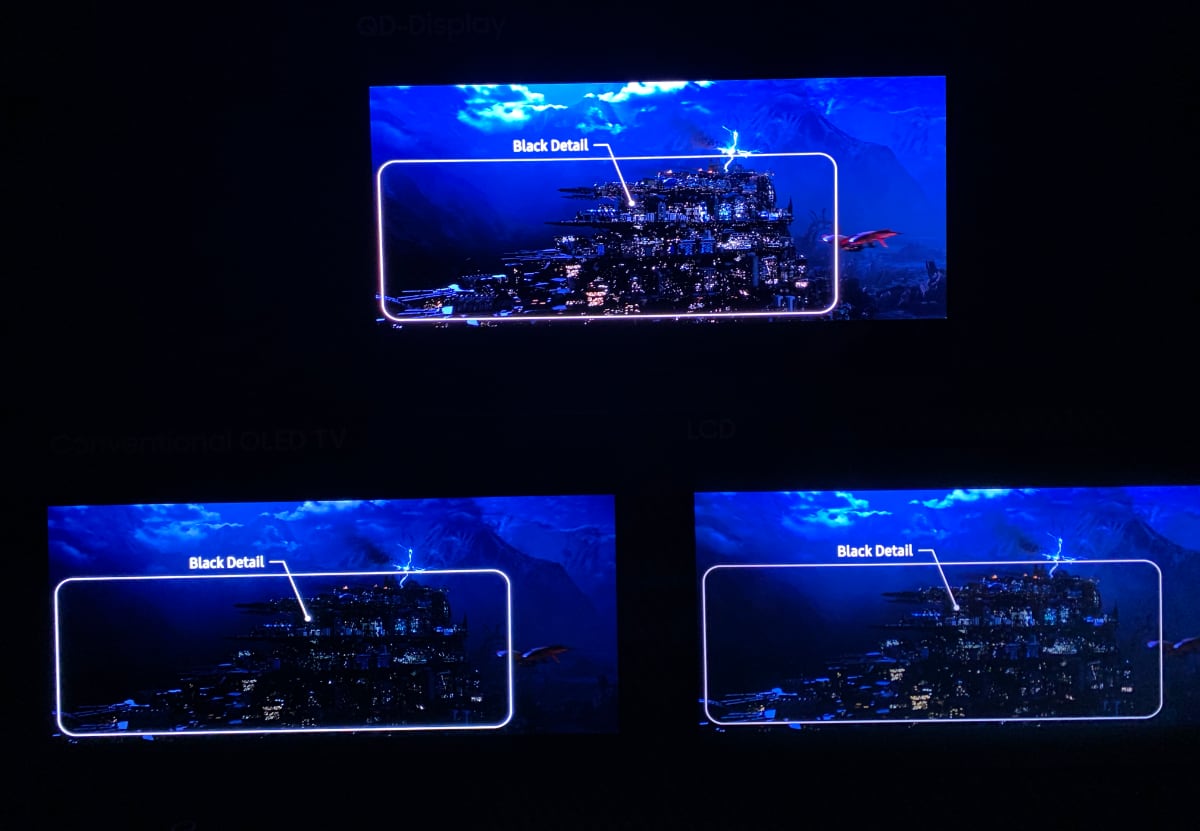
Which is which? Take a guess but don't put too much meaning into our smartphone photo. Photo: FlatpanelsHD

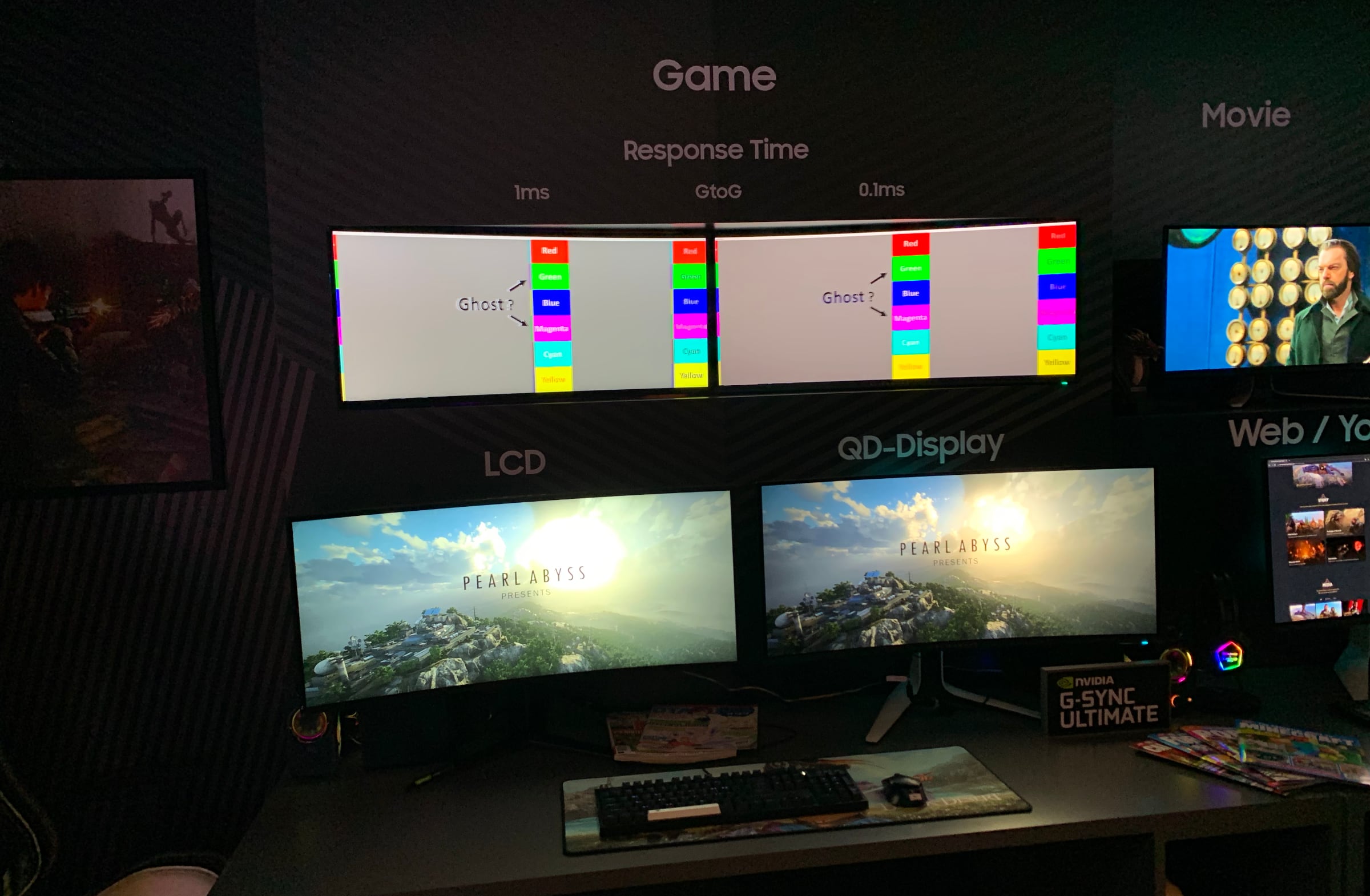
QD-OLED monitor as compared to a typical LCD monitor. Photo: FlatpanelsHD